



Invasive Species
Developing Methods and Techniques to Control the Spread of Invasive Species
Developing Methods and Techniques to Control the Spread of Invasive Species
Columbia Environmental Research Center
Welcome to the Columbia Environmental Research Center. Our research focuses on environmental contaminants and the effects of habitat alterations on aquatic and terrestrial ecosystems.
Comprehensive Sturgeon Research Project (CSRP) Blog
Comprehensive Sturgeon Research Project (CSRP) Blog

Learn how CERC research is contributing to the recovery of the endangered pallid sturgeon in the Missouri River
Passive Sampling Using SPMDs and POCIS - Resources and Tools
Passive Sampling Using SPMDs and POCIS - Resources and Tools

CERC scientists are pioneers in the development of passive sampling techniques.
News
EcoNews - Vol. 7 | Issue 3
EcoNews - Vol. 7 | Issue 3
Addressing Knowledge Gaps on the Potential Effects of Critical Minerals on Aquatic Life
Addressing Knowledge Gaps on the Potential Effects of Critical Minerals on Aquatic Life
A Tale of Two Islands and the Future of an Ocean Sentinel Seabird
A Tale of Two Islands and the Future of an Ocean Sentinel Seabird
Publications
From transcriptomic dysregulation to behavioral impairment: Mechanistic effects of weathered Brazilian oil on early life stage fish From transcriptomic dysregulation to behavioral impairment: Mechanistic effects of weathered Brazilian oil on early life stage fish
The 2019–2020 oil spill along the northeastern coast of Brazil affected coastal reef ecosystems and the organisms that inhabit these environments. To characterize the toxicity of persistent weathered oil residues to early life stage fish, embryonic zebrafish (Danio rerio) were exposed to environmentally relevant concentrations of a water-accommodated fraction (WAF) prepared from...
A template for integrated ecological restoration planning, implementation, and monitoring: Case study from the Little Saint Francis River Chat Pile mining site A template for integrated ecological restoration planning, implementation, and monitoring: Case study from the Little Saint Francis River Chat Pile mining site
We present here a template for integrated ecological restoration planning and monitoring, using a case study from the Little Saint Francis River chat pile restoration site in Madison County, Missouri, USA. We used US Department of Agriculture Ecological Site Descriptions (ESDs) to identify a range of potential target vegetation communities given the site's biophysical setting...
Science

From Stream to Spider: How PFAS Move Through Aquatic and Terrestrial Food Webs
Per- and polyfluoroalkyl substances (PFAS) are persistent synthetic chemicals that accumulate in the environment and living organisms. A USGS study examined how different PFAS compounds move through a stream ecosystem and are transferred from aquatic to terrestrial food webs. The findings documented that not all PFAS behave the same once they enter the environment, leading to differences in...
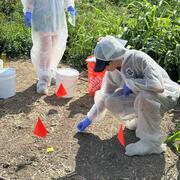
eDNA and the Efficacy of Management Actions
Environmental DNA (eDNA) is a powerful feedback tool, giving managers fast, clear, and cost-effective evidence to guide decisions and improve conservation outcomes.
By
Ecosystems Mission Area, Biological Threats and Invasive Species Research Program, Environmental Health Program, Species Management Research Program, Alaska Science Center, Columbia Environmental Research Center, Eastern Ecological Science Center, Forest and Rangeland Ecosystem Science Center, Fort Collins Science Center, Great Lakes Science Center, National Wildlife Health Center, Northern Prairie Wildlife Research Center, Northern Rocky Mountain Science Center, Pacific Island Ecosystems Research Center, Southwest Biological Science Center, Upper Midwest Environmental Sciences Center, Western Ecological Research Center (WERC), Western Fisheries Research Center, Wetland and Aquatic Research Center , Pacific Northwest Environmental DNA Laboratory
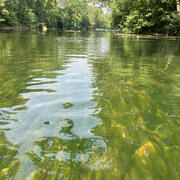
eDNA for Water-Quality Monitoring and Public Health Protection
By analyzing genetic traces left behind in water, eDNA provides early warning signs of problems—helping managers respond faster, protect public health, and keep freshwater ecosystems resilient.
By
Ecosystems Mission Area, Biological Threats and Invasive Species Research Program, Environmental Health Program, Alaska Science Center, Columbia Environmental Research Center, Eastern Ecological Science Center, Forest and Rangeland Ecosystem Science Center, Fort Collins Science Center, Great Lakes Science Center, National Wildlife Health Center, Northern Prairie Wildlife Research Center, Northern Rocky Mountain Science Center, Pacific Island Ecosystems Research Center, Upper Midwest Environmental Sciences Center, Western Ecological Research Center (WERC), Western Fisheries Research Center, Wetland and Aquatic Research Center , Pacific Northwest Environmental DNA Laboratory