Estimated height of large ice spike is about 7 feet.
Images
Images
Estimated height of large ice spike is about 7 feet.
Several smaller ice spikes merge to create a large ice spike. Flow is 5.59 cubic feet per second.
Small ice mounds developed downstream of weir on Apple Creek. Flow is 14.7 cubic feet per second.
The carcass of a red-winged blackbird from Beebe, AR is being examined by USGS National Wildlife Health Center wildlife pathologist Dr. David E. Green.
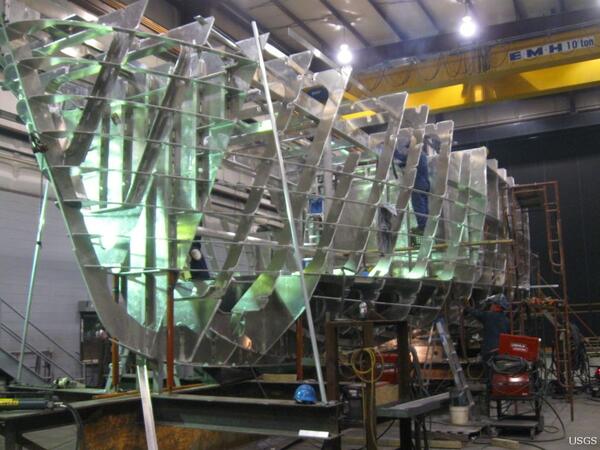
Vessel forward module framing looking aft from bow to midship bulkhead.
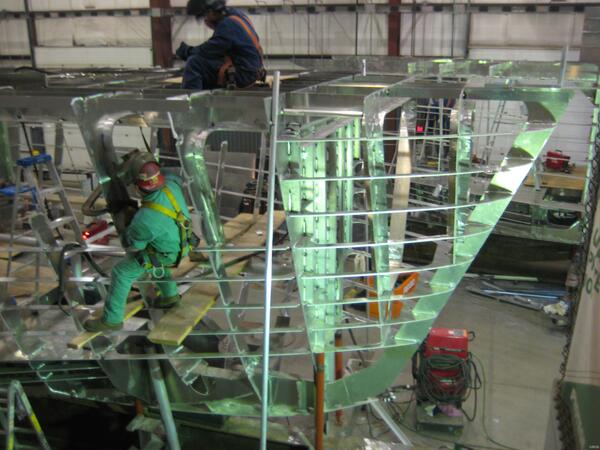
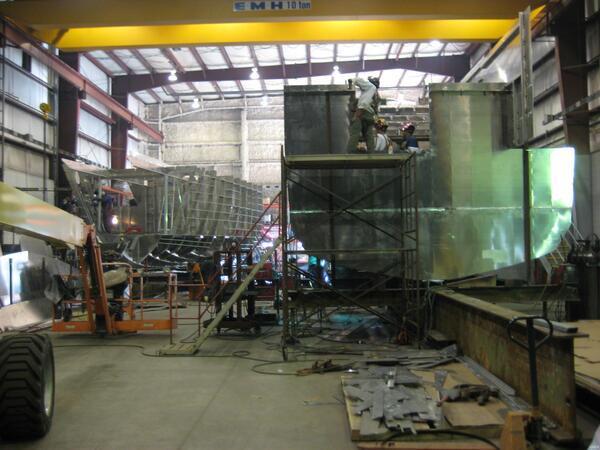
Two new additions to the U.S. Geological Survey Great Lakes Science Center's fleet of large research vessels ;are currently being constructed. The two new USGS research vessels will replace the aging vessels on lakes Erie and Ontario.
Two new additions to the U.S. Geological Survey Great Lakes Science Center's fleet of large research vessels are currently being constructed. The two new USGS research vessels will replace the aging vessels on lakes Erie and Ontario.
The USGS monitors the Narraguagus River at Cherryfield, Maine at a location called Cable Pool. This spot was once renowned for Atlantic salmon, where anglers would line the banks, waiting their turn to cast a line into the water.
Gulls, such as this lesser black-backed gull, play an important role in moving avian flu viruses across the North Atlantic between Europe and North America.
Osprey fledgings thrive in almost all parts of Chesapeake Bay
Osprey fledgings thrive in almost all parts of Chesapeake BayThis seven- to eight-week-old osprey fledgling was photographed in a nest at Poplar Island, Maryland. The island in Chesapeake Bay was used as a control site, where toxic chemical residues were low, in a USGS study of chemical contaminants in Bay ospreys’ food chain.
Osprey fledgings thrive in almost all parts of Chesapeake Bay
Osprey fledgings thrive in almost all parts of Chesapeake BayThis seven- to eight-week-old osprey fledgling was photographed in a nest at Poplar Island, Maryland. The island in Chesapeake Bay was used as a control site, where toxic chemical residues were low, in a USGS study of chemical contaminants in Bay ospreys’ food chain.
Two new additions to the U.S. Geological Survey Great Lakes Science Center's fleet of large research vessels are currently being constructed. The two new USGS research vessels will replace the aging vessels on lakes Erie and Ontario.
Gulls, such as this Iceland gull, play an important role in moving avian flu viruses across the North Atlantic between Europe and North America.
A scuba diver navigates his field site underwater.
Camille Hopkins, the Wildlife Disease Coordinator for the USGS Ecosystems Mission Area, provides fluids to a baby rhino in South Africa. &nb
Florida Everglades
Estimating volume of water discharged from fish sampling locations within mangrove forests is necessary to derive fish density estimates per volume. Fish density was found to be greater in waters draining natural tidal forests than in waters from mudflats formed as a result of landfall of a Category 5 hurricane on Cape Sable, Everglades National Park in 1935.&