



Interview With GLSC’s Nicole Watson About PhD Dissertation Research at Michigan State University Featured in Article About Arctic Grayling Reintroduction
Developing More Options for Managing Invasive Plants
GLSC Studies the Effect of Pausing Sea Lamprey Control Efforts During COVID
GLSC Teaches Preschool Students About Aquatic and Terrestrial Science of the Great Lakes
GLSC Invited to Great Lakes Angler Workshop
Great Lakes Science Center
Welcome! The Great Lakes Science Center (GLSC) is part of the Midcontinent Region of the USGS, DOI Regions 3 and 5. Our scientists work in the Great Lakes region and other parts of the country to meet the nation’s need for scientific information used by resource managers to restore, enhance, manage, and protect the living resources and habitats in the Great Lakes basin.


News
Ecological Thresholds, Abiotic Stress, and Climate Change: A Conceptual Framework
Ecological Thresholds, Abiotic Stress, and Climate Change: A Conceptual Framework
U.S. Geological Survey Pollinator Science Strategy, 2025–35—A Review and Look Forward
U.S. Geological Survey Pollinator Science Strategy, 2025–35—A Review and Look Forward
GLSC Sea Lamprey Science Highlighted by Great Lakes Fishery Commission
GLSC Sea Lamprey Science Highlighted by Great Lakes Fishery Commission
Publications
Multi-year cut-to-drown management limits Phragmites australis growth, belowground resources, and rhizome viability in Great Lakes wetlands Multi-year cut-to-drown management limits Phragmites australis growth, belowground resources, and rhizome viability in Great Lakes wetlands
The distribution and abundance of Phragmites in the Great Lakes coastal zone has expanded in part due to its unique ventilation physiology and its ability to take advantage of changes in lake levels over the past several decades. During an extended period of low lake levels in the early 2000s, Phragmites expanded into vast shallow water areas as lake bottoms were exposed. Many of those...
Bird predation obscures detection of acoustic telemetry tags in fish Bird predation obscures detection of acoustic telemetry tags in fish
Increasing application of acoustic telemetry for determining survival, migration and habitat use of fishes highlights the need to improve interpretation of tracks that end abruptly: when is fishing mortality, predation, or some other cause to be inferred? Significant technological advances have led to the development of tags that “sense” predation and can be used to infer information...
Drowned river mouth lakes are winter foraging habitats for the expanding Lake Michigan cisco Coregonus artedi population Drowned river mouth lakes are winter foraging habitats for the expanding Lake Michigan cisco Coregonus artedi population
Characterizing fish movements is required for understanding habitat use, energy flow, and trophic structure and can inform fisheries management. Drowned river mouth (DRM) lakes are productive inland habitats in the Laurentian Great Lakes basin used by migratory fishes. Despite recognition of their ecological connections to the Great Lakes, the value of DRM lakes as seasonal habitats is...
Science
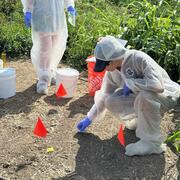
eDNA and the Efficacy of Management Actions
Environmental DNA (eDNA) is a powerful feedback tool, giving managers fast, clear, and cost-effective evidence to guide decisions and improve conservation outcomes.
By
Ecosystems Mission Area, Biological Threats and Invasive Species Research Program, Environmental Health Program, Species Management Research Program, Alaska Science Center, Columbia Environmental Research Center, Eastern Ecological Science Center, Forest and Rangeland Ecosystem Science Center, Fort Collins Science Center, Great Lakes Science Center, National Wildlife Health Center, Northern Prairie Wildlife Research Center, Northern Rocky Mountain Science Center, Pacific Island Ecosystems Research Center, Southwest Biological Science Center, Upper Midwest Environmental Sciences Center, Western Ecological Research Center (WERC), Western Fisheries Research Center, Wetland and Aquatic Research Center , Pacific Northwest Environmental DNA Laboratory
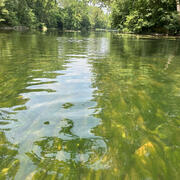
eDNA for Water-Quality Monitoring and Public Health Protection
By analyzing genetic traces left behind in water, eDNA provides early warning signs of problems—helping managers respond faster, protect public health, and keep freshwater ecosystems resilient.
By
Ecosystems Mission Area, Biological Threats and Invasive Species Research Program, Environmental Health Program, Alaska Science Center, Columbia Environmental Research Center, Eastern Ecological Science Center, Forest and Rangeland Ecosystem Science Center, Fort Collins Science Center, Great Lakes Science Center, National Wildlife Health Center, Northern Prairie Wildlife Research Center, Northern Rocky Mountain Science Center, Pacific Island Ecosystems Research Center, Upper Midwest Environmental Sciences Center, Western Ecological Research Center (WERC), Western Fisheries Research Center, Wetland and Aquatic Research Center , Pacific Northwest Environmental DNA Laboratory
eDNA Science for Species Management, Ecosystem Health, Biodiversity Monitoring, and Habitat Restoration
Using eDNA to track biodiversity, guide restoration, and safeguard ecosystems for the future.
By
Ecosystems Mission Area, Biological Threats and Invasive Species Research Program, Species Management Research Program, Alaska Science Center, Columbia Environmental Research Center, Eastern Ecological Science Center, Forest and Rangeland Ecosystem Science Center, Fort Collins Science Center, Great Lakes Science Center, National Wildlife Health Center, Northern Prairie Wildlife Research Center, Northern Rocky Mountain Science Center, Pacific Island Ecosystems Research Center, Southwest Biological Science Center, Upper Midwest Environmental Sciences Center, Western Ecological Research Center (WERC), Western Fisheries Research Center, Wetland and Aquatic Research Center , Pacific Northwest Environmental DNA Laboratory