U.S. flag

An official website of the United States government

Earth Resources Observation and Science (EROS) Center

The U.S. Geological Survey's (USGS) Earth Resources Observation and Science (EROS) Center in Sioux Falls, South Dakota, is a global leader in land imaging, using remotely sensed data to track how Earth is changing. EROS provides reliable, science-based information to help decision-makers understand how shifts in land use, cover, and condition affect people and the environment. 

This work is supported by an authoritative national archive of Earth observation data—housing more than 85 years of satellite and aerial records, including the complete Landsat collection. As the operational home of Landsat 8 and 9, EROS delivers daily observations that inform natural resource assessments, support national security, and help communities prepare for the future.

News

Latest in Landsat April 2026 - Vol. 5 | Issue 4

Latest in Landsat April 2026 - Vol. 5 | Issue 4

Landsat 9 Products Impacted by 2025 Safehold Now Available

Landsat 9 Products Impacted by 2025 Safehold Now Available

Landsat Bulk Metadata Now Accessible in New Format

Landsat Bulk Metadata Now Accessible in New Format

Publications

Towards affordable wetland evapotranspiration monitoring using the Variance-Bowen Ratio method: Insights from three contrasting wetlands Towards affordable wetland evapotranspiration monitoring using the Variance-Bowen Ratio method: Insights from three contrasting wetlands

Accurate measurement of evapotranspiration (ET) is essential for sustainable water management. Standard methods such as eddy covariance (EC) are costly, while alternatives such as surface renewal are cheaper but require calibration and complex data processing. This study evaluates the utility of the Variance-Bowen Ratio (VBR) method for estimating ET across three California’s wetlands...
Authors
Tianxin Wang, Gabriel B. Senay, Joseph Verfaille, Daphne J. Szutu, MacKenzie Friedrichs, Jack R. Eggleston, Dennis Baldocchi

ECCOE Landsat quarterly calibration and validation report—Quarter 3, 2025 ECCOE Landsat quarterly calibration and validation report—Quarter 3, 2025

Executive Summary The U.S. Geological Survey Earth Resources Observation and Science Calibration and Validation (Cal/Val) Center of Excellence (ECCOE) focuses on improving the accuracy, precision, calibration, and product quality of remote-sensing data, leveraging years of multiscale optical system geometric and radiometric calibration and characterization experience. The ECCOE Landsat...
Authors
Md Obaidul Haque, Nahid Hasan, Ashish Shrestha, Rajagopalan Rengarajan, Mark Lubke, Daniel Steinwand, Paul Bresnahan, Jerad L. Shaw, Kathryn Ruslander, Esad Micijevic, Michael J. Choate, Cody Anderson, Jeff Clauson, Kurt Thome, Amit Angal, Raviv Levy, Jeff Miller, Leibo Ding, Cibele Teixeira Pinto

A framework for integrating spatiotemporal deep learning methods with landsat for annual land cover and impervious surface mapping A framework for integrating spatiotemporal deep learning methods with landsat for annual land cover and impervious surface mapping

Land cover information is essential for understanding Earth’s surface dynamics and how vegetation, water, soil, climate, and terrain interact. The National Land Cover Database (NLCD) has been the authoritative source for consistent U.S. land cover mapping. To extend NLCD’s temporal resolution and reduce production latency, we developed the Land Cover Artificial Mapping System (LCAMS)—a...
Authors
Rylie Fleckenstein, Danika Fay Wellington, Suming Jin, Heather J. Tollerud, Jesslyn F. Brown, Jon Dewitz, Neal J. Pastick, Christopher P. Barber, Austin O'Brien, Mark Spanier

Science

EROS User Services

Your trusted resource for USGS EROS data and tools. As the primary contact point for the USGS Earth Resources Observation and Science (EROS) center, we help thousands of users each year access and understand our vast archive of remotely sensed imagery and science products. From technical assistance and tool support, to training and outreach, our team ensures you have the resources you need to make...
EROS User Services

EROS User Services

Your trusted resource for USGS EROS data and tools. As the primary contact point for the USGS Earth Resources Observation and Science (EROS) center, we help thousands of users each year access and understand our vast archive of remotely sensed imagery and science products. From technical assistance and tool support, to training and outreach, our team ensures you have the resources you need to make...
Learn More

USGS Sagebrush Science: Supporting Public Safety and Economic Decision Making Across the West

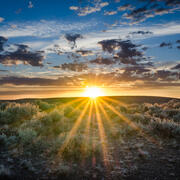
The sagebrush biome is one of the largest ecosystems in North America. Encompassing nearly one-third of the continental U.S., it provides critical resources for millions of Americans and a home for hundreds of plants and animal species in the West. Natural resource management in sagebrush ecosystems can be complex, and science can support management decisions by providing knowledge and tools to...
USGS Sagebrush Science: Supporting Public Safety and Economic Decision Making Across the West

USGS Sagebrush Science: Supporting Public Safety and Economic Decision Making Across the West

The sagebrush biome is one of the largest ecosystems in North America. Encompassing nearly one-third of the continental U.S., it provides critical resources for millions of Americans and a home for hundreds of plants and animal species in the West. Natural resource management in sagebrush ecosystems can be complex, and science can support management decisions by providing knowledge and tools to...
Learn More

Land Processes Distributed Active Archive Center

The Land Processes Distributed Active Archive Center (LP DAAC) operates as a partnership between the United States Geological Survey (USGS) and the National Aeronautics and Space Administration (NASA) dedicated to enabling natural resource managers, disaster responders, academia, and industry to investigate, characterize, and monitor land surface processes.
Land Processes Distributed Active Archive Center

Land Processes Distributed Active Archive Center

The Land Processes Distributed Active Archive Center (LP DAAC) operates as a partnership between the United States Geological Survey (USGS) and the National Aeronautics and Space Administration (NASA) dedicated to enabling natural resource managers, disaster responders, academia, and industry to investigate, characterize, and monitor land surface processes.
Learn More
Was this page helpful?