



Coastal Observing Cameras at America's Northernmost Point Decommissioned Due to Coastal Erosion
Impact of warming and suspended land-based sediment on Hawaiian reef corals
Hawaiʻi Abyssal Nodules and Associated Ecosystems Expedition
Defining the Anthropocene via the transport of invasive species
Sediment contaminants in Puget Sound: Implications for ecosystem health and remediation
Seasonal erosion and accretion in a San Francisco Bay marsh
New seafloor mapping offshore Kodiak Island, Alaska, reveals extensive submarine landslides
Land-based nutrient flux to a fringing reef: insights from Ofu Island, American Samoa
Frequency and Intensity of Storm Surges Underestimated Nationally, Study Finds
USGS Coastal Storm Projection Data Inform Department of Defense Infrastructure Risk Assessments
Long-term Satellite Data Reveal How Climate Shapes West Coast Shorelines
Ecological Thresholds, Abiotic Stress, and Climate Change: A Conceptual Framework
Pacific Coastal and Marine Science Center
PCMSC is one of three centers serving the mission of the USGS Coastal and Marine Hazards and Resources Program—the primary Federal marine geology and physical science research program responsible for the Nation’s entire coastal and marine landscape.
What We Do: Coastal and Marine Science at USGS Santa Cruz
What We Do: Coastal and Marine Science at USGS Santa Cruz

Get an overview of the coastal and marine research conducted by the USGS in Santa Cruz, California in our downloadable booklet.
Research Projects
Research Projects

Read about our science projects, find out where we are working, and discover the reasons why our research matters.
News
Oceanographic Instrumentation Detects Layers of Plankton Migration off Puerto Rico
Oceanographic Instrumentation Detects Layers of Plankton Migration off Puerto Rico
Comparing Nearly 40 years of Satellite-derived Shorelines with Traditional Shoreline Measurements
Comparing Nearly 40 years of Satellite-derived Shorelines with Traditional Shoreline Measurements
Coastal Observing Cameras at America’s Northernmost Point Decommissioned Due to Coastal Erosion
Coastal Observing Cameras at America’s Northernmost Point Decommissioned Due to Coastal Erosion
Publications
Predicting sediment bulk density for San Francisco Estuary Predicting sediment bulk density for San Francisco Estuary
Sediment bulk density (ρ-dry) and particle size are two important parameters for predicting sediment bed erosion. ρ-dry, however, is difficult to measure accurately. The units of ρdry have not been consistently reported in the literature, leading to confusion, particularly in the calculation of sediment budgets that typically require integrating mass-based and volumetric components...
Comparisons of shoreline positions from satellite-derived and traditional field- and remote-sensing techniques Comparisons of shoreline positions from satellite-derived and traditional field- and remote-sensing techniques
Satellite-derived shorelines (SDS) have the potential to help researchers answer critical coastal science questions and support work to predict coastal change by filling in the spatial and temporal gaps present in current field-based and remote-sensing data collection methods. The U.S. Geological Survey conducted comparison analyses of traditionally sourced shorelines and SDS in diverse...
Groundwater spatial variability within an atoll island: Assessing shallow aquifer heterogeneity with geophysical and physicochemical measurements Groundwater spatial variability within an atoll island: Assessing shallow aquifer heterogeneity with geophysical and physicochemical measurements
This study examines the spatial variability of shallow groundwater on Dhigelaabadhoo Island using electromagnetic induction surveys, groundwater monitoring, and sediment analyses. The research reveals how variations in island morphology—such as differences in elevation, reef flat width, and sediment composition—affect the spatial distribution of groundwater lenses and the overall aquifer...
Science
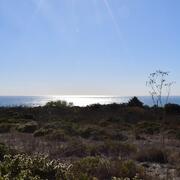
Where land meets sea: USGS science for resilient coastal habitats
USGS coastal science plays a critical role in supporting the effective, science-based management of coastal ecosystems, where the biodiversity of land and sea meet. It provides managers with the information they need to make sound decisions. Through cutting-edge research, predictive modeling, and decision-support tools, USGS empowers resource managers to make informed, science-based choices. From...
By
Core Science Systems Mission Area, Ecosystems Mission Area, Water Resources Mission Area, Cooperative Research Units, Ecosystems Land Change Science Program, Land Management Research Program, Science and Decisions Center, Species Management Research Program, California Water Science Center, Eastern Ecological Science Center, Forest and Rangeland Ecosystem Science Center, Lower Mississippi-Gulf Water Science Center, Pacific Coastal and Marine Science Center, Western Ecological Research Center (WERC), Western Fisheries Research Center, Western Geographic Science Center, Wetland and Aquatic Research Center

Seafloor Benthic Mapping and Characterization: Enhancing our Understanding of Aleutian Islands’ Hazards, Potential Seabed Minerals and Deep Corals
A USGS-led expedition in the Aleutian Arc off Alaska will provide critical information on energy resources, underwater earthquakes and other hazards, seafloor habitats, and biological resources, including key fisheries, as well as potential seabed minerals.
By
Ecosystems Mission Area, Natural Hazards Mission Area, Coastal and Marine Hazards and Resources Program, Land Management Research Program, Species Management Research Program, Eastern Ecological Science Center, Pacific Coastal and Marine Science Center, St. Petersburg Coastal and Marine Science Center, Wetland and Aquatic Research Center , Woods Hole Coastal and Marine Science Center, Hawaiian Volcano Observatory, Deep Sea Exploration, Mapping and Characterization

Coastal Wetland Vulnerability to Climate Change and Sea-Level Rise: Understanding Ecological Thresholds and Ecosystem Transformations
Eighteen USGS coastal scientists from all four coasts of the conterminous United States are working together to advance the understanding of climate change and sea-level rise impacts to coastal wetlands.
By
California Water Science Center, Chesapeake Bay Activities, Eastern Ecological Science Center, Florence Bascom Geoscience Center, Great Lakes Science Center, Pacific Coastal and Marine Science Center, St. Petersburg Coastal and Marine Science Center, Western Ecological Research Center (WERC), Western Geographic Science Center, Wetland and Aquatic Research Center , Woods Hole Coastal and Marine Science Center