Glaucous-winged Gulls fight over a Pacific Herring
Glaucous-winged Gulls fight over a Pacific HerringGlaucous-winged Gulls fight over a Pacific Herring near Gull Island in Kachemak Bay, Alaska.


Official websites use .gov
A .gov website belongs to an official government organization in the United States.

Secure .gov websites use HTTPS
A lock () or https:// means you’ve safely connected to the .gov website. Share sensitive information only on official, secure websites.

Available here are tracking data of large-bodied gull species and hybrids (Larus species). These data were collected to better understand the migratory movements of these birds and their role in the dispersal of antibiotic resistant bacteria among areas of Alaska and other regions.
Return to Ecosystems >> Wildlife Tracking Data Collection
USGS Alaska Science Center scientists collect data from wildlife tracking devices to: determine locations of animals throughout their annual cycles, understand patterns of habitat use, quantify time spent on various behaviors, and identify geographic areas repeatedly used by wildlife that may indicate sites of importance to species and populations. Tracking data from other wildlife species can be found at: https://doi.org/10.5066/P9VYSWEH
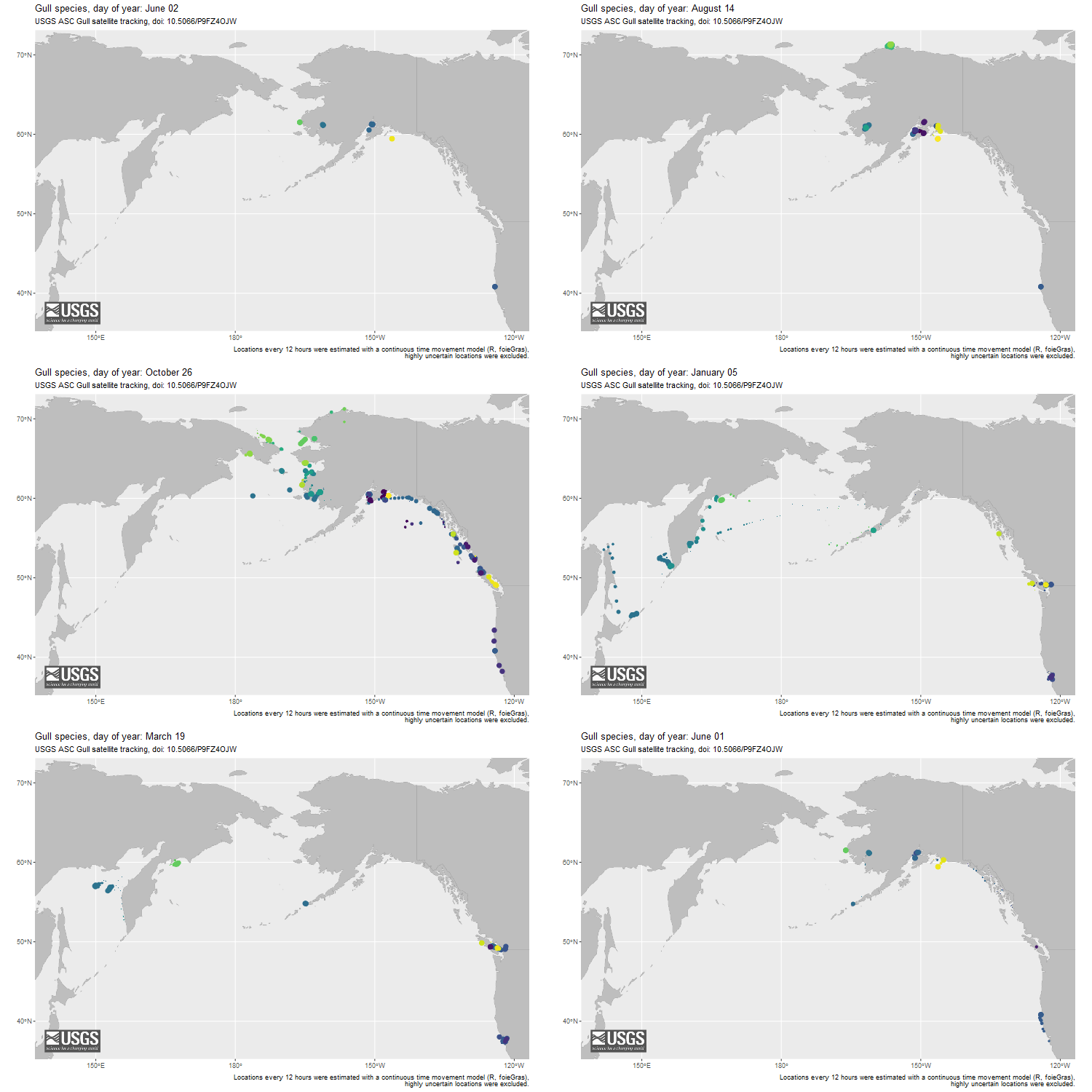
Gull Species and Hybrids Tracking Maps
These webpages contain five different types of browse maps and other visualizations of the tracking data.
Argos GPS Satellite Telemetry Data
These data packages contain the data collected from GPS satellite transmitters attached to free-ranging animals. The packages include both raw and processed location and sensor data. The raw data includes data as originally retrieved from the Argos System. The processed data include location data estimated by GPS and the Argos System (Doppler). They have been filtered for location plausibility, and sensor data have been decoded into standard measurement units. For most users, the processed data will be preferred.
NOTE: Processed data contains both plausible (DAF_Filter=0 or Speed_Filter=0) and implausible (DAF_Filter=1 or Speed_Filter=1) locations as indicated by the column “Location_DAF_filter” or “Location_Speed_Filter”. Before using these data, we recommend excluding locations flagged as implausible or apply an alternative filtering method of your choice.
Ramey, A.M., Hatch, S.A., Ahlstrom, C.A., van Toor, M.L., Woksepp, H., Chandler, J.C., Reed, J.A., Reeves, A.B., Waldenström, J., Franklin, A.B., Bonnedahl, J., Gill, V.A., Mulcahy, D.M., and Douglas, D.C. 2020, Tracking data for three large-bodied gull species and hybrids (Larus spp.) (ver 2.0, March 2021): U.S. Geological Survey data release, https://doi.org/10.5066/P9FZ4OJW
Version History:
First release: June 2020
Revised: March 2021 (ver. 2.0)
Below are other science products associated with Large-bodied Gulls.

Below are multimedia items associated with Large-bodied Gulls.

Glaucous-winged Gulls fight over a Pacific Herring near Gull Island in Kachemak Bay, Alaska.
Glaucous-winged Gulls fight over a Pacific Herring near Gull Island in Kachemak Bay, Alaska.

Glaucous-winged gull with externally attached GPS satellite transmitter, Soldotna, Alaska
Glaucous-winged gull with externally attached GPS satellite transmitter, Soldotna, Alaska

A Glaucous-winged Gull on the rock floor of the Bogoslof Volcano a year after it explosively erupted.
A Glaucous-winged Gull on the rock floor of the Bogoslof Volcano a year after it explosively erupted.

Photo of Herring and Glaucous gulls at the Bethel Landfill, Alaska.
Photo of Herring and Glaucous gulls at the Bethel Landfill, Alaska.

Glaucous-winged gull in water in Kenai River, Kenai, Alaska
Glaucous-winged gull in water in Kenai River, Kenai, Alaska

Glaucous-winged Gull flying near the Aleutian Islands, Alaska
Glaucous-winged Gull flying near the Aleutian Islands, Alaska
Available here are tracking data of large-bodied gull species and hybrids (Larus species). These data were collected to better understand the migratory movements of these birds and their role in the dispersal of antibiotic resistant bacteria among areas of Alaska and other regions.
Return to Ecosystems >> Wildlife Tracking Data Collection
USGS Alaska Science Center scientists collect data from wildlife tracking devices to: determine locations of animals throughout their annual cycles, understand patterns of habitat use, quantify time spent on various behaviors, and identify geographic areas repeatedly used by wildlife that may indicate sites of importance to species and populations. Tracking data from other wildlife species can be found at: https://doi.org/10.5066/P9VYSWEH
Gull Species and Hybrids Tracking Maps
These webpages contain five different types of browse maps and other visualizations of the tracking data.
Argos GPS Satellite Telemetry Data
These data packages contain the data collected from GPS satellite transmitters attached to free-ranging animals. The packages include both raw and processed location and sensor data. The raw data includes data as originally retrieved from the Argos System. The processed data include location data estimated by GPS and the Argos System (Doppler). They have been filtered for location plausibility, and sensor data have been decoded into standard measurement units. For most users, the processed data will be preferred.
NOTE: Processed data contains both plausible (DAF_Filter=0 or Speed_Filter=0) and implausible (DAF_Filter=1 or Speed_Filter=1) locations as indicated by the column “Location_DAF_filter” or “Location_Speed_Filter”. Before using these data, we recommend excluding locations flagged as implausible or apply an alternative filtering method of your choice.
Ramey, A.M., Hatch, S.A., Ahlstrom, C.A., van Toor, M.L., Woksepp, H., Chandler, J.C., Reed, J.A., Reeves, A.B., Waldenström, J., Franklin, A.B., Bonnedahl, J., Gill, V.A., Mulcahy, D.M., and Douglas, D.C. 2020, Tracking data for three large-bodied gull species and hybrids (Larus spp.) (ver 2.0, March 2021): U.S. Geological Survey data release, https://doi.org/10.5066/P9FZ4OJW
Version History:
First release: June 2020
Revised: March 2021 (ver. 2.0)
Below are other science products associated with Large-bodied Gulls.
Below are multimedia items associated with Large-bodied Gulls.
Glaucous-winged Gulls fight over a Pacific Herring near Gull Island in Kachemak Bay, Alaska.
Glaucous-winged Gulls fight over a Pacific Herring near Gull Island in Kachemak Bay, Alaska.
Glaucous-winged gull with externally attached GPS satellite transmitter, Soldotna, Alaska
Glaucous-winged gull with externally attached GPS satellite transmitter, Soldotna, Alaska
A Glaucous-winged Gull on the rock floor of the Bogoslof Volcano a year after it explosively erupted.
A Glaucous-winged Gull on the rock floor of the Bogoslof Volcano a year after it explosively erupted.
Photo of Herring and Glaucous gulls at the Bethel Landfill, Alaska.
Photo of Herring and Glaucous gulls at the Bethel Landfill, Alaska.
Glaucous-winged gull in water in Kenai River, Kenai, Alaska
Glaucous-winged gull in water in Kenai River, Kenai, Alaska
Glaucous-winged Gull flying near the Aleutian Islands, Alaska
Glaucous-winged Gull flying near the Aleutian Islands, Alaska