



Welcome Message from the Center Director
“Science for a Stronger America: Objective, Actionable, Trusted.”
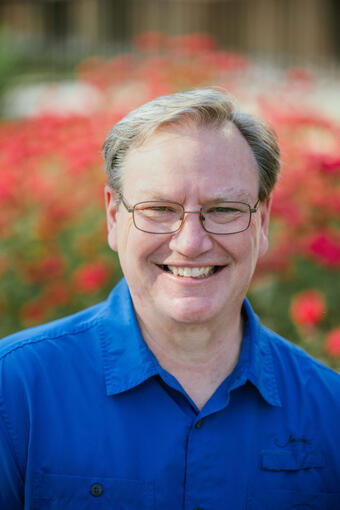
Welcome to the USGS Eastern Ecological Science Center!
The Eastern Ecological Science Center (EESC) is rooted in a proud tradition of service to the nation—advancing science that informs the conservation and management of fish, wildlife, and habitats across the eastern United States and beyond. Our mission is clear: deliver reliable, partner-driven science that supports natural resource decisions today, while ensuring these resources remain available for generations to come.
Our work is built on a legacy that spans nearly a century:
- The Patuxent Research Refuge in Maryland was established by President Franklin D. Roosevelt through Executive Order in 1936 as the nation’s only National Wildlife Refuge with a primary mission of supporting wildlife research. EESC at the Patuxent Research Refuge remains a vital hub for long-term ecological science and monitoring.
- The Leetown Science Center in West Virginia, established in 1931, holds the distinction of being the first federal research laboratory dedicated to fish and aquatic ecosystem science. EESC at the Leetown Research Laboratory continues to lead in fish biology, ecology and health, and species conservation.
The S.O. Conte Anadromous Fish Research Laboratory was founded in 1989 on the banks of the Connecticut River in Massachusetts. EESC at the S.O. Conte Research Laboratory is home to a one-of-a-kind fish passage design and testing facility, supporting efforts to restore native migratory fish to their historic habitats.
Across these three campuses—with nearly 140 scientists, technicians, and professionals—EESC conducts research spanning aquatic and terrestrial systems. Our expertise includes wildlife health and disease, invasive species, contaminants, species ecology, habitat and stream health, wetland science, geospatial modeling, remote sensing, species conservation, population monitoring, and structured decision-making.
We are home to several nationally and internationally recognized programs, including:
- The USGS Bird Banding Laboratory, central to bird conservation efforts across the Western Hemisphere.
- The North American Breeding Bird Survey, which has informed wildlife managers for over nearly 60 years.
- The Quantitative Ecology Team, widely recognized as a global trailblazer in wildlife conservation science. For more than half a century, this team has led the advancement of quantitative methods to inform conservation and natural resource decision-making.
- The Fish Health and Wildlife Ecotoxicology Team, whose science helped lay the foundation for our nation’s environmental movement. This team’s historic research contributed to Rachel Carson’s Silent Spring and continues to provide essential insight into the health of fish and wildlife exposed to environmental contaminants.
The Fish Passage, Physiology, and Behavior Team, an interdisciplinary group of fish biologists, physiologists, and hydrologic and civil engineers. World-renowned for developing innovative technologies, this team works at the intersection of biology and engineering to improve aquatic connectivity and restore access to vital fish habitats.
We are committed to partner-driven science—delivered in close collaboration with federal, state, Tribal, and local partners. Our work supports decisions that sustain both wildlife populations and the recreational opportunities that define America’s outdoor heritage—hunting, fishing, birding, hiking, and more. These activities contribute to a vibrant $1 trillion outdoor recreation economy that supports jobs, communities, and traditions across the country.
As Center Director, I am honored to lead a team of professionals who take great pride in their work, uphold the highest standards of scientific integrity, and contribute meaningfully to the mission of the Department of the Interior and the U.S. Geological Survey.
Thank you for visiting the Eastern Ecological Science Center. We invite you to learn more about our science and our story.
Tom O’Connell, Center Director
U.S. Geological Survey
Eastern Ecological Science Center