



Studies of contaminant biogeochemistry and microbial processes in surface sediments.
Ecosystem restoration research.
Studies of contaminant biogeochemistry and microbial processes in surface waters.
Laboratory approaches for quantifying microbial process rates and analyte concentrations.
Studies of contaminant biogeochemistry and microbial processes in wetland environments.
About the Research
The Microbial Biogeochemistry Laboratory Core Technology Team (CTT) as part of the Environmental Health Program focuses on environmental questions in aquatic systems (sediment and water) involving the linkages between major biogeochemical cycles (those involving carbon, sulfur, iron and nitrogen) and those associated with contaminants of concern.
The research interests and analytical capabilities of the Microbial Biogeochemistry Laboratory CTT bridge the intersection of fundamental microbial biogeochemistry and ecosystem contaminants science.

The mobility, transport, and chemical transformation of many contaminants in aquatic systems are ultimately mediated by microbial process, which are in turn mediated and defined by the availability of specific electron donors (such as various forms of organic carbon) and electron acceptors (such as oxygen, iron, manganese, nitrogen and sulfur).
The Microbial Biogeochemistry Laboratory has a long history of focusing on the intersection of microbial biogeochemistry and contaminants in mercury specific studies, in a wide range of aquatic systems (streams/rivers, wetlands, reservoirs, tidal estuaries and hypersaline salt ponds). In recent years their analytical capabilities have expanded to a much wider range of elements of concern (including Al, As, Cd, Cr, Cu, Fe, Mn, Pb, Se, U, and Zn) and energy production associated waste streams (oil and gas production wastewater, and coal mining regions).
Key Analytical Capabilities include:
- Measurement of microbial reaction rates using isotopic tracer methods
- Mercury speciation in a range of matrices
- Nutrients, anions/cations and trace elements
- Chemical speciation and quantification of major biogeochemical cycle constituents associated with carbon, sulfur, iron, and nitrogen

Key Instrumentation:
- Quadrupole Inductively coupled plasma mass spectrometer (ICP-MS)
- Ion, liquid and gas chromatography
- Total mercury analyzer
- Methylmercury analyzer
- Nutrient analyzer
- Chlorophyll analyzer
- Field fluorometry and other in-situ sensor technology
- Total carbon analyzer (with 13C isotopes)
Science Team Collaborators
-
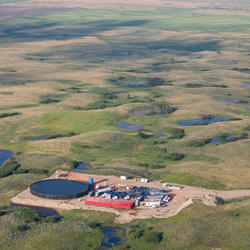
Energy Resources Life Cycle Integrated Science Team
The Energy Resources Life Cycle Integrated Science Team focuses on the potential for environmental contaminant exposures that might originate from energy resource activities including extraction, production, transportation, storage, waste management, and restoration. Perceived health risks to humans and other organisms will be distinguished from actual risks, if any. If actual risks are identified...
Ecologically-Driven Exposure Pathways Science Team
The Ecologically-Driven Exposure Pathways Integrated Science Team identifies how ecological pathways and physiological processes within a single organism can alter exposure and toxicity of contaminants and pathogens and seek to understand outcomes at different scales from individuals to populations and ecosystems.
Proxies Project
The Proxies Project is a series of studies to improve our understanding of water contaminants and water quality hazards. These studies develop models and technical approaches for estimating concentrations and assessing risk associated with: - harmful algal blooms (HABs) - per- and polyfluoroalkyl substances (PFAS) - 12 elements of concern (EoC)
About the Research
The Microbial Biogeochemistry Laboratory Core Technology Team (CTT) as part of the Environmental Health Program focuses on environmental questions in aquatic systems (sediment and water) involving the linkages between major biogeochemical cycles (those involving carbon, sulfur, iron and nitrogen) and those associated with contaminants of concern.
The research interests and analytical capabilities of the Microbial Biogeochemistry Laboratory CTT bridge the intersection of fundamental microbial biogeochemistry and ecosystem contaminants science.
The mobility, transport, and chemical transformation of many contaminants in aquatic systems are ultimately mediated by microbial process, which are in turn mediated and defined by the availability of specific electron donors (such as various forms of organic carbon) and electron acceptors (such as oxygen, iron, manganese, nitrogen and sulfur).
The Microbial Biogeochemistry Laboratory has a long history of focusing on the intersection of microbial biogeochemistry and contaminants in mercury specific studies, in a wide range of aquatic systems (streams/rivers, wetlands, reservoirs, tidal estuaries and hypersaline salt ponds). In recent years their analytical capabilities have expanded to a much wider range of elements of concern (including Al, As, Cd, Cr, Cu, Fe, Mn, Pb, Se, U, and Zn) and energy production associated waste streams (oil and gas production wastewater, and coal mining regions).
Key Analytical Capabilities include:
- Measurement of microbial reaction rates using isotopic tracer methods
- Mercury speciation in a range of matrices
- Nutrients, anions/cations and trace elements
- Chemical speciation and quantification of major biogeochemical cycle constituents associated with carbon, sulfur, iron, and nitrogen
Key Instrumentation:
- Quadrupole Inductively coupled plasma mass spectrometer (ICP-MS)
- Ion, liquid and gas chromatography
- Total mercury analyzer
- Methylmercury analyzer
- Nutrient analyzer
- Chlorophyll analyzer
- Field fluorometry and other in-situ sensor technology
- Total carbon analyzer (with 13C isotopes)
Science Team Collaborators
-
-
Energy Resources Life Cycle Integrated Science Team
The Energy Resources Life Cycle Integrated Science Team focuses on the potential for environmental contaminant exposures that might originate from energy resource activities including extraction, production, transportation, storage, waste management, and restoration. Perceived health risks to humans and other organisms will be distinguished from actual risks, if any. If actual risks are identified... -
Ecologically-Driven Exposure Pathways Science Team
The Ecologically-Driven Exposure Pathways Integrated Science Team identifies how ecological pathways and physiological processes within a single organism can alter exposure and toxicity of contaminants and pathogens and seek to understand outcomes at different scales from individuals to populations and ecosystems. -
Proxies Project
The Proxies Project is a series of studies to improve our understanding of water contaminants and water quality hazards. These studies develop models and technical approaches for estimating concentrations and assessing risk associated with: - harmful algal blooms (HABs) - per- and polyfluoroalkyl substances (PFAS) - 12 elements of concern (EoC)