



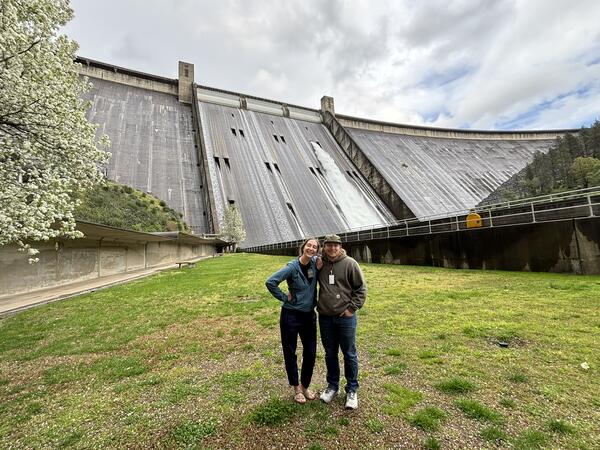
This is Shasta Dam in California. Mitchell Morse and Caitlin Stockwell drove down to Redding, CA to wrap up the Shasta Reservoir fish telemetry project. They worked with California Department of Fish and Wildlife partners to remove 16 submersible acoustic telemetry receivers within the reservoir, and 5 receivers installed on Shasta Dam.
Images
Below is a list of available CRRL images.
Filter Total Items: 59
Shasta Dam
This is Shasta Dam in California. Mitchell Morse and Caitlin Stockwell drove down to Redding, CA to wrap up the Shasta Reservoir fish telemetry project. They worked with California Department of Fish and Wildlife partners to remove 16 submersible acoustic telemetry receivers within the reservoir, and 5 receivers installed on Shasta Dam.

Shasta Reservoir McCloud Arm
A photo of the McCloud arm looking upstream from one of the telemetry deployment sites.
A photo of the McCloud arm looking upstream from one of the telemetry deployment sites.
Boat on Shasta Reservoir
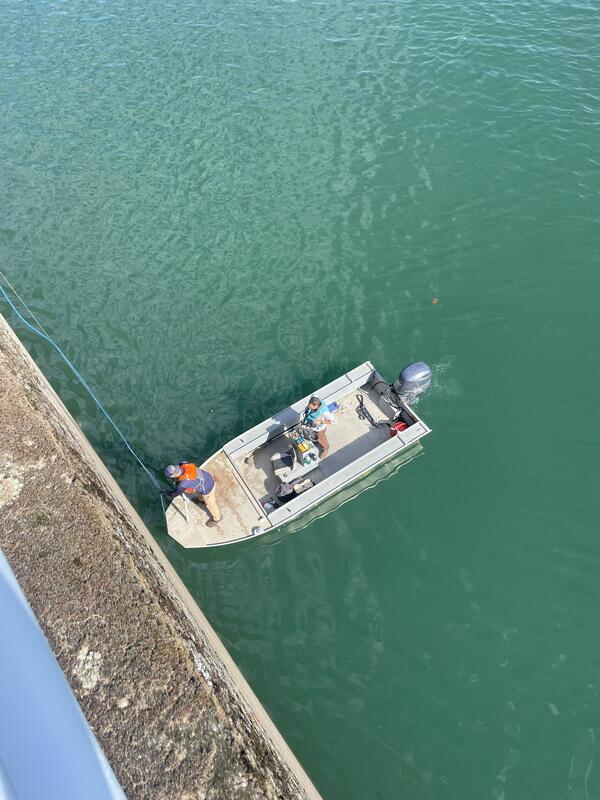
California Department of Fish & Wildlife boat on Shasta Reservoir partnering with USGS Western Fisheries Research Center to conduct telemetry studies.
California Department of Fish & Wildlife boat on Shasta Reservoir partnering with USGS Western Fisheries Research Center to conduct telemetry studies.

Telemetry Receivers on Shasta Reservoir, CA
Mitchell Morse and Caitlin Stockwell drove down to Redding, CA to wrap up the Shasta Reservoir fish telemetry project. They worked with California Department of Fish and Wildlife partners to remove 16 submersible acoustic telemetry receivers within the reservoir, and 5 receivers installed on Shasta Dam.
Mitchell Morse and Caitlin Stockwell drove down to Redding, CA to wrap up the Shasta Reservoir fish telemetry project. They worked with California Department of Fish and Wildlife partners to remove 16 submersible acoustic telemetry receivers within the reservoir, and 5 receivers installed on Shasta Dam.

Randi M. Bowman
This is Randi M. Bowman, a fish biologist with the Western Fisheries Research Center
This is Randi M. Bowman, a fish biologist with the Western Fisheries Research Center

Scientists Digging For Lamprey
Check out these photos from the field! Lisa K Weiland (sitting) and Leah Tai from the U.S. Fish and Wildlife Service are shown above. This project is working to learn how larval lampreys use soft substrates for burrowing.
Check out these photos from the field! Lisa K Weiland (sitting) and Leah Tai from the U.S. Fish and Wildlife Service are shown above. This project is working to learn how larval lampreys use soft substrates for burrowing.
Georgiana Slough Bio-Acoustic Fish Fence (BAFF) Barrier
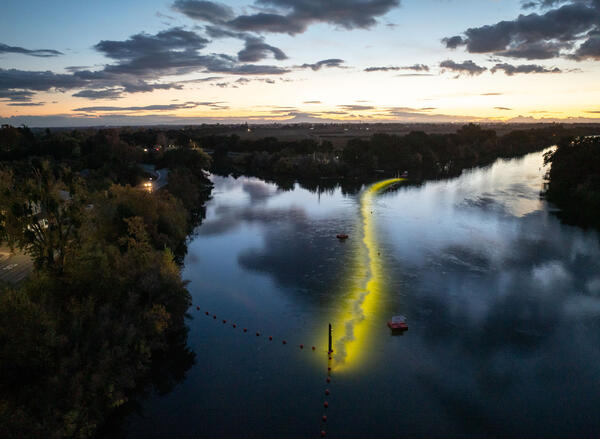
Georgiana Slough Bio-Acoustic Fish Fence (BAFF) BarrierThis is a drone photo of the bio-acoustic fish fence in the Georgiana Slough, a tributary of the Sacramento River Delta. It is used to guide fish safely out to the ocean.
Georgiana Slough Bio-Acoustic Fish Fence (BAFF) Barrier
Georgiana Slough Bio-Acoustic Fish Fence (BAFF) BarrierThis is a drone photo of the bio-acoustic fish fence in the Georgiana Slough, a tributary of the Sacramento River Delta. It is used to guide fish safely out to the ocean.

Fish Passage Tour - North Shore Collector in the forebay of Cowlitz Falls Dam
Fish Passage Tour - North Shore Collector in the forebay of Cowlitz Falls DamToby Kock (right, in plaid shirt) listens to a question during the Fish Passage Tour while standing on the North Shore Collector in the forebay of Cowlitz Falls Dam. The group discussed various ways that migrating juvenile salmon approach and pass the dam.
Fish Passage Tour - North Shore Collector in the forebay of Cowlitz Falls Dam
Fish Passage Tour - North Shore Collector in the forebay of Cowlitz Falls DamToby Kock (right, in plaid shirt) listens to a question during the Fish Passage Tour while standing on the North Shore Collector in the forebay of Cowlitz Falls Dam. The group discussed various ways that migrating juvenile salmon approach and pass the dam.

Fish Passage Tour Group Photo
Group photo of USGS staff and partners who participated in the Fish Passage Tour sponsored by the USGS Western Fisheries Research Center. Partners: NOAA Fisheries, the California Department of Fish and Wildlife, the California Department of Water Resources, the U.S. Forest Service, the U.S.
Group photo of USGS staff and partners who participated in the Fish Passage Tour sponsored by the USGS Western Fisheries Research Center. Partners: NOAA Fisheries, the California Department of Fish and Wildlife, the California Department of Water Resources, the U.S. Forest Service, the U.S.

North Shore Collector separator at Cowlitz Falls Dam, WA
North Shore Collector separator at Cowlitz Falls Dam, WAParticipants of the Fish Passage Tour view the North Shore Collector separator at Cowlitz Falls Dam, WA. Fish are collected here to allow staff to count, determine species, and sample fish as they migrate downstream.
North Shore Collector separator at Cowlitz Falls Dam, WA
North Shore Collector separator at Cowlitz Falls Dam, WAParticipants of the Fish Passage Tour view the North Shore Collector separator at Cowlitz Falls Dam, WA. Fish are collected here to allow staff to count, determine species, and sample fish as they migrate downstream.

View of the forebay of the North Fork Dam of the Clackamas River Dam Complex, OR
View of the forebay of the North Fork Dam of the Clackamas River Dam Complex, ORView of the forebay of the North Fork Dam of the Clackamas River Dam Complex, OR. An orange buoy system is seen on the right side of the image showing an exclusion net to prevent fish from getting behind the collector.
View of the forebay of the North Fork Dam of the Clackamas River Dam Complex, OR
View of the forebay of the North Fork Dam of the Clackamas River Dam Complex, ORView of the forebay of the North Fork Dam of the Clackamas River Dam Complex, OR. An orange buoy system is seen on the right side of the image showing an exclusion net to prevent fish from getting behind the collector.

Waiting for multi-tribal ceremonial release of adult Chinook to the Spokane River during 2022 National American Fisheries Society Meeting
Waiting for multi-tribal ceremonial release of adult Chinook to the Spokane River during 2022 National American Fisheries Society MeetingMulti-tribal ceremonial release of adult Chinook to the Spokane River during 2022 National American Fisheries Society Meeting. Here, people line up to participate in ceremonial multi-tribal fish release in the Spokane River.
Waiting for multi-tribal ceremonial release of adult Chinook to the Spokane River during 2022 National American Fisheries Society Meeting
Waiting for multi-tribal ceremonial release of adult Chinook to the Spokane River during 2022 National American Fisheries Society MeetingMulti-tribal ceremonial release of adult Chinook to the Spokane River during 2022 National American Fisheries Society Meeting. Here, people line up to participate in ceremonial multi-tribal fish release in the Spokane River.

USGS fish biologist, Ian Jezorek, hands off adult Chinook salmon during ceremonial tribal fish release during 2022 National AFS Meeting
USGS fish biologist, Ian Jezorek, hands off adult Chinook salmon during ceremonial tribal fish release during 2022 National AFS MeetingMulti-tribal ceremonial release of adult Chinook to the Spokane River during 2022 National American Fisheries Society Meeting. Here, fish biologist Ian Jezorek participates in ceremonial multi-tribal fish release in the Spokane River.
USGS fish biologist, Ian Jezorek, hands off adult Chinook salmon during ceremonial tribal fish release during 2022 National AFS Meeting
USGS fish biologist, Ian Jezorek, hands off adult Chinook salmon during ceremonial tribal fish release during 2022 National AFS MeetingMulti-tribal ceremonial release of adult Chinook to the Spokane River during 2022 National American Fisheries Society Meeting. Here, fish biologist Ian Jezorek participates in ceremonial multi-tribal fish release in the Spokane River.

Overhead view of the Spokane River, where adult Chinook salmon were released during a multi-tribal ceremonial fish release
Overhead view of the Spokane River, where adult Chinook salmon were released during a multi-tribal ceremonial fish releaseOverhead view of the Spokane River, where adult Chinook salmon were released during a multi-tribal ceremonial fish release. During 2022 National American Fisheries Society, many scientists and citizens took part in a ceremonial fish release. Adult Chinook salmon are currently blocked by dams and unable travel upstream to their historic range.
Overhead view of the Spokane River, where adult Chinook salmon were released during a multi-tribal ceremonial fish release
Overhead view of the Spokane River, where adult Chinook salmon were released during a multi-tribal ceremonial fish releaseOverhead view of the Spokane River, where adult Chinook salmon were released during a multi-tribal ceremonial fish release. During 2022 National American Fisheries Society, many scientists and citizens took part in a ceremonial fish release. Adult Chinook salmon are currently blocked by dams and unable travel upstream to their historic range.

Fish biologist, Jill Hardiman, releases adult Chinook salmon into Spokane River
Fish biologist, Jill Hardiman, releases adult Chinook salmon into Spokane RiverMulti-tribal ceremonial release of adult Chinook to the Spokane River during 2022 National American Fisheries Society meeting. Here, fish biologist, Jill Hardiman, participates in the event by releasing an adult Chinook salmon into the Spokane River.
Fish biologist, Jill Hardiman, releases adult Chinook salmon into Spokane River
Fish biologist, Jill Hardiman, releases adult Chinook salmon into Spokane RiverMulti-tribal ceremonial release of adult Chinook to the Spokane River during 2022 National American Fisheries Society meeting. Here, fish biologist, Jill Hardiman, participates in the event by releasing an adult Chinook salmon into the Spokane River.

Scientist measuring a Fall Chinook salmon captured in the Snake River
Scientist measuring a Fall Chinook salmon captured in the Snake RiverUSGS scientist Dalton Lebeda is measuring a Fall Chinook salmon captured in the Snake River. This study is being conducted to determine the percentages of natural and hatchery origin spawners in the upper reach of Hells Canyon.
Scientist measuring a Fall Chinook salmon captured in the Snake River
Scientist measuring a Fall Chinook salmon captured in the Snake RiverUSGS scientist Dalton Lebeda is measuring a Fall Chinook salmon captured in the Snake River. This study is being conducted to determine the percentages of natural and hatchery origin spawners in the upper reach of Hells Canyon.

Scenic picture taken with a sUAS (drone) of Hells Canyon, Fall 2023
Scenic picture taken with a sUAS (drone) of Hells Canyon, Fall 2023Scenic picture taken with a sUAS (drone) of Hells Canyon, Fall 2023. In the bottom of the picture, you can see one of our USGS work boats pulled onto shore. USGS scientists are conducting redd surveys for spawning Fall Chinook salmon.
Scenic picture taken with a sUAS (drone) of Hells Canyon, Fall 2023
Scenic picture taken with a sUAS (drone) of Hells Canyon, Fall 2023Scenic picture taken with a sUAS (drone) of Hells Canyon, Fall 2023. In the bottom of the picture, you can see one of our USGS work boats pulled onto shore. USGS scientists are conducting redd surveys for spawning Fall Chinook salmon.

Scientists collect and tag adult green sturgeon on the Sacramento River (Image 2)
Scientists collect and tag adult green sturgeon on the Sacramento River (Image 2)USGS scientist helped the U.S. Army Corps of Engineers and FISHBIO to collect and tag adult green sturgeon on the Sacramento River. The purpose of the project is to monitor fish movements and behavior in relation to flood control projects in the Sacramento River.
Scientists collect and tag adult green sturgeon on the Sacramento River (Image 2)
Scientists collect and tag adult green sturgeon on the Sacramento River (Image 2)USGS scientist helped the U.S. Army Corps of Engineers and FISHBIO to collect and tag adult green sturgeon on the Sacramento River. The purpose of the project is to monitor fish movements and behavior in relation to flood control projects in the Sacramento River.

Scientists collect and tag adult green sturgeon on the Sacramento River (Image 1)
Scientists collect and tag adult green sturgeon on the Sacramento River (Image 1)USGS scientist helped the U.S. Army Corps of Engineers and FISHBIO to collect and tag adult green sturgeon on the Sacramento River. The purpose of the project is to monitor fish movements and behavior in relation to flood control projects in the Sacramento River.
Scientists collect and tag adult green sturgeon on the Sacramento River (Image 1)
Scientists collect and tag adult green sturgeon on the Sacramento River (Image 1)USGS scientist helped the U.S. Army Corps of Engineers and FISHBIO to collect and tag adult green sturgeon on the Sacramento River. The purpose of the project is to monitor fish movements and behavior in relation to flood control projects in the Sacramento River.
USGS scientist Ryan Tomka shown surgically tagging invasive silver carp in Kentucky
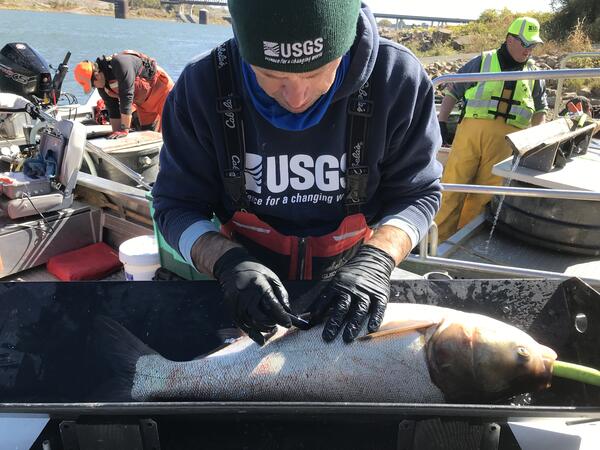
USGS scientist Ryan Tomka shown surgically tagging invasive silver carp in KentuckyUSGS, Western Fisheries Research Center scientist tagging an invasive silver carp with an acoustic transmitter to evaluate the effectiveness of a BioAcoustic Fish Fence (BAFF) to deter upstream migration of invasive carp at Barkley Lock and Dam, Kentucky in October 2022.
USGS scientist Ryan Tomka shown surgically tagging invasive silver carp in Kentucky
USGS scientist Ryan Tomka shown surgically tagging invasive silver carp in KentuckyUSGS, Western Fisheries Research Center scientist tagging an invasive silver carp with an acoustic transmitter to evaluate the effectiveness of a BioAcoustic Fish Fence (BAFF) to deter upstream migration of invasive carp at Barkley Lock and Dam, Kentucky in October 2022.

Sampling for European green crab environmental DNA (eDNA) in Pauls Slough in Willapa Bay, Washington
Sampling for European green crab environmental DNA (eDNA) in Pauls Slough in Willapa Bay, WashingtonSampling for European green crab environmental DNA (eDNA) in Pauls Slough in Willapa Bay, Washington, as part of a study that aims to increase the capacity for early detection monitoring and biosurveillance of invasive green crab.
Sampling for European green crab environmental DNA (eDNA) in Pauls Slough in Willapa Bay, Washington
Sampling for European green crab environmental DNA (eDNA) in Pauls Slough in Willapa Bay, WashingtonSampling for European green crab environmental DNA (eDNA) in Pauls Slough in Willapa Bay, Washington, as part of a study that aims to increase the capacity for early detection monitoring and biosurveillance of invasive green crab.