



Gas hydrate is sometimes called “the ice that burns” because the warming hydrates release enough methane to sustain a flame. Credit: USGS
What are gas hydrates?
Gas hydrates are a crystalline solid formed of water and gas. It looks and acts much like ice, but it contains huge amounts of methane; it is known to occur on every continent; and it exists in huge quantities in marine sediments in a layer several hundred meters thick directly below the sea floor and in association with permafrost in the Arctic. It is not stable at normal sea-level pressures and temperatures, which is the primary reason that it is a challenge to study.
Gas hydrates are important for three reasons:
- They may contain a major energy resource
- It may be a significant hazard because it alters sea floor sediment stability, influencing collapse and landsliding
- The hydrate reservoir may have strong influence on the environment and climate, because methane is a significant greenhouse gas.
Learn more:
Related

How are gas hydrates studied? How are gas hydrates studied?
Gas hydrates can be studied in the laboratory, where a machine is used to create the proper pressure and temperature conditions for hydrate formation, or it can be studied in situ using seismic data collected aboard ships and geophysical models. Learn more: USGS Gas Hydrates Lab

Where are gas hydrates found? Where are gas hydrates found?
Gas hydrates are found in sub-oceanic sediments in the polar regions (shallow water) and in continental slope sediments (deep water), where pressure and temperature conditions combine to make them stable.

Who studies gas hydrates? Who studies gas hydrates?
Currently, groups of scientists in the U.S., Canada, Norway, Great Britain, and Japan are working to try to understand gas hydrates and the role it plays in the global climate and the future of fuels. The USGS Gas Hydrates Project focuses on the study of natural gas hydrates in deepwater marine systems and permafrost areas. The primary goals are: Evaluate methane hydrates as a potential energy...
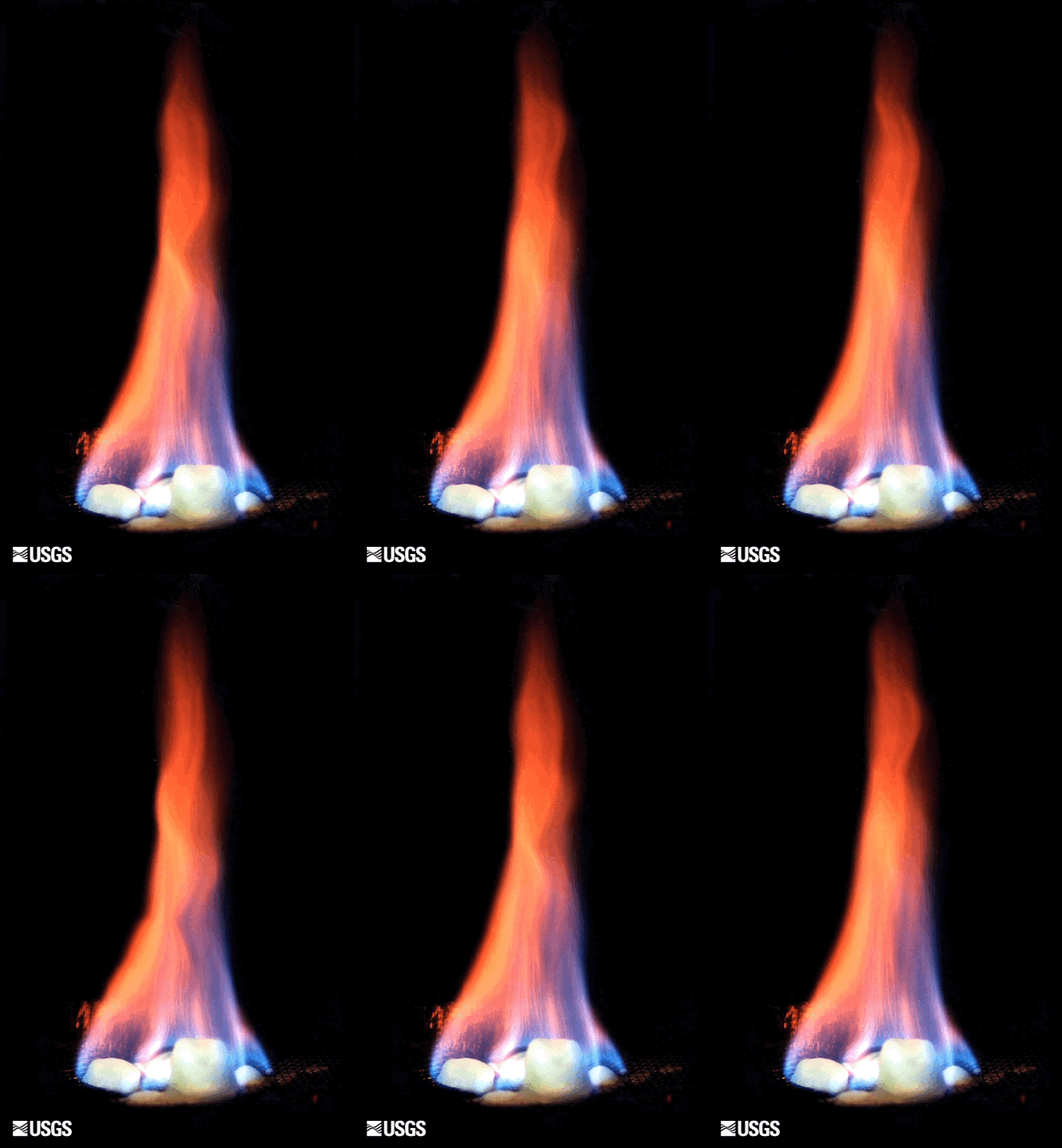
Burning Gas Hydrate
Gas hydrate is sometimes called “the ice that burns” because the warming hydrates release enough methane to sustain a flame. Credit: USGS

Gas Hydrates and Gas Bubbles
Gas hydrate (orange material) and gas bubbles near the seafloor in the northern Gulf of America. As the methane bubbles are emitted, a rind of gas hydrate immediately forms around some of them. If more bubbles continue to feed from below, gas hydrate forms.
Gas hydrate (orange material) and gas bubbles near the seafloor in the northern Gulf of America. As the methane bubbles are emitted, a rind of gas hydrate immediately forms around some of them. If more bubbles continue to feed from below, gas hydrate forms.
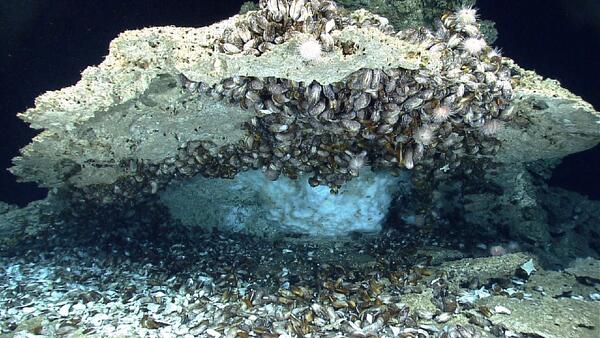
Ice-like gas hydrates under capping rock encrusted with mussels
Ice-like gas hydrates under capping rock encrusted with musselsIce-like gas hydrates under capping rock encrusted with mussels on the sea floor of the northern Gulf of America.
Ice-like gas hydrates under capping rock encrusted with mussels
Ice-like gas hydrates under capping rock encrusted with musselsIce-like gas hydrates under capping rock encrusted with mussels on the sea floor of the northern Gulf of America.

Sediment Sampling for Gas Hydrate
USGS scientists collect sediment samples in a gas hydrates area during a cruise on the U.S. Atlantic margin in 2015.
USGS scientists collect sediment samples in a gas hydrates area during a cruise on the U.S. Atlantic margin in 2015.

Gas Hydrate Crystals
Scanning electron microscope image of gas hydrate crystals in a sediment sample. The scale is 50 micrometers (µm) or approximately 0.002 inches
Scanning electron microscope image of gas hydrate crystals in a sediment sample. The scale is 50 micrometers (µm) or approximately 0.002 inches

Gas hydrate at the seafloor on the U.S. Atlantic margin.
Gas hydrate at the seafloor on the U.S. Atlantic margin.Gas hydrate at the seafloor on the U.S. Atlantic margin. The icy deposit formed as gas bubbles emitted from the seafloor transformed into methane hydrate beneath the overhanging rock.
Gas hydrate at the seafloor on the U.S. Atlantic margin.
Gas hydrate at the seafloor on the U.S. Atlantic margin.Gas hydrate at the seafloor on the U.S. Atlantic margin. The icy deposit formed as gas bubbles emitted from the seafloor transformed into methane hydrate beneath the overhanging rock.

USGS Gas Hydrates Lab
Gas hydrates are a significant potential energy source occurring in ocean-floor sediments at water depths greater than 500 meters and beneath Arctic permafrost. The USGS operates a gas hydrates laboratory on its Menlo Park campus.
Gas hydrates are a significant potential energy source occurring in ocean-floor sediments at water depths greater than 500 meters and beneath Arctic permafrost. The USGS operates a gas hydrates laboratory on its Menlo Park campus.

Gas Hydrate Drill Rig at the Mt. Elbert Test Site in Alaska
Gas Hydrate Drill Rig at the Mt. Elbert Test Site in AlaskaA drill rig at the Mount Elbert test site in Alaska's North Slope, just west of Prudhoe Bay. USGS joined BP Exploration (Alaska) and the U.S. Department of Energy to drill a test well to study natural gas production from gas hydrate deposits. Read more about the Mt.
Gas Hydrate Drill Rig at the Mt. Elbert Test Site in Alaska
Gas Hydrate Drill Rig at the Mt. Elbert Test Site in AlaskaA drill rig at the Mount Elbert test site in Alaska's North Slope, just west of Prudhoe Bay. USGS joined BP Exploration (Alaska) and the U.S. Department of Energy to drill a test well to study natural gas production from gas hydrate deposits. Read more about the Mt.

Gas Hydrates in Marine Sediments
This image shows gas hydrates (the white material) in marine sediments from a test well drilled in the Indian Ocean in 2006 during the Indian National Gas Hydrate Program (NGHP) Expedition 01.
This image shows gas hydrates (the white material) in marine sediments from a test well drilled in the Indian Ocean in 2006 during the Indian National Gas Hydrate Program (NGHP) Expedition 01.

Gas Hydrates in Marine Sediments from the Indian Ocean
Gas Hydrates in Marine Sediments from the Indian OceanThis image shows gas hydrates (the white material) in marine sediments from a test well drilled in the Indian Ocean in 2006 during the Indian National Gas Hydrate Program (NGHP) Expedition 01.
Gas Hydrates in Marine Sediments from the Indian Ocean
Gas Hydrates in Marine Sediments from the Indian OceanThis image shows gas hydrates (the white material) in marine sediments from a test well drilled in the Indian Ocean in 2006 during the Indian National Gas Hydrate Program (NGHP) Expedition 01.

Gas Hydrates in Marine Sediments off the Oregon Coast
Gas Hydrates in Marine Sediments off the Oregon CoastDuring Ocean Drilling Program Leg 204, nine sites were cored and wireline logged on the Oregon continental margin to determine the distribution and concentration of gas hydrates in an accretionary ridge setting, investigate the mechanisms that transport methane and other gases into the gas hydrate stability zone, and obtain constraints on physical properties of
Gas Hydrates in Marine Sediments off the Oregon Coast
Gas Hydrates in Marine Sediments off the Oregon CoastDuring Ocean Drilling Program Leg 204, nine sites were cored and wireline logged on the Oregon continental margin to determine the distribution and concentration of gas hydrates in an accretionary ridge setting, investigate the mechanisms that transport methane and other gases into the gas hydrate stability zone, and obtain constraints on physical properties of
Related
How are gas hydrates studied? How are gas hydrates studied?
Gas hydrates can be studied in the laboratory, where a machine is used to create the proper pressure and temperature conditions for hydrate formation, or it can be studied in situ using seismic data collected aboard ships and geophysical models. Learn more: USGS Gas Hydrates Lab
Where are gas hydrates found? Where are gas hydrates found?
Gas hydrates are found in sub-oceanic sediments in the polar regions (shallow water) and in continental slope sediments (deep water), where pressure and temperature conditions combine to make them stable.
Who studies gas hydrates? Who studies gas hydrates?
Currently, groups of scientists in the U.S., Canada, Norway, Great Britain, and Japan are working to try to understand gas hydrates and the role it plays in the global climate and the future of fuels. The USGS Gas Hydrates Project focuses on the study of natural gas hydrates in deepwater marine systems and permafrost areas. The primary goals are: Evaluate methane hydrates as a potential energy...
Burning Gas Hydrate
Gas hydrate is sometimes called “the ice that burns” because the warming hydrates release enough methane to sustain a flame. Credit: USGS
Gas hydrate is sometimes called “the ice that burns” because the warming hydrates release enough methane to sustain a flame. Credit: USGS
Gas Hydrates and Gas Bubbles
Gas hydrate (orange material) and gas bubbles near the seafloor in the northern Gulf of America. As the methane bubbles are emitted, a rind of gas hydrate immediately forms around some of them. If more bubbles continue to feed from below, gas hydrate forms.
Gas hydrate (orange material) and gas bubbles near the seafloor in the northern Gulf of America. As the methane bubbles are emitted, a rind of gas hydrate immediately forms around some of them. If more bubbles continue to feed from below, gas hydrate forms.
Ice-like gas hydrates under capping rock encrusted with mussels
Ice-like gas hydrates under capping rock encrusted with musselsIce-like gas hydrates under capping rock encrusted with mussels on the sea floor of the northern Gulf of America.
Ice-like gas hydrates under capping rock encrusted with mussels
Ice-like gas hydrates under capping rock encrusted with musselsIce-like gas hydrates under capping rock encrusted with mussels on the sea floor of the northern Gulf of America.
Sediment Sampling for Gas Hydrate
USGS scientists collect sediment samples in a gas hydrates area during a cruise on the U.S. Atlantic margin in 2015.
USGS scientists collect sediment samples in a gas hydrates area during a cruise on the U.S. Atlantic margin in 2015.
Gas Hydrate Crystals
Scanning electron microscope image of gas hydrate crystals in a sediment sample. The scale is 50 micrometers (µm) or approximately 0.002 inches
Scanning electron microscope image of gas hydrate crystals in a sediment sample. The scale is 50 micrometers (µm) or approximately 0.002 inches
Gas hydrate at the seafloor on the U.S. Atlantic margin.
Gas hydrate at the seafloor on the U.S. Atlantic margin.Gas hydrate at the seafloor on the U.S. Atlantic margin. The icy deposit formed as gas bubbles emitted from the seafloor transformed into methane hydrate beneath the overhanging rock.
Gas hydrate at the seafloor on the U.S. Atlantic margin.
Gas hydrate at the seafloor on the U.S. Atlantic margin.Gas hydrate at the seafloor on the U.S. Atlantic margin. The icy deposit formed as gas bubbles emitted from the seafloor transformed into methane hydrate beneath the overhanging rock.
USGS Gas Hydrates Lab
Gas hydrates are a significant potential energy source occurring in ocean-floor sediments at water depths greater than 500 meters and beneath Arctic permafrost. The USGS operates a gas hydrates laboratory on its Menlo Park campus.
Gas hydrates are a significant potential energy source occurring in ocean-floor sediments at water depths greater than 500 meters and beneath Arctic permafrost. The USGS operates a gas hydrates laboratory on its Menlo Park campus.
Gas Hydrate Drill Rig at the Mt. Elbert Test Site in Alaska
Gas Hydrate Drill Rig at the Mt. Elbert Test Site in AlaskaA drill rig at the Mount Elbert test site in Alaska's North Slope, just west of Prudhoe Bay. USGS joined BP Exploration (Alaska) and the U.S. Department of Energy to drill a test well to study natural gas production from gas hydrate deposits. Read more about the Mt.
Gas Hydrate Drill Rig at the Mt. Elbert Test Site in Alaska
Gas Hydrate Drill Rig at the Mt. Elbert Test Site in AlaskaA drill rig at the Mount Elbert test site in Alaska's North Slope, just west of Prudhoe Bay. USGS joined BP Exploration (Alaska) and the U.S. Department of Energy to drill a test well to study natural gas production from gas hydrate deposits. Read more about the Mt.
Gas Hydrates in Marine Sediments
This image shows gas hydrates (the white material) in marine sediments from a test well drilled in the Indian Ocean in 2006 during the Indian National Gas Hydrate Program (NGHP) Expedition 01.
This image shows gas hydrates (the white material) in marine sediments from a test well drilled in the Indian Ocean in 2006 during the Indian National Gas Hydrate Program (NGHP) Expedition 01.
Gas Hydrates in Marine Sediments from the Indian Ocean
Gas Hydrates in Marine Sediments from the Indian OceanThis image shows gas hydrates (the white material) in marine sediments from a test well drilled in the Indian Ocean in 2006 during the Indian National Gas Hydrate Program (NGHP) Expedition 01.
Gas Hydrates in Marine Sediments from the Indian Ocean
Gas Hydrates in Marine Sediments from the Indian OceanThis image shows gas hydrates (the white material) in marine sediments from a test well drilled in the Indian Ocean in 2006 during the Indian National Gas Hydrate Program (NGHP) Expedition 01.
Gas Hydrates in Marine Sediments off the Oregon Coast
Gas Hydrates in Marine Sediments off the Oregon CoastDuring Ocean Drilling Program Leg 204, nine sites were cored and wireline logged on the Oregon continental margin to determine the distribution and concentration of gas hydrates in an accretionary ridge setting, investigate the mechanisms that transport methane and other gases into the gas hydrate stability zone, and obtain constraints on physical properties of
Gas Hydrates in Marine Sediments off the Oregon Coast
Gas Hydrates in Marine Sediments off the Oregon CoastDuring Ocean Drilling Program Leg 204, nine sites were cored and wireline logged on the Oregon continental margin to determine the distribution and concentration of gas hydrates in an accretionary ridge setting, investigate the mechanisms that transport methane and other gases into the gas hydrate stability zone, and obtain constraints on physical properties of
Updated Date: April 2, 2025