
U.S. flag

An official website of the United States government

Decision Science

Filter Total Items: 44

Greater Sage-Grouse Population Monitoring Framework

Greater sage-grouse ( Centrocercus urophasianus) are at the center of state and national land use policies largely because of their unique life-history traits as an ecological indicator for health of sagebrush ecosystems. Researchers within the U.S. Geological Survey (USGS) and Colorado State University (CSU) worked with the Bureau of Land Management (BLM) and state wildlife agencies to develop a...
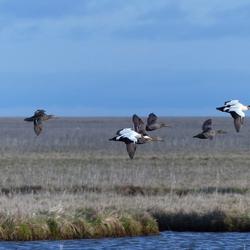
Greater Sage-Grouse Population Monitoring Framework

Greater Sage-Grouse Population Monitoring Framework

Greater sage-grouse ( Centrocercus urophasianus) are at the center of state and national land use policies largely because of their unique life-history traits as an ecological indicator for health of sagebrush ecosystems. Researchers within the U.S. Geological Survey (USGS) and Colorado State University (CSU) worked with the Bureau of Land Management (BLM) and state wildlife agencies to develop a...
Learn More

USGS Avian Research: Collaborative Science for Bird Management and Conservation

USGS scientists lead activities that are central to bird conservation and support both wildlife and communities. Through close collaboration with conservation partners, our scientists are meeting real-world needs—from maintaining sustainable harvest opportunities to advancing species recovery efforts.
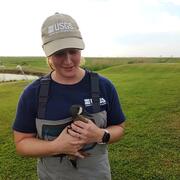
USGS Avian Research: Collaborative Science for Bird Management and Conservation

USGS Avian Research: Collaborative Science for Bird Management and Conservation

USGS scientists lead activities that are central to bird conservation and support both wildlife and communities. Through close collaboration with conservation partners, our scientists are meeting real-world needs—from maintaining sustainable harvest opportunities to advancing species recovery efforts.
Learn More

Science in Flight: Seven Ways Bird Science Serves Society

Explore seven case studies highlighting how USGS bird research informs real-world decisions.

Science in Flight: Seven Ways Bird Science Serves Society

Science in Flight: Seven Ways Bird Science Serves Society

Explore seven case studies highlighting how USGS bird research informs real-world decisions.
Learn More

Key Values of a Century of EESC Science

The USGS Eastern Ecological Science Center (EESC) is rooted in a proud tradition of service to the nation—advancing science that informs the conservation and management of fish, wildlife, and habitats across the eastern United States and beyond. Our mission is clear: deliver reliable, partner-driven science that supports natural resource decisions today, while ensuring these resources remain...
Key Values of a Century of EESC Science

Key Values of a Century of EESC Science

The USGS Eastern Ecological Science Center (EESC) is rooted in a proud tradition of service to the nation—advancing science that informs the conservation and management of fish, wildlife, and habitats across the eastern United States and beyond. Our mission is clear: deliver reliable, partner-driven science that supports natural resource decisions today, while ensuring these resources remain...
Learn More

Bison Conservation

USGS science in support of the Department of the Interior's Bison Conservation Initiative.
Bison Conservation

Bison Conservation

USGS science in support of the Department of the Interior's Bison Conservation Initiative.
Learn More

North Pacific Pelagic Seabird Database

The North Pacific Pelagic Seabird Database (NPPSD) contains survey transect data designed and conducted by numerous partners primarily to census seabirds at sea. The NPPSD includes more than 486,000 transect segments and includes observations of over 20 million birds of 258 species collected over the span of 50 years (from 1973 to 2022).
North Pacific Pelagic Seabird Database

North Pacific Pelagic Seabird Database

The North Pacific Pelagic Seabird Database (NPPSD) contains survey transect data designed and conducted by numerous partners primarily to census seabirds at sea. The NPPSD includes more than 486,000 transect segments and includes observations of over 20 million birds of 258 species collected over the span of 50 years (from 1973 to 2022).
Learn More

Tracking and Modeling the Population of the Louisiana Black Bear Using “BearTRAK”

"BearTrak" is an app that provides a central repository for Louisiana black bear tracking data, allowing managers to access information more quickly and reliably. USGS science was used in the decision to delist the species from the Endangered Species Act in 2016. Louisiana Department of Wildlife and Fisheries continues to monitor the Louisiana black bear population.
Tracking and Modeling the Population of the Louisiana Black Bear Using “BearTRAK”

Tracking and Modeling the Population of the Louisiana Black Bear Using “BearTRAK”

"BearTrak" is an app that provides a central repository for Louisiana black bear tracking data, allowing managers to access information more quickly and reliably. USGS science was used in the decision to delist the species from the Endangered Species Act in 2016. Louisiana Department of Wildlife and Fisheries continues to monitor the Louisiana black bear population.
Learn More

Understanding Avian Habitat Availability and Use After Barrier Island Restoration in Coastal Louisiana

Using ecological and geographical data, WARC researchers and their partners are analyzing avian and benthic sampling on Whiskey Island and Caminda Headland to compare pre- and post-restoration aspects of habitat occupancy, habitat availability, habitat use, and kernal density estimation.
Understanding Avian Habitat Availability and Use After Barrier Island Restoration in Coastal Louisiana

Understanding Avian Habitat Availability and Use After Barrier Island Restoration in Coastal Louisiana

Using ecological and geographical data, WARC researchers and their partners are analyzing avian and benthic sampling on Whiskey Island and Caminda Headland to compare pre- and post-restoration aspects of habitat occupancy, habitat availability, habitat use, and kernal density estimation.
Learn More

Bighorn Sheep and Mountain Goat Research in Western National Park Units

Mountain goat and bighorn sheep are iconic symbols of many national lands in the West. Both species have limited distributions that can be difficult to observe and face multiple stressors including disease, increasing recreation in remote areas, and shifting weather regimes that influence their forage and thermoregulation. As species with relatively small population sizes, understanding...
Bighorn Sheep and Mountain Goat Research in Western National Park Units

Bighorn Sheep and Mountain Goat Research in Western National Park Units

Mountain goat and bighorn sheep are iconic symbols of many national lands in the West. Both species have limited distributions that can be difficult to observe and face multiple stressors including disease, increasing recreation in remote areas, and shifting weather regimes that influence their forage and thermoregulation. As species with relatively small population sizes, understanding...
Learn More

A user-friendly decision support tool for monitoring and managing greater sage-grouse populations

Researchers within the U.S. Geological Survey (USGS) and Colorado State University (CSU) worked with BLM and State Wildlife Agencies to develop a hierarchical population monitoring framework for managing greater sage-grouse ( Centrocercus urophasianus) populations and the sagebrush ecosystems that they depend upon for survival and reproduction. This hierarchical population monitoring strategy now...
A user-friendly decision support tool for monitoring and managing greater sage-grouse populations

A user-friendly decision support tool for monitoring and managing greater sage-grouse populations

Researchers within the U.S. Geological Survey (USGS) and Colorado State University (CSU) worked with BLM and State Wildlife Agencies to develop a hierarchical population monitoring framework for managing greater sage-grouse ( Centrocercus urophasianus) populations and the sagebrush ecosystems that they depend upon for survival and reproduction. This hierarchical population monitoring strategy now...
Learn More

A targeted annual warning system (TAWS) for identifying aberrant declines in greater sage-grouse populations

Land and wildlife managers require accurate estimates of sensitive species’ trends to help guide conservation decisions that maintain biodiversity and promote healthy ecosystems. Researchers within the U.S. Geological Survey (USGS) and Colorado State University (CSU) worked with the Bureau of Land Management (BLM) and State Wildlife Agencies to develop a hierarchical population monitoring...
A targeted annual warning system (TAWS) for identifying aberrant declines in greater sage-grouse populations

A targeted annual warning system (TAWS) for identifying aberrant declines in greater sage-grouse populations

Land and wildlife managers require accurate estimates of sensitive species’ trends to help guide conservation decisions that maintain biodiversity and promote healthy ecosystems. Researchers within the U.S. Geological Survey (USGS) and Colorado State University (CSU) worked with the Bureau of Land Management (BLM) and State Wildlife Agencies to develop a hierarchical population monitoring...
Learn More

Hierarchical Units of Greater Sage-Grouse Populations Informing Wildlife Management

Wildlife management boundaries frequently lack biological context, such as information on habitat resource availability and wildlife movements. To address this, we developed multiple levels of biologically relevant and hierarchically nested greater sage-grouse ( Centrocercus urophasianus) population units that could facilitate management and conservation of populations and habitats.
Hierarchical Units of Greater Sage-Grouse Populations Informing Wildlife Management

Hierarchical Units of Greater Sage-Grouse Populations Informing Wildlife Management

Wildlife management boundaries frequently lack biological context, such as information on habitat resource availability and wildlife movements. To address this, we developed multiple levels of biologically relevant and hierarchically nested greater sage-grouse ( Centrocercus urophasianus) population units that could facilitate management and conservation of populations and habitats.
Learn More
Was this page helpful?