



A shelf full of legacy data collected on seabirds in Cook Inlet and Glacier Bay, Alaska.
Multimedia
Learn more about the Species Management Research Program through the multimedia below.
Images
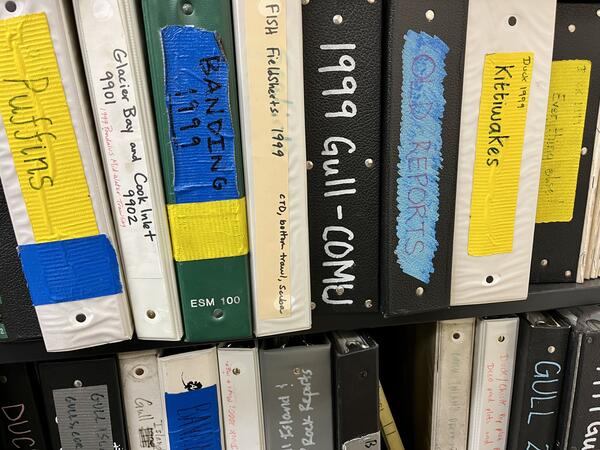
Shelf of legacy seabird data
A shelf full of legacy data collected on seabirds in Cook Inlet and Glacier Bay, Alaska.
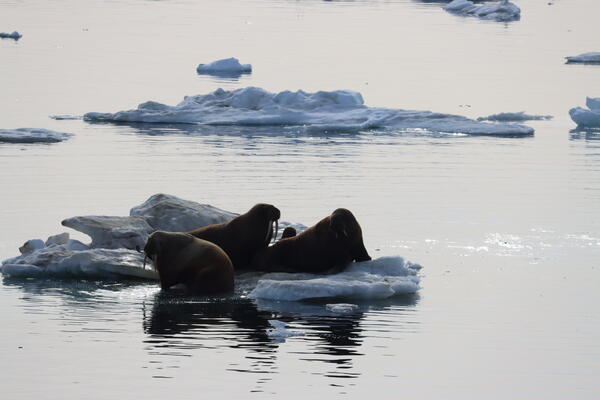
Pacific walruses hauled out on sea ice evaluating their surroundings
Pacific walruses hauled out on sea ice evaluating their surroundingsA small group of Pacific walruses consider entering the water as they assess their surroundings. A calf can be seen in the back of the group. USGS and the U.S.
Pacific walruses hauled out on sea ice evaluating their surroundings
Pacific walruses hauled out on sea ice evaluating their surroundingsA small group of Pacific walruses consider entering the water as they assess their surroundings. A calf can be seen in the back of the group. USGS and the U.S.

Discover Ecosystems
America’s diverse ecosystems are an asset to current and future generations by supporting economically and recreationally important fish, wildlife, and lands. Healthy ecosystems support people and nature, fostering prosperity and enjoyment for all.
By
Ecosystems Mission Area, Biological Threats and Invasive Species Research Program, Climate Adaptation Science Centers, Cooperative Research Units, Ecosystems Land Change Science Program, Environmental Health Program, Land Management Research Program, Species Management Research Program, Communications and Publishing
America’s diverse ecosystems are an asset to current and future generations by supporting economically and recreationally important fish, wildlife, and lands. Healthy ecosystems support people and nature, fostering prosperity and enjoyment for all.
By
Ecosystems Mission Area, Biological Threats and Invasive Species Research Program, Climate Adaptation Science Centers, Cooperative Research Units, Ecosystems Land Change Science Program, Environmental Health Program, Land Management Research Program, Species Management Research Program, Communications and Publishing

Discover Ecosystems
America’s diverse ecosystems are an asset to current and future generations by supporting economically and recreationally important fish, wildlife, and lands. Healthy ecosystems support people and nature, fostering prosperity and enjoyment for all.
America’s diverse ecosystems are an asset to current and future generations by supporting economically and recreationally important fish, wildlife, and lands. Healthy ecosystems support people and nature, fostering prosperity and enjoyment for all.

Dozer Line through Repaired Habitat Supervised by SPARCS Fireline Resource Advisors during the Palisades Fire
Dozer Line through Repaired Habitat Supervised by SPARCS Fireline Resource Advisors during the Palisades FireBulldozer lines create breaks in vegetation and are commonly used when fighting wildfires. This dozer line was created during the Palisades Fire in Los Angeles County, California in January 2025.
Dozer Line through Repaired Habitat Supervised by SPARCS Fireline Resource Advisors during the Palisades Fire
Dozer Line through Repaired Habitat Supervised by SPARCS Fireline Resource Advisors during the Palisades FireBulldozer lines create breaks in vegetation and are commonly used when fighting wildfires. This dozer line was created during the Palisades Fire in Los Angeles County, California in January 2025.

Northern rubber boa climate-niche shift
The northern rubber boa is an example of a species predicted to have a smaller climate-niche space by the end of the century. Under climate scenario RCP 8.5--which assumes carbon emissions stay near current levels--this species' range could be reduced from most of the northwestern U.S. to only a small portion of British Columbia.
The northern rubber boa is an example of a species predicted to have a smaller climate-niche space by the end of the century. Under climate scenario RCP 8.5--which assumes carbon emissions stay near current levels--this species' range could be reduced from most of the northwestern U.S. to only a small portion of British Columbia.
Videos

Saline Lakes IWAA Fall 2024 Webinar Series: Satellite Observations of Lake Surface Water Dynamics
Saline Lakes IWAA Fall 2024 Webinar Series: Satellite Observations of Lake Surface Water DynamicsThe sixth and final webinar in the Saline Lakes Ecosystems IWAA Fall 2024 Webinar Series is on satellite observations of lake surface water dynamics. John W. Jones of the USGS Hydrologic Remote Sensing Branch introduces the surface water and wetland remote sensing component of the Integrated Water Availability Assessment.
By
Ecosystems Mission Area, Water Resources Mission Area, Species Management Research Program, Water Availability and Use Science Program, Forest and Rangeland Ecosystem Science Center, Fort Collins Science Center, Nevada Water Science Center, Oregon Water Science Center, Utah Water Science Center, Western Ecological Research Center (WERC), Saline Lake Ecosystems Integrated Water Availability Assessment
Saline Lakes IWAA Fall 2024 Webinar Series: Satellite Observations of Lake Surface Water Dynamics
Saline Lakes IWAA Fall 2024 Webinar Series: Satellite Observations of Lake Surface Water DynamicsThe sixth and final webinar in the Saline Lakes Ecosystems IWAA Fall 2024 Webinar Series is on satellite observations of lake surface water dynamics. John W. Jones of the USGS Hydrologic Remote Sensing Branch introduces the surface water and wetland remote sensing component of the Integrated Water Availability Assessment.
By
Ecosystems Mission Area, Water Resources Mission Area, Species Management Research Program, Water Availability and Use Science Program, Forest and Rangeland Ecosystem Science Center, Fort Collins Science Center, Nevada Water Science Center, Oregon Water Science Center, Utah Water Science Center, Western Ecological Research Center (WERC), Saline Lake Ecosystems Integrated Water Availability Assessment

Saline Lakes IWAA Fall 2024 Webinar Series: Waterbird Prey Availability
Saline Lakes IWAA Fall 2024 Webinar Series: Waterbird Prey AvailabilityThe fifth webinar in the Saline Lakes Ecosystems IWAA Fall 2024 Webinar Series is on waterbird prey availability in Great Basin terminal lakes.
By
Ecosystems Mission Area, Water Resources Mission Area, Species Management Research Program, Water Availability and Use Science Program, Forest and Rangeland Ecosystem Science Center, Fort Collins Science Center, Nevada Water Science Center, Oregon Water Science Center, Utah Water Science Center, Western Ecological Research Center (WERC), Saline Lake Ecosystems Integrated Water Availability Assessment
Saline Lakes IWAA Fall 2024 Webinar Series: Waterbird Prey Availability
Saline Lakes IWAA Fall 2024 Webinar Series: Waterbird Prey AvailabilityThe fifth webinar in the Saline Lakes Ecosystems IWAA Fall 2024 Webinar Series is on waterbird prey availability in Great Basin terminal lakes.
By
Ecosystems Mission Area, Water Resources Mission Area, Species Management Research Program, Water Availability and Use Science Program, Forest and Rangeland Ecosystem Science Center, Fort Collins Science Center, Nevada Water Science Center, Oregon Water Science Center, Utah Water Science Center, Western Ecological Research Center (WERC), Saline Lake Ecosystems Integrated Water Availability Assessment

Saline Lakes Ecosystems IWAA Fall 2024 Webinar Series: Bird Movements
Saline Lakes Ecosystems IWAA Fall 2024 Webinar Series: Bird MovementsThe fourth webinar in the Saline Lakes Ecosystems IWAA Fall 2024 Webinar Series is on movement of bird species associated with Great Basin terminal lake ecosystems. Cory Overton of the Western Ecological Research Center gives an overview of the USGS bird movement monitoring strategy and presents results from the 2024 field season.
By
Ecosystems Mission Area, Water Resources Mission Area, Species Management Research Program, Water Availability and Use Science Program, Forest and Rangeland Ecosystem Science Center, Fort Collins Science Center, Nevada Water Science Center, Oregon Water Science Center, Utah Water Science Center, Western Ecological Research Center (WERC), Saline Lake Ecosystems Integrated Water Availability Assessment
Saline Lakes Ecosystems IWAA Fall 2024 Webinar Series: Bird Movements
Saline Lakes Ecosystems IWAA Fall 2024 Webinar Series: Bird MovementsThe fourth webinar in the Saline Lakes Ecosystems IWAA Fall 2024 Webinar Series is on movement of bird species associated with Great Basin terminal lake ecosystems. Cory Overton of the Western Ecological Research Center gives an overview of the USGS bird movement monitoring strategy and presents results from the 2024 field season.
By
Ecosystems Mission Area, Water Resources Mission Area, Species Management Research Program, Water Availability and Use Science Program, Forest and Rangeland Ecosystem Science Center, Fort Collins Science Center, Nevada Water Science Center, Oregon Water Science Center, Utah Water Science Center, Western Ecological Research Center (WERC), Saline Lake Ecosystems Integrated Water Availability Assessment

Saline Lakes Ecosystems IWAA Fall 2024 Webinar Series: Water-Quality Monitoring of Great Basin Terminal Lake Ecosystems
Saline Lakes Ecosystems IWAA Fall 2024 Webinar Series: Water-Quality Monitoring of Great Basin Terminal Lake EcosystemsThe third webinar in the Saline Lakes Ecosystems IWAA Fall 2024 Webinar Series is on water-quality monitoring of Great Basin terminal lake ecosystems. Christine Rumsey of the Utah Water Science Center and Casie Smith of the Oregon Water Science Center give an overview of the USGS water-quality monitoring strategy and present results from the 2024 field season.
By
Ecosystems Mission Area, Water Resources Mission Area, Species Management Research Program, Water Availability and Use Science Program, Forest and Rangeland Ecosystem Science Center, Fort Collins Science Center, Nevada Water Science Center, Oregon Water Science Center, Utah Water Science Center, Western Ecological Research Center (WERC), Saline Lake Ecosystems Integrated Water Availability Assessment
Saline Lakes Ecosystems IWAA Fall 2024 Webinar Series: Water-Quality Monitoring of Great Basin Terminal Lake Ecosystems
Saline Lakes Ecosystems IWAA Fall 2024 Webinar Series: Water-Quality Monitoring of Great Basin Terminal Lake EcosystemsThe third webinar in the Saline Lakes Ecosystems IWAA Fall 2024 Webinar Series is on water-quality monitoring of Great Basin terminal lake ecosystems. Christine Rumsey of the Utah Water Science Center and Casie Smith of the Oregon Water Science Center give an overview of the USGS water-quality monitoring strategy and present results from the 2024 field season.
By
Ecosystems Mission Area, Water Resources Mission Area, Species Management Research Program, Water Availability and Use Science Program, Forest and Rangeland Ecosystem Science Center, Fort Collins Science Center, Nevada Water Science Center, Oregon Water Science Center, Utah Water Science Center, Western Ecological Research Center (WERC), Saline Lake Ecosystems Integrated Water Availability Assessment

Saline Lake Ecosystems IWAA Fall 2024 Webinar Series: Physical and Chemical Monitoring in Support of Water Budgets of Select Great Basin Saline Lakes
Saline Lake Ecosystems IWAA Fall 2024 Webinar Series: Physical and Chemical Monitoring in Support of Water Budgets of Select Great Basin Saline LakesThe second webinar in the Saline Lake Ecosystems IWAA Fall 2024 Webinar Series is on physical and chemical monitoring in support of water budgets of select Great Basin saline lakes.
By
Ecosystems Mission Area, Water Resources Mission Area, Species Management Research Program, Water Availability and Use Science Program, Forest and Rangeland Ecosystem Science Center, Fort Collins Science Center, Nevada Water Science Center, Oregon Water Science Center, Utah Water Science Center, Western Ecological Research Center (WERC), Saline Lake Ecosystems Integrated Water Availability Assessment
Saline Lake Ecosystems IWAA Fall 2024 Webinar Series: Physical and Chemical Monitoring in Support of Water Budgets of Select Great Basin Saline Lakes
Saline Lake Ecosystems IWAA Fall 2024 Webinar Series: Physical and Chemical Monitoring in Support of Water Budgets of Select Great Basin Saline LakesThe second webinar in the Saline Lake Ecosystems IWAA Fall 2024 Webinar Series is on physical and chemical monitoring in support of water budgets of select Great Basin saline lakes.
By
Ecosystems Mission Area, Water Resources Mission Area, Species Management Research Program, Water Availability and Use Science Program, Forest and Rangeland Ecosystem Science Center, Fort Collins Science Center, Nevada Water Science Center, Oregon Water Science Center, Utah Water Science Center, Western Ecological Research Center (WERC), Saline Lake Ecosystems Integrated Water Availability Assessment

Saline Lake Ecosystems IWAA Fall 2024 Webinar Series: Project Overview
Saline Lake Ecosystems IWAA Fall 2024 Webinar Series: Project OverviewAllison Shipp, Deputy Regional Director for Science and Research and Saline Lake Ecosystems IWAA Project Manager, kicked off the Fall 2024 webinar series. This presentation gives an overview of the project and introduces topics that will be covered by the USGS research team throughout the webinar series.
By
Ecosystems Mission Area, Water Resources Mission Area, Species Management Research Program, Water Availability and Use Science Program, Forest and Rangeland Ecosystem Science Center, Fort Collins Science Center, Nevada Water Science Center, Oregon Water Science Center, Utah Water Science Center, Western Ecological Research Center (WERC), Saline Lake Ecosystems Integrated Water Availability Assessment
Saline Lake Ecosystems IWAA Fall 2024 Webinar Series: Project Overview
Saline Lake Ecosystems IWAA Fall 2024 Webinar Series: Project OverviewAllison Shipp, Deputy Regional Director for Science and Research and Saline Lake Ecosystems IWAA Project Manager, kicked off the Fall 2024 webinar series. This presentation gives an overview of the project and introduces topics that will be covered by the USGS research team throughout the webinar series.
By
Ecosystems Mission Area, Water Resources Mission Area, Species Management Research Program, Water Availability and Use Science Program, Forest and Rangeland Ecosystem Science Center, Fort Collins Science Center, Nevada Water Science Center, Oregon Water Science Center, Utah Water Science Center, Western Ecological Research Center (WERC), Saline Lake Ecosystems Integrated Water Availability Assessment