



Ecologically-Driven Exposure Pathways Science Team
Ecologically-Driven Exposure Pathways Science Team
Ecologically-Driven Exposure Pathways Science Team
The Ecologically-Driven Exposure Pathways team identifies internal and external pathways and processes that can alter exposure and toxicity of contaminants and pathogens to wildlife the environment.


Filter Total Items: 33

Dust from the Great Salt Lake dry lakebed: a possible health risk for communities in northern Utah
By analyzing dust samples in northern Utah, the USGS is providing crucial insights about the importance of water and lakebed management to mitigate dust pollution and protect vulnerable communities in northern Utah.

Healthy Fish and Wildlife: Community Livelihoods, Fishing and Hunting Heritage, Recreation, and Economic Security
Healthy fish and wildlife underpin the economic vitality, food security, recreational enjoyment, and cultural heritage of fishing and hunting in communities across the United States. Fishing and hunting resources scale from the personal recreation of families to multi-billion-dollar industries. Recognizing these critical connections, the U.S. Geological Survey (USGS) works to understand, protect...
By
Ecosystems Mission Area, Contaminant Biology, Environmental Health Program, Toxic Substances Hydrology, California Water Science Center, Central Midwest Water Science Center, Columbia Environmental Research Center, Eastern Ecological Science Center, Forest and Rangeland Ecosystem Science Center, Upper Midwest Environmental Sciences Center, Upper Midwest Water Science Center

Avian Influenza Host Movement Ecology
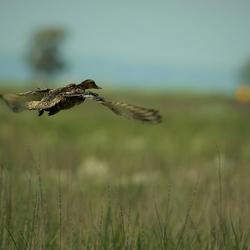
Understanding disease systems requires an understanding of the basic ecology of host species. USGS is involved in global efforts to explore the movements of bird species that are hosts of avian influenza as well as the potential impacts of changing landscapes on avian influenza.
Avian Influenza Spread, Prevalence and Persistence
USGS researchers seek to understand the factors influencing the spread and persistence of avian influenza viruses on the landscape. This research also addresses how novel strains of highly pathogenic avian influenza are impacting a larger number and diversity of host species, including waterfowl, shorebirds, raptors and other birds.

USGS Environmental Health Program: Integrating Science for Public Health and Resource Management
The USGS Environmental Health Program seeks to understand how environmental factors, especially contaminants and pathogens, influence human health and ecosystems. It focuses on studying the distribution and effects of toxic substances, environmental stressors, and their pathways. The program prioritizes collaboration with State, Federal and local governments; Tribes; non-government organizations...

Innovative Sensor Development for Detecting Low-Micrometer Plastics in Freshwater Systems
Plastic pollution is a significant global issue in aquatic ecosystems, with low-micrometer plastics (LMMPs) posing particular risks owing to their small size and prevalence in various environments. The U.S. Geological Survey and collaborators are developing an innovative sensor to detect and analyze LMMPs in freshwater systems, achieving rapid and accurate results without the need for additional...

Wildfires Increase Mercury Concentrations in Headwater Streams
The U.S. Geological Survey is researching the effect of wildfires on the release of stored mercury from forest watersheds and subsequent transport, methylmercury formation, and bioaccumulation post-fire. Wildfires not only alter the re-release of mercury into the environment but also affect its reactivity and availability to the food web, complicating predictions of mercury exposure risks to...

Per- and Polyfluoroalkyl Substance (PFAS) Core Technology Team
The Per- and Polyfluoroalkyl Substance (PFAS) Core Technology Team (CTT) within the Environmental Health Program partners with external and internal stakeholders to develop and apply analytical methods for measuring PFAS in complex matrices, addressing environmental health issues related to transport, distribution, fate, effects, and exposure.

Estimating Methylmercury Injury to Birds—“The Bird Mercury Tool”
U.S. Geological Survey (USGS) scientists have developed a tool that can be used by practitioners to help interpret injury to birds caused by methylmercury contamination. This tool was developed from a comprehensive review of 168 studies and summarizing data on the effects of methylmercury on birds.

The Dragonfly Mercury Project
The Dragonfly Mercury Project measures mercury concentrations in dragonfly larvae from U.S. National Parks and other protected places across the country. This information helps scientists, resource managers, and policymakers assess potential environmental health risks due to mercury, track patterns over time, and assess the efficacy of mercury mitigation efforts. Explore this website to learn more...

Avian Influenza Prevalence Correlated to Mercury Concentrations in Wild Waterfowl
Low pathogenic avian influenza infections were directly correlated with blood mercury concentrations in wild waterfowl, indicating that mercury exposure may be related to pathogen susceptibility. Further study is needed to determine if and how mercury and other environmental contaminant exposures may affect disease susceptibility in wildlife.

Antibiotic Resistant Bacteria Acquired by Wild Birds in Urban Settings and Dispersed via Migration
U.S. Geological Survey (USGS) scientists have developed a model that demonstrates how migratory wild birds in urban areas can acquire bacteria that are resistant to antibiotics, including those used in clinics, and potentially disperse these bacteria between continents via migration.