



Healthy Fish and Wildlife: Community Livelihoods, Fishing and Hunting Heritage, Recreation, and Economic Security
Healthy fish and wildlife underpin the economic vitality, food security, recreational enjoyment, and cultural heritage of fishing and hunting in communities across the United States. Fishing and hunting resources scale from the personal recreation of families to multi-billion-dollar industries. Recognizing these critical connections, the U.S. Geological Survey (USGS) works to understand, protect, and enhance essential fishing and hunting resources nation-wide, through scientific research, collaboration with resource agencies, and active community engagement.

USGS Provides Management Information for Healthy Fish and Wildlife
In the United States, hunting and fishing significantly contribute to the economy and culture, where hunters can annually harvest 18 million waterfowl, 700,000 wild turkeys, and 6 million white-tailed deer. The annual value of U.S. fisheries can also reach 321 billion dollars, underscoring the need for effective management of wild populations., underscoring the need for effective management of wild populations.
Healthy fish and wildlife are vital for sustainable fishing and hunting, influencing the livelihoods and traditions of many communities. Understanding the contaminants and pathogens affecting these species is essential for ensuring safe consumption and safeguarding both human health and wildlife.
USGS provides data and research to assist land and water managers in developing best practices for maintaining these valuable natural resources. Collaboration among states, tribes, and agencies - all with role in managing huntable fish and wildlife - ensures these resources remain healthy and available. Healthy ecosystems offer critical habitats that provide food, shelter, and protection from contaminants and diseases, which promotes the growth and reproduction of fish and wildlife.
Assessing the Effects of Environmental Contaminants: Pathways and Health Risks
USGS research provides valuable insights to resource managers regarding potential contaminants in the environment. Their work highlights important areas of focus, including:
- Risk Assessment: Assess and differentiate the environmental and pathogen exposures that cause actual health risks versus those that are only perceived which leads to more effective use of resources and better public health outcomes.
- Exposure Pathways: Providing scientific data and insights on the routes through which fish and wildlife encounter identified contaminants or pathogens in their environments to enhance management decisions.
- Potential Absorption and Accumulation of Contaminants and Pathogens: Understanding how living organisms encounter contaminants through various routes—such as drinking, eating, breathing, and skin contact—provides valuable insights into how these substances can build up in the tissues of fish and wildlife over time. This knowledge helps us take steps to protect our ecosystems and support the health of wildlife populations.
- Potential Health Impacts: Evaluating how environmental contaminants, whether confirmed or suspected, may influence the health of wildlife populations and potentially impact human health.
Contaminants of potential concern include pharmaceuticals, plastic particles, fertilizers, pesticides, flame-retardants, mercury and other heavy metals, tire-wear chemicals from automobiles, and industrial chemicals like polycyclic aromatic hydrocarbons (PAHs), polychlorinated biphenyls (PCBs), and per- and polyfluoroalkyl substances (PFAS). Presence of these substances may pose a risk to human health, wildlife, or ecosystems, based on their presence, concentrations, and known or suspected toxic effects. Their identification is a precautionary step, not a confirmation of harm.

Why do Contaminants Matter?
In fish, wildlife, and humans, contaminants can lead to disease by disrupting cellular functions, harming organs, or weakening an animal's immune response. Research is focused on how these contaminants affect interactions between different species, considering various stressors like chemicals, nutritional deficiencies, food web changes, and diseases. Additionally, we are investigating how contaminants affect the availability of essential vitamins, influence animal behavior, and hinder proper development.

Mercury in Fish
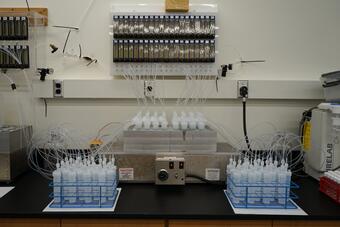
Mercury, a toxic heavy metal, is present in streams due to a combination of natural sources like erosion and atmospheric deposition, and human activities such as fossil fuel combustion and historical mining. Once in the environment, it can turn into a more dangerous form called methylmercury, which builds up in fish and poses health risks. Ongoing research and monitoring are vital to protect public health and manage our fisheries wisely.
Impact of Water Management on Mercury Levels in Smallmouth Bass
Recent research in the Hells Canyon area along the Snake River, which borders Idaho and Oregon, has shown that how we manage water quality and hydroelectric dams can affect the levels of mercury in smallmouth bass. In the deeper parts of the reservoir, low oxygen levels can create methylmercury, a harmful form of mercury. This toxic substance can then move out of the reservoirs and build up in fish downstream. Over the past 10 years, researchers have collected data on mercury levels in both water and fish. This information is being shared directly with dam operators in the area to help them manage the dams better and reduce risks for anglers fishing downstream.
To read about the research, click here.

Invasive Mussels and Increased Mercury Levels in Walleye
Did you know that invasive mussels can lead to increased mercury levels in walleye? Collaborative work between the USGS, University of Minnesota, and the Minnesota Department of Natural Resources have shown that fish collected in lakes with zebra mussels can have 72% more mercury than fish in lakes with no zebra mussels. This work demonstrates that invasive species can change how fish accumulate contaminants and that risks can be increased up to 2x for recreational and subsistence anglers. The USGS is continuing to study this phenomenon in the Midwest, including exploring the effects on Great Lakes fisheries.
To read about the research, click here.
Wildfires and Increased Mercury Release
Wildfires across the western U.S. are becoming more frequent and can have severe consequences for local communities, but did you know that one of those risks is release of mercury? New studies led by the USGS demonstrate that streams in burned regions of Oregon, Idaho, and Washington can have up to 51% higher methylmercury concentrations in waters when compared to unburned regions. This difference is magnified in downstream insects which can have up to 251% more mercury than insects from unburned locations. This work is some of the first to demonstrate that wildfires may increase mercury exposure in smaller, headwater streams posing risks to downstream fish and wildlife. Understanding these interactions is crucial for developing effective responses to wildfires and their implications for fish and hunting advisories.

Monitoring Ecosystems for Better Insights
Effective monitoring is essential for assessing the risks contaminants and pathogens pose to both animal and human health. The USGS prioritizes large-scale multi-state monitoring to understand broader patterns and factors that may influence exposure across different ecosystems. This approach leads to better-informed decisions regarding the management of environmental health and safety, which is crucial for those who depend on fishing and hunting for their livelihoods and traditions.

Economic Importance and Health Challenges of Salmon Fisheries
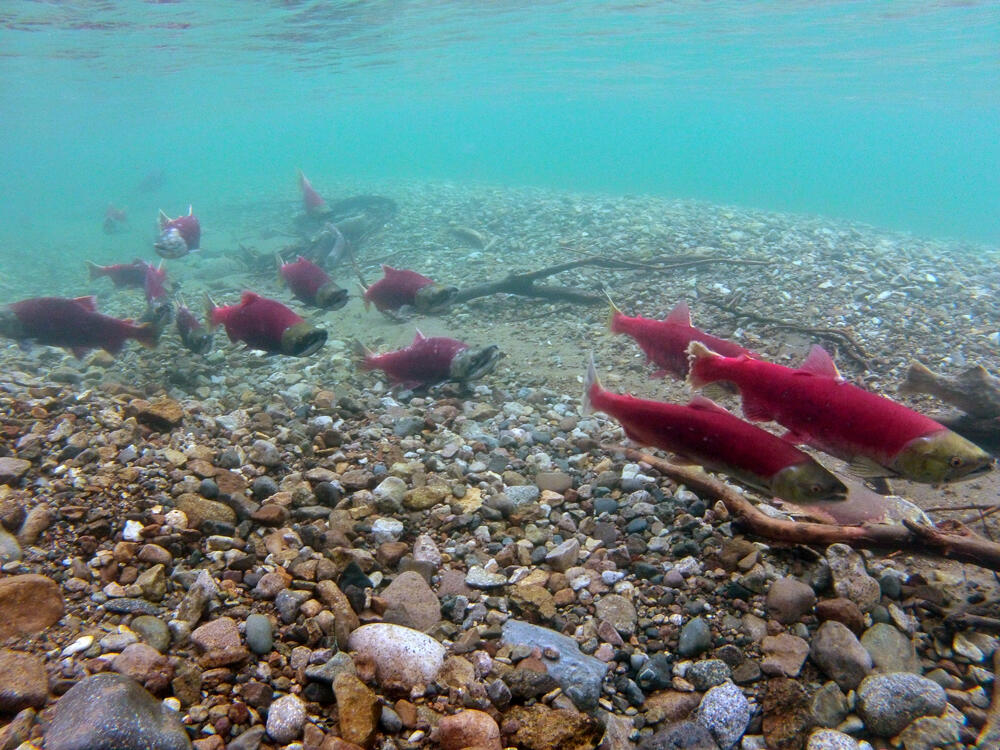
In 2021, the total economic benefit of domestic fisheries in the United States reached \$122 billion in 2021, with \$10 billion coming from salmon in the Pacific Northwest. However, vitamin B1 (thiamine) deficiency is contributing to declines in wild salmon abundance, leading to high mortality rates among young fish, in both natural environments and hatcheries. USGS is leading national research to understand the causes of vitamin B1 deficiency in salmon. Efforts involve collaboration with NOAA, academia, anglers, Tribes, and hatcheries to diagnose the deficiency, examine how changes in salmon diet and habitat may be contributing factors, and identify potential solutions to mitigate the impacts of insufficient vitamin B1.
Understanding Disease Transmission
Pathogens can transfer between wildlife, fish, livestock, and humans, potentially resulting in disease outbreaks with significant economic repercussions. The USGS Environmental Health Program explores how these diseases spread and examines the influence of environmental factors to enhance biosecurity measures and management practices aimed at reducing health and economic risks.
USGS scientists identify new and emerging disease organisms and investigate their interactions with environmental stressors in fish. Research focuses on conditions like “blotchy bass” syndrome caused by Adomavirus, largemouth bass virus (LMBV), white sucker Hepatitis B virus, bacterial, fungal and parasitic diseases. By studying how environmental conditions affect fish immune systems, USGS aims to identify factors that can promote or hinder fish health and their ability to fight infections.
In addition, USGS examines how wild birds, and wildlife can transmit diseases to domesticated poultry and cattle, particularly focusing on the spread of avian influenza and chronic wasting disease. Through this comprehensive research, USGS is working to better understand the connections between environmental health, wildlife, and disease, ultimately contributing to improved strategies for disease prevention and management in both wildlife and agricultural settings.


From Model Species to Broader Impacts
While much of the USGS Environmental Health program focuses on specific species, the findings have wide-ranging implications for understanding health factors that impact numerous species, including humans. Birds and fish, for example, are key bioindicators for environmental contamination. By studying these species, researchers can gain valuable insights into how pollutants affect a variety of organisms across both aquatic and terrestrial environments. Additionally, this research explores how environmental stressors, such as microplastics and nutritional deficiencies, impact contamination levels in fish and other aquatic species that are crucial for both sport and subsistence fishing. The One Health approach allows USGS to better understand the complex interactions among humans, plants, wildlife, and the environment. The program partners with public health agencies to identify and assess pathways of environmental exposures to the public. This approach guides the responses of public and wildlife health agencies to diseases that can be transmitted between animals and humans. It also contributes valuable data and information regarding public and wildlife exposure to toxic substances and pathogens in the environment. Furthermore, it offers research, modeling, and analysis to support decision-making in resource management.

Sustaining Communities and Culture
Through this integrated research, the USGS highlights the vital role fish and wildlife play, not only as essential components of ecosystems but also as significant contributors to our health, livelihoods, and cultural identities related to fishing and hunting. By protecting these natural resources, we help secure the future of communities that depend on them for sustenance, recreation, and the rich traditions of hunting and fishing.

Avian influenza antibody prevalence increases with mercury contamination in wild waterfowl
Methylmercury Effects on Birds: A Review, Meta-Analysis, and Development of Toxicity Reference Values for Injury Assessment Based on Tissue Residues and Diet
Potential use of poultry farms by wild waterfowl in California's Central Valley
Phylogeographic genetic diversity in the white sucker hepatitis B virus across the Great Lakes region and Alberta, Canada
Prevalence of Hyperpigmented Melanistic Lesions in Smallmouth
Temporal analysis of water chemistry and smallmouth bass
Per- and polyfluoroalkyl substances in Smallmouth Bass
Biological effects associated with mercury concentrations in smallmouth Bass
An interdisciplinary research team to study the disease, decline, and recovery of a world-class Smallmouth Bass fishery
Follow the Fishing, Hunting, and Subsistence Living Integrated Science Team!
Follow the Ecologically-Driven Exposure Pathways Integrated Science Team!
Healthy fish and wildlife underpin the economic vitality, food security, recreational enjoyment, and cultural heritage of fishing and hunting in communities across the United States. Fishing and hunting resources scale from the personal recreation of families to multi-billion-dollar industries. Recognizing these critical connections, the U.S. Geological Survey (USGS) works to understand, protect, and enhance essential fishing and hunting resources nation-wide, through scientific research, collaboration with resource agencies, and active community engagement.
USGS Provides Management Information for Healthy Fish and Wildlife
In the United States, hunting and fishing significantly contribute to the economy and culture, where hunters can annually harvest 18 million waterfowl, 700,000 wild turkeys, and 6 million white-tailed deer. The annual value of U.S. fisheries can also reach 321 billion dollars, underscoring the need for effective management of wild populations., underscoring the need for effective management of wild populations.
Healthy fish and wildlife are vital for sustainable fishing and hunting, influencing the livelihoods and traditions of many communities. Understanding the contaminants and pathogens affecting these species is essential for ensuring safe consumption and safeguarding both human health and wildlife.
USGS provides data and research to assist land and water managers in developing best practices for maintaining these valuable natural resources. Collaboration among states, tribes, and agencies - all with role in managing huntable fish and wildlife - ensures these resources remain healthy and available. Healthy ecosystems offer critical habitats that provide food, shelter, and protection from contaminants and diseases, which promotes the growth and reproduction of fish and wildlife.
Assessing the Effects of Environmental Contaminants: Pathways and Health Risks
USGS research provides valuable insights to resource managers regarding potential contaminants in the environment. Their work highlights important areas of focus, including:
- Risk Assessment: Assess and differentiate the environmental and pathogen exposures that cause actual health risks versus those that are only perceived which leads to more effective use of resources and better public health outcomes.
- Exposure Pathways: Providing scientific data and insights on the routes through which fish and wildlife encounter identified contaminants or pathogens in their environments to enhance management decisions.
- Potential Absorption and Accumulation of Contaminants and Pathogens: Understanding how living organisms encounter contaminants through various routes—such as drinking, eating, breathing, and skin contact—provides valuable insights into how these substances can build up in the tissues of fish and wildlife over time. This knowledge helps us take steps to protect our ecosystems and support the health of wildlife populations.
- Potential Health Impacts: Evaluating how environmental contaminants, whether confirmed or suspected, may influence the health of wildlife populations and potentially impact human health.
Contaminants of potential concern include pharmaceuticals, plastic particles, fertilizers, pesticides, flame-retardants, mercury and other heavy metals, tire-wear chemicals from automobiles, and industrial chemicals like polycyclic aromatic hydrocarbons (PAHs), polychlorinated biphenyls (PCBs), and per- and polyfluoroalkyl substances (PFAS). Presence of these substances may pose a risk to human health, wildlife, or ecosystems, based on their presence, concentrations, and known or suspected toxic effects. Their identification is a precautionary step, not a confirmation of harm.
Why do Contaminants Matter?
In fish, wildlife, and humans, contaminants can lead to disease by disrupting cellular functions, harming organs, or weakening an animal's immune response. Research is focused on how these contaminants affect interactions between different species, considering various stressors like chemicals, nutritional deficiencies, food web changes, and diseases. Additionally, we are investigating how contaminants affect the availability of essential vitamins, influence animal behavior, and hinder proper development.
Mercury in Fish
Mercury, a toxic heavy metal, is present in streams due to a combination of natural sources like erosion and atmospheric deposition, and human activities such as fossil fuel combustion and historical mining. Once in the environment, it can turn into a more dangerous form called methylmercury, which builds up in fish and poses health risks. Ongoing research and monitoring are vital to protect public health and manage our fisheries wisely.
Impact of Water Management on Mercury Levels in Smallmouth Bass
Recent research in the Hells Canyon area along the Snake River, which borders Idaho and Oregon, has shown that how we manage water quality and hydroelectric dams can affect the levels of mercury in smallmouth bass. In the deeper parts of the reservoir, low oxygen levels can create methylmercury, a harmful form of mercury. This toxic substance can then move out of the reservoirs and build up in fish downstream. Over the past 10 years, researchers have collected data on mercury levels in both water and fish. This information is being shared directly with dam operators in the area to help them manage the dams better and reduce risks for anglers fishing downstream.
To read about the research, click here.
Invasive Mussels and Increased Mercury Levels in Walleye
Did you know that invasive mussels can lead to increased mercury levels in walleye? Collaborative work between the USGS, University of Minnesota, and the Minnesota Department of Natural Resources have shown that fish collected in lakes with zebra mussels can have 72% more mercury than fish in lakes with no zebra mussels. This work demonstrates that invasive species can change how fish accumulate contaminants and that risks can be increased up to 2x for recreational and subsistence anglers. The USGS is continuing to study this phenomenon in the Midwest, including exploring the effects on Great Lakes fisheries.
To read about the research, click here.
Wildfires and Increased Mercury Release
Wildfires across the western U.S. are becoming more frequent and can have severe consequences for local communities, but did you know that one of those risks is release of mercury? New studies led by the USGS demonstrate that streams in burned regions of Oregon, Idaho, and Washington can have up to 51% higher methylmercury concentrations in waters when compared to unburned regions. This difference is magnified in downstream insects which can have up to 251% more mercury than insects from unburned locations. This work is some of the first to demonstrate that wildfires may increase mercury exposure in smaller, headwater streams posing risks to downstream fish and wildlife. Understanding these interactions is crucial for developing effective responses to wildfires and their implications for fish and hunting advisories.
Monitoring Ecosystems for Better Insights
Effective monitoring is essential for assessing the risks contaminants and pathogens pose to both animal and human health. The USGS prioritizes large-scale multi-state monitoring to understand broader patterns and factors that may influence exposure across different ecosystems. This approach leads to better-informed decisions regarding the management of environmental health and safety, which is crucial for those who depend on fishing and hunting for their livelihoods and traditions.
Economic Importance and Health Challenges of Salmon Fisheries
In 2021, the total economic benefit of domestic fisheries in the United States reached \$122 billion in 2021, with \$10 billion coming from salmon in the Pacific Northwest. However, vitamin B1 (thiamine) deficiency is contributing to declines in wild salmon abundance, leading to high mortality rates among young fish, in both natural environments and hatcheries. USGS is leading national research to understand the causes of vitamin B1 deficiency in salmon. Efforts involve collaboration with NOAA, academia, anglers, Tribes, and hatcheries to diagnose the deficiency, examine how changes in salmon diet and habitat may be contributing factors, and identify potential solutions to mitigate the impacts of insufficient vitamin B1.
Understanding Disease Transmission
Pathogens can transfer between wildlife, fish, livestock, and humans, potentially resulting in disease outbreaks with significant economic repercussions. The USGS Environmental Health Program explores how these diseases spread and examines the influence of environmental factors to enhance biosecurity measures and management practices aimed at reducing health and economic risks.
USGS scientists identify new and emerging disease organisms and investigate their interactions with environmental stressors in fish. Research focuses on conditions like “blotchy bass” syndrome caused by Adomavirus, largemouth bass virus (LMBV), white sucker Hepatitis B virus, bacterial, fungal and parasitic diseases. By studying how environmental conditions affect fish immune systems, USGS aims to identify factors that can promote or hinder fish health and their ability to fight infections.
In addition, USGS examines how wild birds, and wildlife can transmit diseases to domesticated poultry and cattle, particularly focusing on the spread of avian influenza and chronic wasting disease. Through this comprehensive research, USGS is working to better understand the connections between environmental health, wildlife, and disease, ultimately contributing to improved strategies for disease prevention and management in both wildlife and agricultural settings.
From Model Species to Broader Impacts
While much of the USGS Environmental Health program focuses on specific species, the findings have wide-ranging implications for understanding health factors that impact numerous species, including humans. Birds and fish, for example, are key bioindicators for environmental contamination. By studying these species, researchers can gain valuable insights into how pollutants affect a variety of organisms across both aquatic and terrestrial environments. Additionally, this research explores how environmental stressors, such as microplastics and nutritional deficiencies, impact contamination levels in fish and other aquatic species that are crucial for both sport and subsistence fishing. The One Health approach allows USGS to better understand the complex interactions among humans, plants, wildlife, and the environment. The program partners with public health agencies to identify and assess pathways of environmental exposures to the public. This approach guides the responses of public and wildlife health agencies to diseases that can be transmitted between animals and humans. It also contributes valuable data and information regarding public and wildlife exposure to toxic substances and pathogens in the environment. Furthermore, it offers research, modeling, and analysis to support decision-making in resource management.
Sustaining Communities and Culture
Through this integrated research, the USGS highlights the vital role fish and wildlife play, not only as essential components of ecosystems but also as significant contributors to our health, livelihoods, and cultural identities related to fishing and hunting. By protecting these natural resources, we help secure the future of communities that depend on them for sustenance, recreation, and the rich traditions of hunting and fishing.