



Its early morning as we pass a green expanse of farmland and pull into a parking lot with a boat ramp sloping into the massive waters of Upper Klamath Lake. Paving machines drone next to us, widening the road winding along the lake shore.
Images
See our science through the images below.
Filter Total Items: 3511
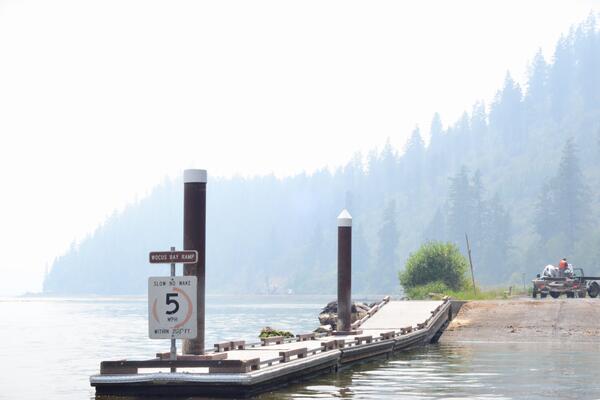
Boat Ramp Next to Upper Klamath Lake, OR
Its early morning as we pass a green expanse of farmland and pull into a parking lot with a boat ramp sloping into the massive waters of Upper Klamath Lake. Paving machines drone next to us, widening the road winding along the lake shore.
Life Cycle of Parasite Diplostomum gavium
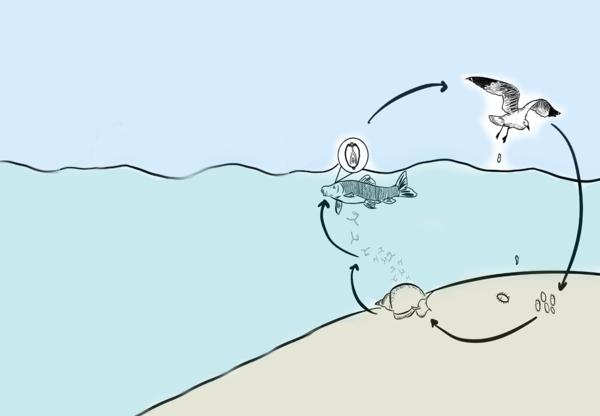
This is an infographic of the life cycle of the parasite, Diplostomum gavium. This parasite affects the Sucker fish in the Upper Klamath Lake. Upper Klamath Lake is home to large colonies of birds and an abundance of snails and fish, making it a haven for trematodes who are reliant on all three for their life cycle. Birds host adult flukes in their intestines.
This is an infographic of the life cycle of the parasite, Diplostomum gavium. This parasite affects the Sucker fish in the Upper Klamath Lake. Upper Klamath Lake is home to large colonies of birds and an abundance of snails and fish, making it a haven for trematodes who are reliant on all three for their life cycle. Birds host adult flukes in their intestines.
A USGS Ecologist gives a tour of a Northern Arizona RestoreNet site
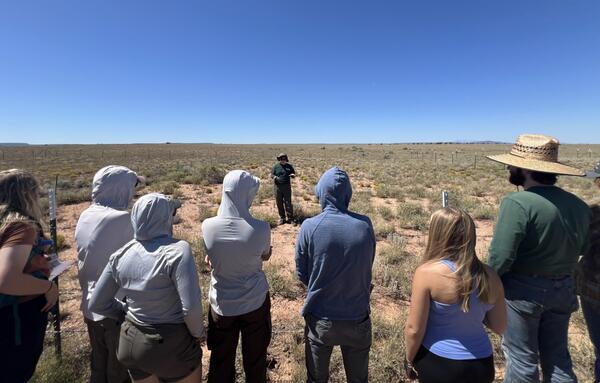
A USGS Ecologist gives a tour of a Northern Arizona RestoreNet siteLaura Shriver, RAMPS coordinator, gives a tour of a Northern Arizona RestoreNet site to Northern Arizona University students. Photo by Jessica Archibald (Diablo Trust).
A USGS Ecologist gives a tour of a Northern Arizona RestoreNet site
A USGS Ecologist gives a tour of a Northern Arizona RestoreNet siteLaura Shriver, RAMPS coordinator, gives a tour of a Northern Arizona RestoreNet site to Northern Arizona University students. Photo by Jessica Archibald (Diablo Trust).
Researchers and ranchers discuss land management in Northern Arizona
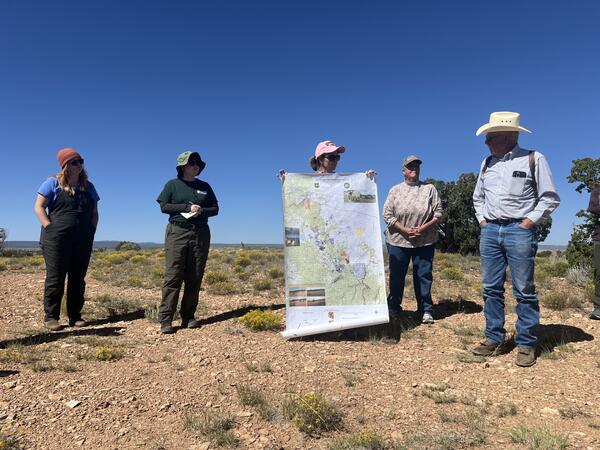
Researchers and ranchers discuss land management in Northern ArizonaResearchers from the U.S. Geological Survey and University of Arizona collaborate with Diablo Trust ranchers on range improvement and restoration efforts on Northern Arizona rangelands. Photo by Jessica Archibald (Diablo Trust).
Researchers and ranchers discuss land management in Northern Arizona
Researchers and ranchers discuss land management in Northern ArizonaResearchers from the U.S. Geological Survey and University of Arizona collaborate with Diablo Trust ranchers on range improvement and restoration efforts on Northern Arizona rangelands. Photo by Jessica Archibald (Diablo Trust).
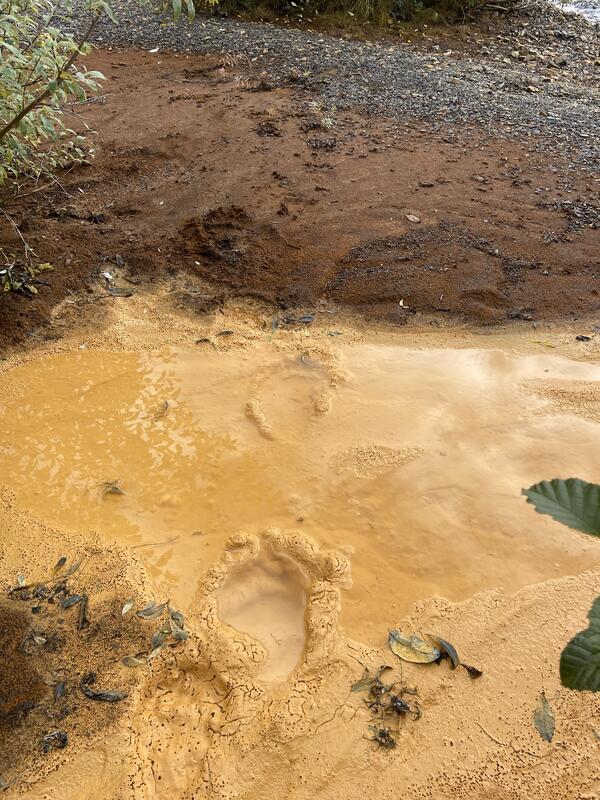
Bear tracks in an orange tributary of the Kugururok River, Noatak National Preserve, Alaska
Bear tracks in an orange tributary of the Kugururok River, Noatak National Preserve, AlaskaOrange streams are increasingly common in the Brooks Range of northern Alaska. The orange stream color reflects oxidized iron, but also often indicates elevated heavy metal concentrations. Our ongoing study aims to document these occurrences and the timing of their onset.
Bear tracks in an orange tributary of the Kugururok River, Noatak National Preserve, Alaska
Bear tracks in an orange tributary of the Kugururok River, Noatak National Preserve, AlaskaOrange streams are increasingly common in the Brooks Range of northern Alaska. The orange stream color reflects oxidized iron, but also often indicates elevated heavy metal concentrations. Our ongoing study aims to document these occurrences and the timing of their onset.
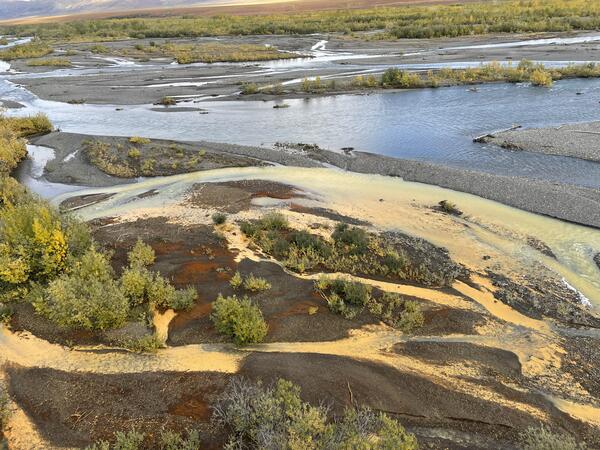
Orange waters mixing in to the mainstem of the Kugururok River
Orange waters mixing in to the mainstem of the Kugururok RiverOrange streams are increasingly common in the Brooks Range of northern Alaska. The orange stream color reflects oxidized iron, but also often indicates elevated heavy metal concentrations. Our ongoing study aims to document these occurrences and the timing of their onset.
Orange waters mixing in to the mainstem of the Kugururok River
Orange waters mixing in to the mainstem of the Kugururok RiverOrange streams are increasingly common in the Brooks Range of northern Alaska. The orange stream color reflects oxidized iron, but also often indicates elevated heavy metal concentrations. Our ongoing study aims to document these occurrences and the timing of their onset.
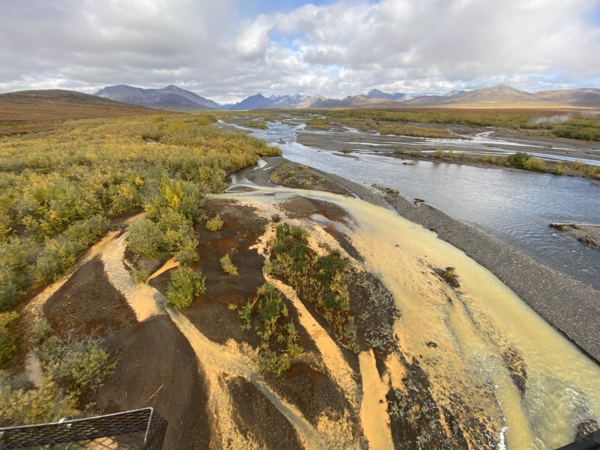
An orange tributary of the Kugururok River in Noatak National Preserve, Alaska
An orange tributary of the Kugururok River in Noatak National Preserve, AlaskaOrange streams are increasingly common in the Brooks Range of northern Alaska. The orange stream color reflects oxidized iron, but also often indicates elevated heavy metal concentrations. Our ongoing study aims to document these occurrences and the timing of their onset.
An orange tributary of the Kugururok River in Noatak National Preserve, Alaska
An orange tributary of the Kugururok River in Noatak National Preserve, AlaskaOrange streams are increasingly common in the Brooks Range of northern Alaska. The orange stream color reflects oxidized iron, but also often indicates elevated heavy metal concentrations. Our ongoing study aims to document these occurrences and the timing of their onset.
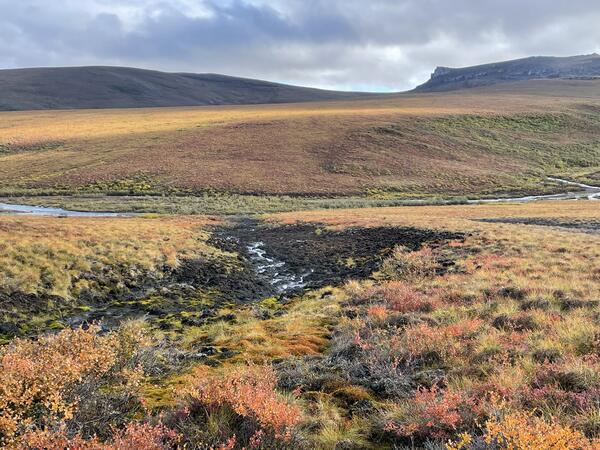
An acid seep on the Nakolikurok Creek
Orange streams are increasingly common in the Brooks Range of northern Alaska. The orange stream color reflects oxidized iron, but also often indicates elevated heavy metal concentrations. Our ongoing study aims to document these occurrences and the timing of their onset.
Orange streams are increasingly common in the Brooks Range of northern Alaska. The orange stream color reflects oxidized iron, but also often indicates elevated heavy metal concentrations. Our ongoing study aims to document these occurrences and the timing of their onset.
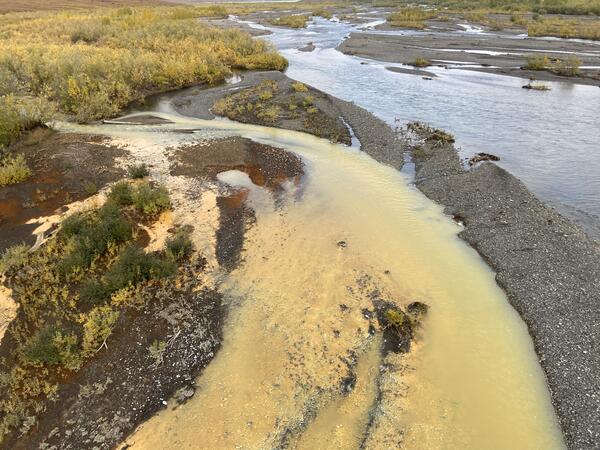
An orange tributary of the Kugururok River in Alaska's Noatak National Preserve
An orange tributary of the Kugururok River in Alaska's Noatak National PreserveOrange streams are increasingly common in the Brooks Range of northern Alaska. The orange stream color reflects oxidized iron, but also often indicates elevated heavy metal concentrations. Our ongoing study aims to document these occurrences and the timing of their onset.
An orange tributary of the Kugururok River in Alaska's Noatak National Preserve
An orange tributary of the Kugururok River in Alaska's Noatak National PreserveOrange streams are increasingly common in the Brooks Range of northern Alaska. The orange stream color reflects oxidized iron, but also often indicates elevated heavy metal concentrations. Our ongoing study aims to document these occurrences and the timing of their onset.
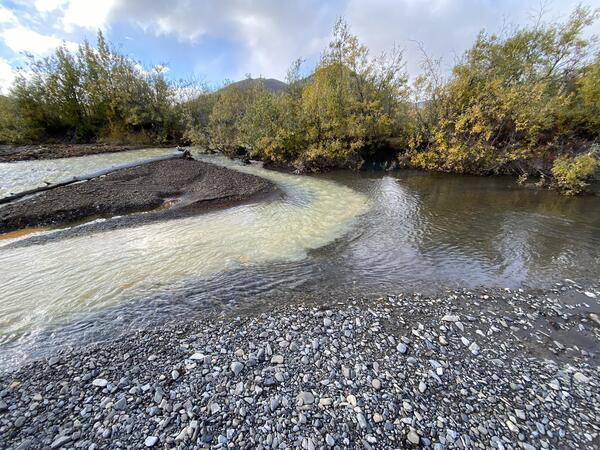
Mixing of an orange tributary and Kugururok River, Noatak National Preserve, Alaska
Mixing of an orange tributary and Kugururok River, Noatak National Preserve, AlaskaOrange streams are increasingly common in the Brooks Range of northern Alaska. The orange stream color reflects oxidized iron, but also often indicates elevated heavy metal concentrations. Our ongoing study aims to document these occurrences and the timing of their onset.
Mixing of an orange tributary and Kugururok River, Noatak National Preserve, Alaska
Mixing of an orange tributary and Kugururok River, Noatak National Preserve, AlaskaOrange streams are increasingly common in the Brooks Range of northern Alaska. The orange stream color reflects oxidized iron, but also often indicates elevated heavy metal concentrations. Our ongoing study aims to document these occurrences and the timing of their onset.
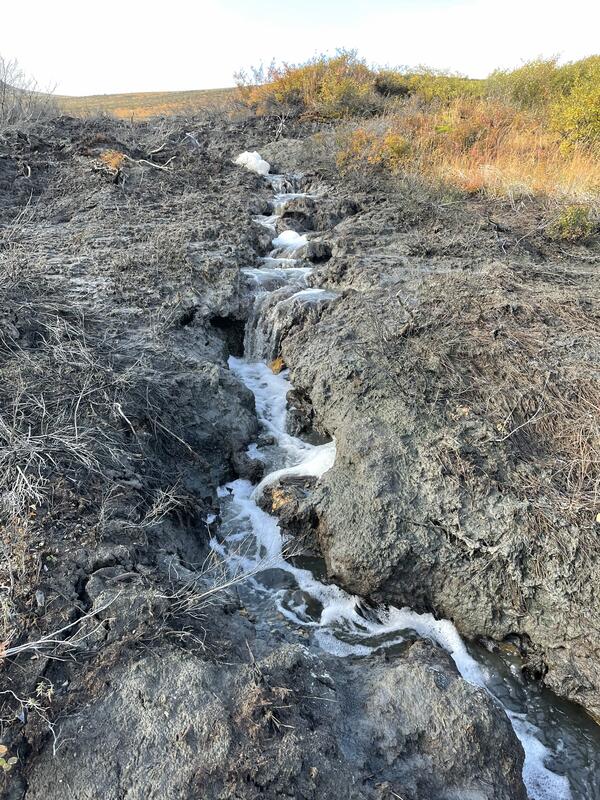
Acidic waters kill and blacken vegetation as they plunge downhill towards the Nakolikurok Creek
Acidic waters kill and blacken vegetation as they plunge downhill towards the Nakolikurok CreekOrange streams are increasingly common in the Brooks Range of northern Alaska. The orange stream color reflects oxidized iron, but also often indicates elevated heavy metal concentrations. Our ongoing study aims to document these occurrences and the timing of their onset.
Acidic waters kill and blacken vegetation as they plunge downhill towards the Nakolikurok Creek
Acidic waters kill and blacken vegetation as they plunge downhill towards the Nakolikurok CreekOrange streams are increasingly common in the Brooks Range of northern Alaska. The orange stream color reflects oxidized iron, but also often indicates elevated heavy metal concentrations. Our ongoing study aims to document these occurrences and the timing of their onset.
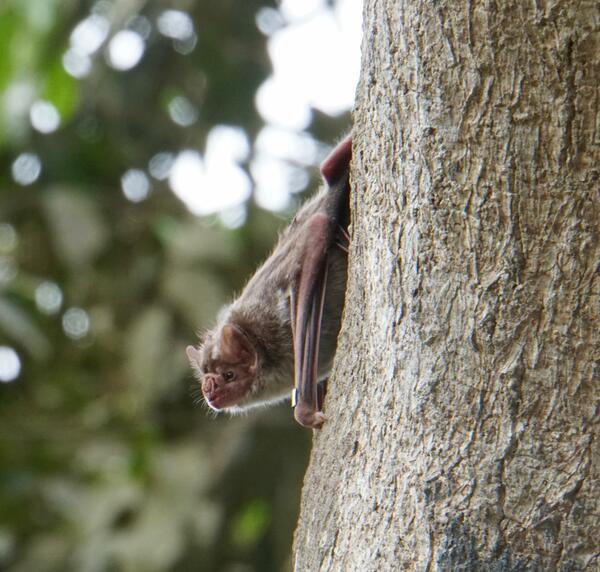
Vampire Bat on a Tree
USGS is developing and testing a safe rabies vaccine for vampire bats and conducting field studies for a practical delivery of this vaccine to wild populations of bats in the future.
USGS is developing and testing a safe rabies vaccine for vampire bats and conducting field studies for a practical delivery of this vaccine to wild populations of bats in the future.
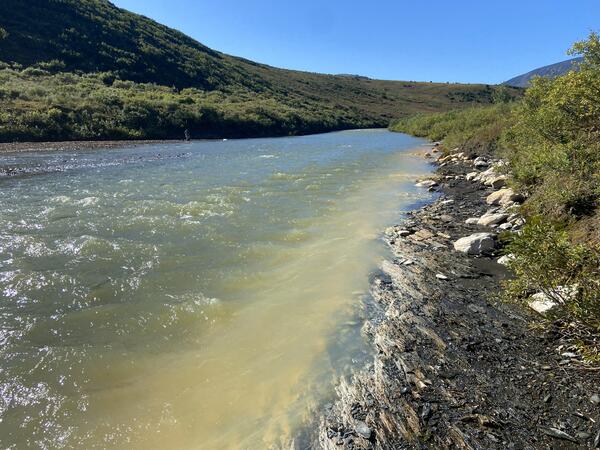
Anatok Creek, Kobuk Valley National Park, Alaska
Orange streams are increasingly common in the Brooks Range of northern Alaska. The orange stream color reflects oxidized iron, but also often indicates elevated heavy metal concentrations. Our ongoing study aims to document these occurrences and the timing of their onset.
Orange streams are increasingly common in the Brooks Range of northern Alaska. The orange stream color reflects oxidized iron, but also often indicates elevated heavy metal concentrations. Our ongoing study aims to document these occurrences and the timing of their onset.
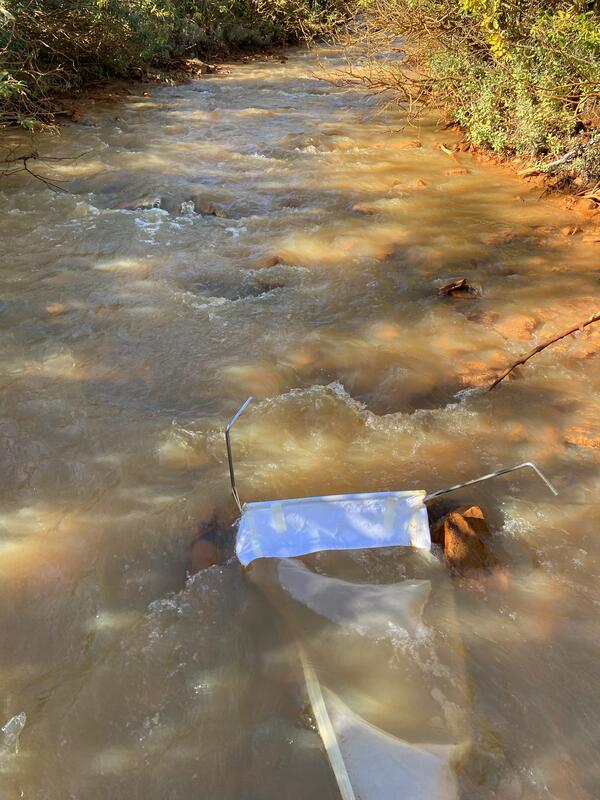
Drift net collecting samples in orange tributary of Anatok Creek, Kobuk Valley National Park, Alaska
Drift net collecting samples in orange tributary of Anatok Creek, Kobuk Valley National Park, AlaskaOrange streams are increasingly common in the Brooks Range of northern Alaska. The orange stream color reflects oxidized iron, but also often indicates elevated heavy metal concentrations. Our ongoing study aims to document these occurrences and the timing of their onset.
Drift net collecting samples in orange tributary of Anatok Creek, Kobuk Valley National Park, Alaska
Drift net collecting samples in orange tributary of Anatok Creek, Kobuk Valley National Park, AlaskaOrange streams are increasingly common in the Brooks Range of northern Alaska. The orange stream color reflects oxidized iron, but also often indicates elevated heavy metal concentrations. Our ongoing study aims to document these occurrences and the timing of their onset.
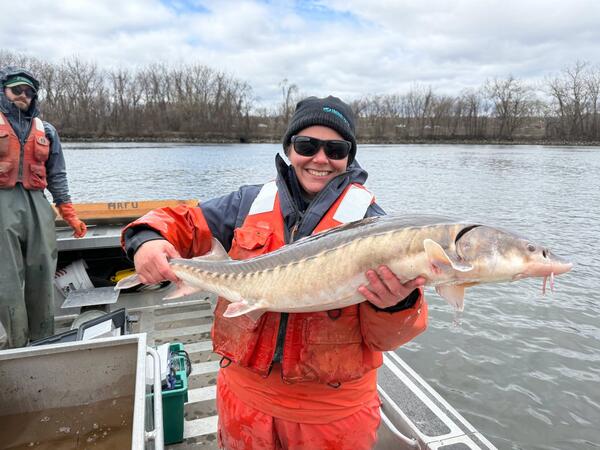
Shannon White Holding Shortnose Sturgeon
Sturgeons are among the most endangered animals globally. Once plentiful along the Atlantic coast, the shortnose sturgeon suffered severe population declines due to overfishing and habitat loss. In 1973, it was listed under the federal Endangered Species Act, as the Hudson River—its key habitat—was heavily polluted and oxygen-deprived.
Sturgeons are among the most endangered animals globally. Once plentiful along the Atlantic coast, the shortnose sturgeon suffered severe population declines due to overfishing and habitat loss. In 1973, it was listed under the federal Endangered Species Act, as the Hudson River—its key habitat—was heavily polluted and oxygen-deprived.
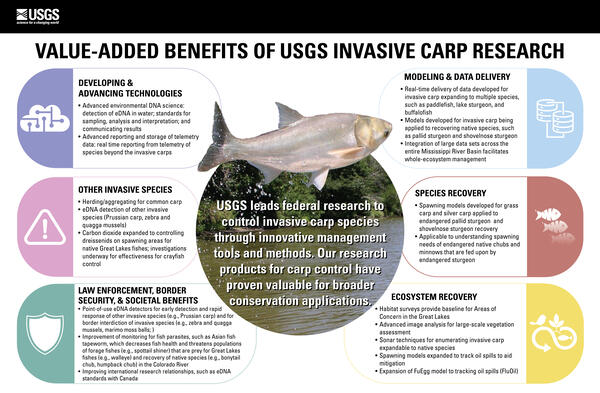
Value-added Benefits of USGS Invasive Carp Research
Value-added Benefits of USGS Invasive Carp ResearchThe USGS leads federal research to control invasive carp species through innovative management tools and methods. Our research products for carp control have proven valuable for broader conservation applications.
DEVELOPING & ADVANCING TECHNOLOGIES
Value-added Benefits of USGS Invasive Carp Research
Value-added Benefits of USGS Invasive Carp ResearchThe USGS leads federal research to control invasive carp species through innovative management tools and methods. Our research products for carp control have proven valuable for broader conservation applications.
DEVELOPING & ADVANCING TECHNOLOGIES

Waiting for passengers at Katmai National Park and Preserve
Waiting for passengers at Katmai National Park and PreserveRidged hull inflatable skiffs are used by scientists to conduct rocky intertidal monitoring for the Nearshore Component of the Gulf Watch Alaska program. Data are collected to estimate percent cover and densities of intertidal invertebrates and algae to assess change in communities from sheltered rocky shorelines.
Waiting for passengers at Katmai National Park and Preserve
Waiting for passengers at Katmai National Park and PreserveRidged hull inflatable skiffs are used by scientists to conduct rocky intertidal monitoring for the Nearshore Component of the Gulf Watch Alaska program. Data are collected to estimate percent cover and densities of intertidal invertebrates and algae to assess change in communities from sheltered rocky shorelines.

Sunset over Katmai
The sun sets over Katmai National Park and Preserve. Katmai is one of four monitoring sites for the Nearshore Component of the Gulf Watch Alaska program.
The sun sets over Katmai National Park and Preserve. Katmai is one of four monitoring sites for the Nearshore Component of the Gulf Watch Alaska program.

A retrieved HOBO temperature logger at Katmai National Park and Preserve
A retrieved HOBO temperature logger at Katmai National Park and PreserveA scientist holds a HOBO temperature logger that was recently retrieved from a sampling site at Katmai National Park and Preserve. The sensor end of the HOBO was partially covered by a small sea star (Leptasterias spp.) when recovered from the site. The temperature loggers record the water temperature.
A retrieved HOBO temperature logger at Katmai National Park and Preserve
A retrieved HOBO temperature logger at Katmai National Park and PreserveA scientist holds a HOBO temperature logger that was recently retrieved from a sampling site at Katmai National Park and Preserve. The sensor end of the HOBO was partially covered by a small sea star (Leptasterias spp.) when recovered from the site. The temperature loggers record the water temperature.

Bumble bee pollinating a wild celery (Angelica lucida) flower at Katmai National Park and Preserve
Bumble bee pollinating a wild celery (Angelica lucida) flower at Katmai National Park and PreserveA native bubble bee pollinates a wild celery. There are 22 species of bumblebees in Alaska and all are essential pollinators during the short growing season.
Bumble bee pollinating a wild celery (Angelica lucida) flower at Katmai National Park and Preserve
Bumble bee pollinating a wild celery (Angelica lucida) flower at Katmai National Park and PreserveA native bubble bee pollinates a wild celery. There are 22 species of bumblebees in Alaska and all are essential pollinators during the short growing season.
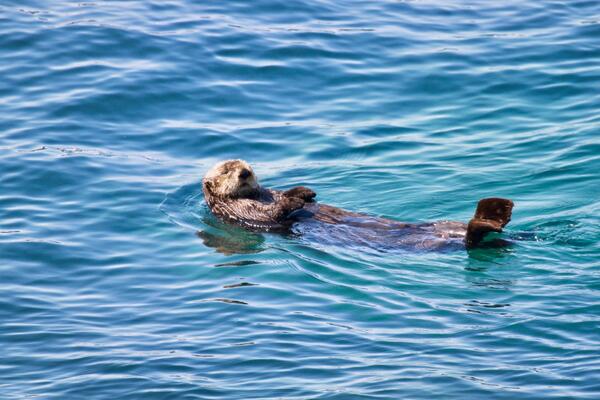
Sleeping sea otter
A male Northern Sea Otter sleeps on his back after foraging for clams at Katmai National Park and Preserve.
A male Northern Sea Otter sleeps on his back after foraging for clams at Katmai National Park and Preserve.