U.S. flag

An official website of the United States government

Images

See our science through the images below.

Filter Total Items: 3512
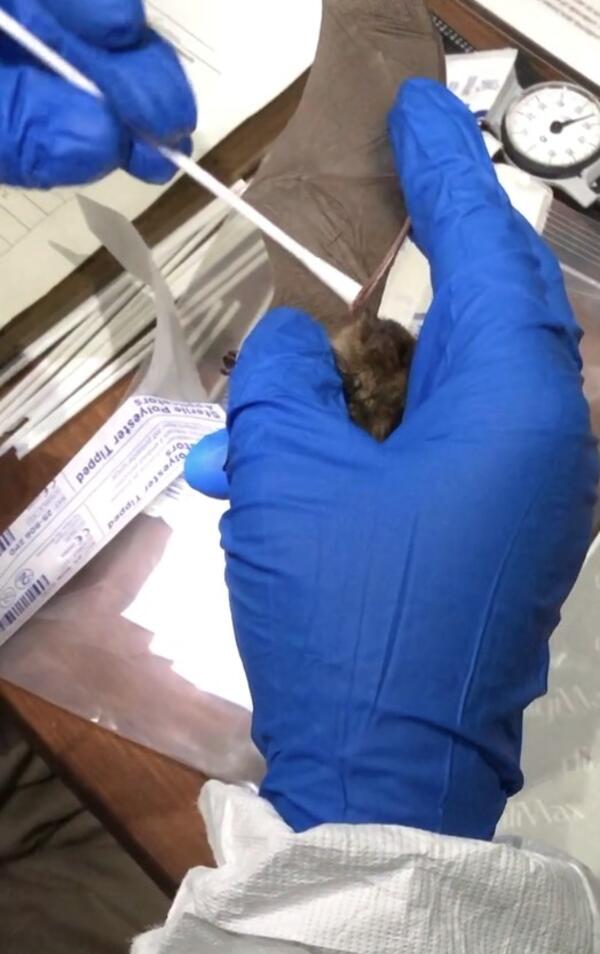
Gloved hands swab a bat's outstretched wing
Collecting fungal samples to test for Pseudogymnoascus destructans

Individual bats are tested for Pseudogymnoascus destructans, the fungus that causes white-nose syndrome, by wiping a sterile swab across the skin of a bat's outstretched wing and muzzle.
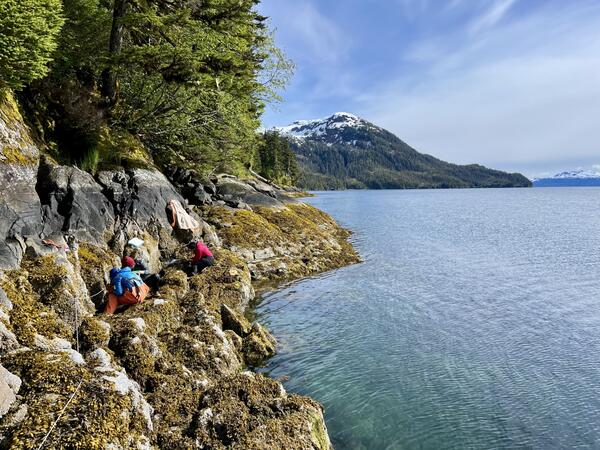
Two scientists examine a rocky shoreline covered in yellow algae and seaweed.
Monitoring mussel beds along the rocky coastline of western Prince William Sound, Alaska

Two scientists work to identify change in the density and size distribution of mussels (Mytilus trossulus) in mussel beds. Long-term data collected are used as an indicator of mussel prey availability for various predators, including Sea Otters, Black Oystercatchers, sea ducks and sea stars.

Two scientists work to identify change in the density and size distribution of mussels (Mytilus trossulus) in mussel beds. Long-term data collected are used as an indicator of mussel prey availability for various predators, including Sea Otters, Black Oystercatchers, sea ducks and sea stars.

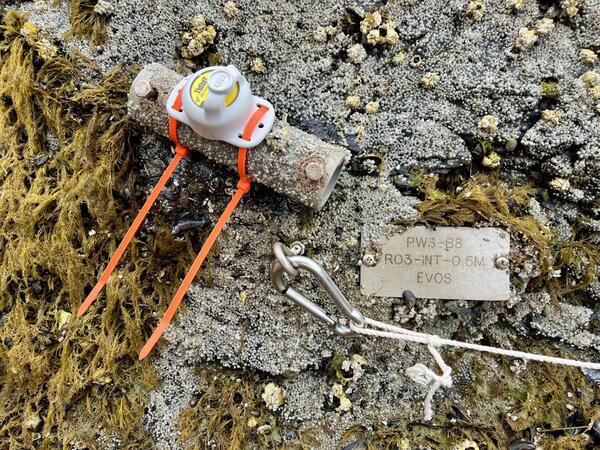
A plastic tube attached to barnacle covered rocks.
Air and water temperature collection at long-term rocky intertidal monitoring site

A temperature logger (HOBO) affixed to a rocky outcrop in western Prince Wiliam Sound. Long-term change in intertidal invertebrate and algal communities is assessed by using temperature loggers.

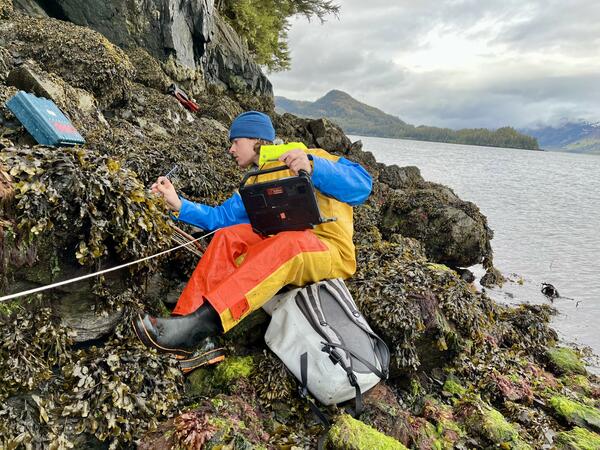
A biologist looks at a rocky coastline covered in yellow algae and seaweed.
Rocky intertidal cover estimate in Prince William Sound, Alaska

A scientist estimates percent cover and densities of intertidal invertebrates and algae to assess change in communities from sheltered rocky shorelines in western Prince William Sound, Alaska.

A scientist estimates percent cover and densities of intertidal invertebrates and algae to assess change in communities from sheltered rocky shorelines in western Prince William Sound, Alaska.

infographic displaying economic statistics of various characteristics and challenges in ecosystems science.
Discover Ecosystems
Discover Ecosystems
Discover Ecosystems

America’s diverse ecosystems are an asset to current and future generations by supporting economically and recreationally important fish, wildlife, and lands. Healthy ecosystems support people and nature, fostering prosperity and enjoyment for all. 

America’s diverse ecosystems are an asset to current and future generations by supporting economically and recreationally important fish, wildlife, and lands. Healthy ecosystems support people and nature, fostering prosperity and enjoyment for all. 

infographic displaying economic statistics of various characteristics and challenges in ecosystems science.
Discover Ecosystems
Discover Ecosystems
Discover Ecosystems

America’s diverse ecosystems are an asset to current and future generations by supporting economically and recreationally important fish, wildlife, and lands. Healthy ecosystems support people and nature, fostering prosperity and enjoyment for all. 

America’s diverse ecosystems are an asset to current and future generations by supporting economically and recreationally important fish, wildlife, and lands. Healthy ecosystems support people and nature, fostering prosperity and enjoyment for all. 

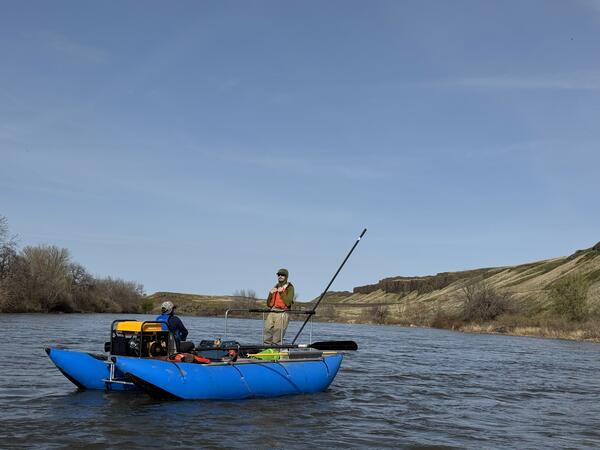
USGS researchers electrofishing on the Yakima River
USGS Researchers Electrofishing on the Yakima River

This is a photo from our scientists working with the Yakama Nation to remove smallmouth bass and other invasive salmon-eating predators. The work involves taking fin clips, scales, diet samples, and tagging and releasing larger fish. This fieldwork will continue through late May 2025. The crew shown in the photos are Ben, Becky, Jeff, and Chloe. 

This is a photo from our scientists working with the Yakama Nation to remove smallmouth bass and other invasive salmon-eating predators. The work involves taking fin clips, scales, diet samples, and tagging and releasing larger fish. This fieldwork will continue through late May 2025. The crew shown in the photos are Ben, Becky, Jeff, and Chloe. 

GIF with maps showing chronic wasting disease distribution in North America prior to 2000 and yearly from 2004-2024.
Chronic wasting disease: change in documented distribution in North America 2000-2024
Prioritizing critical elements for environmental research
Multidisciplinary approach to prioritize critical elements for environmental research
Turtle sitting in plants and sunshine with its head up. It has black markings along its neck.
15 year old female turtle

Northwestern pond turtles are sexually dimorphic (females and males look different). One way to tell female and male turtles apart is that they often have different color patterns on their face and throats. Females have a more speckled throat, while males throats tend to be more solidly white/yellow.

Northwestern pond turtles are sexually dimorphic (females and males look different). One way to tell female and male turtles apart is that they often have different color patterns on their face and throats. Females have a more speckled throat, while males throats tend to be more solidly white/yellow.

Juvenile turtle sitting in vegetation with white flowers with yellow centers in from of it
8 year old juvenile northwestern pond turtle

These turtles are considered juveniles until they reach about 5 inches long. In this part of their range turtles remain juveniles and usually do not begin to reproduce until they are over ten years old.  


Photo taken at Lookout Point Reservoir, Oregon. 

These turtles are considered juveniles until they reach about 5 inches long. In this part of their range turtles remain juveniles and usually do not begin to reproduce until they are over ten years old.  


Photo taken at Lookout Point Reservoir, Oregon. 

up close of a juvenile turtle. It is peaking out of its shell with both eyes on the camera
Juvenile Northwestern pond turtle

This is a juvenile turtle. When they aren't in scared or in danger, northwestern turtles are very curious and will look towards movements and unusual sounds to figure out what is going on. They have excellent vision and hearing.  

Photo taken at Hills Creek Reservoir, Oregon. 


This is a juvenile turtle. When they aren't in scared or in danger, northwestern turtles are very curious and will look towards movements and unusual sounds to figure out what is going on. They have excellent vision and hearing.  

Photo taken at Hills Creek Reservoir, Oregon. 


Turtle with a small circular black transmitter on its shell. It is standing on top of leaf litter.
Turtle being released after receiving a new transmitter

We glue transmitters onto their upper shells (called their carapace) using non-permanent epoxy. We will track these turtles until the transmitter battery dies (about 2 years) and soon after that the epoxy degrades, and the transmitter will fall off the turtle without harming the turtle or it's shell. 

We glue transmitters onto their upper shells (called their carapace) using non-permanent epoxy. We will track these turtles until the transmitter battery dies (about 2 years) and soon after that the epoxy degrades, and the transmitter will fall off the turtle without harming the turtle or it's shell. 

Turtle covered in moss and leaf litter. It is still resting in its shell but looks like its waking up
Turtle coming out of brumation

Turtle found in the spring coming out of brumation. It is still covered in mud from being buried in the ground all winter.  They can brumate up to several months! 

Photo taken at Lookout Point Reservoir, Oregon. 

Turtle found in the spring coming out of brumation. It is still covered in mud from being buried in the ground all winter.  They can brumate up to several months! 

Photo taken at Lookout Point Reservoir, Oregon. 

Turtle moving through underbrush, the forest is full of ferns and dead litter matter
Return to overwintering spot

Northwestern pond turtles often return to the same area each winter for brumation. We tracked this turtle overwintering in almost the exact same area in the winters of 2023 and 2024. It's brumation location was only 11m apart between the two years.  


Photo taken at Fall Creek Reservoir, Oregon. 

Northwestern pond turtles often return to the same area each winter for brumation. We tracked this turtle overwintering in almost the exact same area in the winters of 2023 and 2024. It's brumation location was only 11m apart between the two years.  


Photo taken at Fall Creek Reservoir, Oregon. 

Microbes are important
Why are microbes important?

Text box including a short question/answer on why microbes are important. Can be used for outreach.

The difference between PFOS and PFAS
What is the difference between PFOS and PFAS?

Q: What’s the difference between PFOS and PFAS?

A: PFAS is a broad term that refers to a large group of man-made chemicals that contain fluorine atoms. This group includes thousands of different compounds and are highly resistant to degradation. 

Q: What’s the difference between PFOS and PFAS?

A: PFAS is a broad term that refers to a large group of man-made chemicals that contain fluorine atoms. This group includes thousands of different compounds and are highly resistant to degradation. 

Ecologist taking notes on a tablet. Behind her is a reservoir surrounded by pine trees
Ecologist collecting information on turtle overwintering spot

This turtle crossed a road leaving the reservoir and will cross it again to return to the reservoir. Road crossings present high risk to turtles and are a large source of mortality.  


Photo taken at Lookout Point Reservoir, Oregon

This turtle crossed a road leaving the reservoir and will cross it again to return to the reservoir. Road crossings present high risk to turtles and are a large source of mortality.  


Photo taken at Lookout Point Reservoir, Oregon

Was this page helpful?