



A shelf full of legacy data collected on seabirds in Cook Inlet and Glacier Bay, Alaska.
Images
Multimedia related to the Species Management Research Program are shown below. Click on an image to see a larger view and additional details.
Filter Total Items: 48
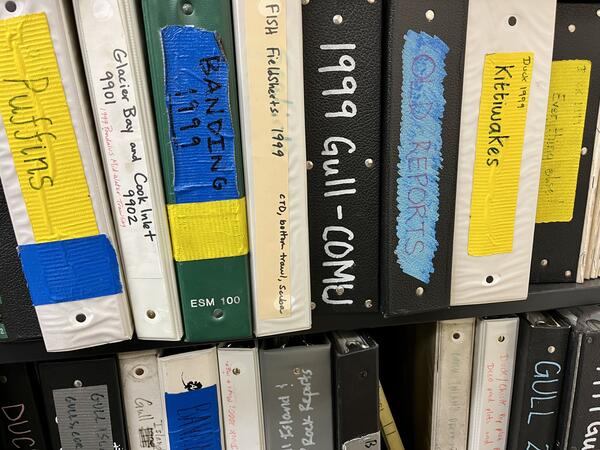
Shelf of legacy seabird data
A shelf full of legacy data collected on seabirds in Cook Inlet and Glacier Bay, Alaska.
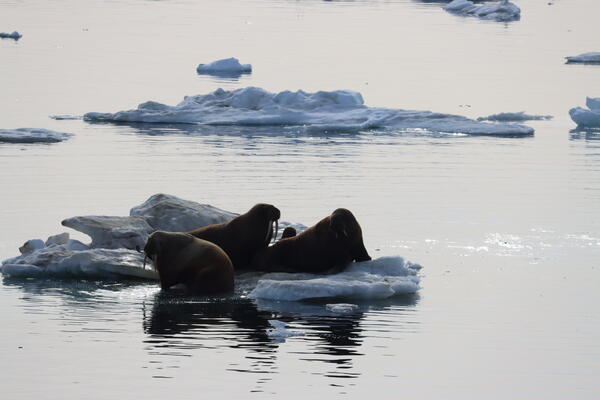
Pacific walruses hauled out on sea ice evaluating their surroundings
Pacific walruses hauled out on sea ice evaluating their surroundingsA small group of Pacific walruses consider entering the water as they assess their surroundings. A calf can be seen in the back of the group. USGS and the U.S.
Pacific walruses hauled out on sea ice evaluating their surroundings
Pacific walruses hauled out on sea ice evaluating their surroundingsA small group of Pacific walruses consider entering the water as they assess their surroundings. A calf can be seen in the back of the group. USGS and the U.S.

Discover Ecosystems
America’s diverse ecosystems are an asset to current and future generations by supporting economically and recreationally important fish, wildlife, and lands. Healthy ecosystems support people and nature, fostering prosperity and enjoyment for all.
By
Ecosystems Mission Area, Biological Threats and Invasive Species Research Program, Climate Adaptation Science Centers, Cooperative Research Units, Ecosystems Land Change Science Program, Environmental Health Program, Land Management Research Program, Species Management Research Program, Communications and Publishing
America’s diverse ecosystems are an asset to current and future generations by supporting economically and recreationally important fish, wildlife, and lands. Healthy ecosystems support people and nature, fostering prosperity and enjoyment for all.
By
Ecosystems Mission Area, Biological Threats and Invasive Species Research Program, Climate Adaptation Science Centers, Cooperative Research Units, Ecosystems Land Change Science Program, Environmental Health Program, Land Management Research Program, Species Management Research Program, Communications and Publishing

Discover Ecosystems
America’s diverse ecosystems are an asset to current and future generations by supporting economically and recreationally important fish, wildlife, and lands. Healthy ecosystems support people and nature, fostering prosperity and enjoyment for all.
America’s diverse ecosystems are an asset to current and future generations by supporting economically and recreationally important fish, wildlife, and lands. Healthy ecosystems support people and nature, fostering prosperity and enjoyment for all.

Dozer Line through Repaired Habitat Supervised by SPARCS Fireline Resource Advisors during the Palisades Fire
Dozer Line through Repaired Habitat Supervised by SPARCS Fireline Resource Advisors during the Palisades FireBulldozer lines create breaks in vegetation and are commonly used when fighting wildfires. This dozer line was created during the Palisades Fire in Los Angeles County, California in January 2025.
Dozer Line through Repaired Habitat Supervised by SPARCS Fireline Resource Advisors during the Palisades Fire
Dozer Line through Repaired Habitat Supervised by SPARCS Fireline Resource Advisors during the Palisades FireBulldozer lines create breaks in vegetation and are commonly used when fighting wildfires. This dozer line was created during the Palisades Fire in Los Angeles County, California in January 2025.

Northern rubber boa climate-niche shift
The northern rubber boa is an example of a species predicted to have a smaller climate-niche space by the end of the century. Under climate scenario RCP 8.5--which assumes carbon emissions stay near current levels--this species' range could be reduced from most of the northwestern U.S. to only a small portion of British Columbia.
The northern rubber boa is an example of a species predicted to have a smaller climate-niche space by the end of the century. Under climate scenario RCP 8.5--which assumes carbon emissions stay near current levels--this species' range could be reduced from most of the northwestern U.S. to only a small portion of British Columbia.

Goose Lake, Oregon-California
Goose Lake, on the Oregon-California border, is one of the 20 terminal lakes identified by USGS partners as priority ecosystems for study by the Saline Lakes Ecosystems IWAA.
By
Ecosystems Mission Area, Water Resources Mission Area, Species Management Research Program, Water Resources Research Act Program, Forest and Rangeland Ecosystem Science Center, Fort Collins Science Center, Nevada Water Science Center, Oregon Water Science Center, Utah Water Science Center, Western Ecological Research Center (WERC), Saline Lake Ecosystems Integrated Water Availability Assessment
Goose Lake, on the Oregon-California border, is one of the 20 terminal lakes identified by USGS partners as priority ecosystems for study by the Saline Lakes Ecosystems IWAA.
By
Ecosystems Mission Area, Water Resources Mission Area, Species Management Research Program, Water Resources Research Act Program, Forest and Rangeland Ecosystem Science Center, Fort Collins Science Center, Nevada Water Science Center, Oregon Water Science Center, Utah Water Science Center, Western Ecological Research Center (WERC), Saline Lake Ecosystems Integrated Water Availability Assessment

Forage Observations, California Sea Otters
Observing southern sea otter foraging behavior from San Nicolas Island, California.
Observing southern sea otter foraging behavior from San Nicolas Island, California.

A hovercraft glides over the surface of Summer Lake, Oregon
A hovercraft glides over the surface of Summer Lake, OregonSummer Lake, Oregon is one of the 20 terminal lakes identified by USGS partners as priority ecosystems for study by the Saline Lakes Ecosystems IWAA.
By
Ecosystems Mission Area, Water Resources Mission Area, Species Management Research Program, Water Availability and Use Science Program, Forest and Rangeland Ecosystem Science Center, Fort Collins Science Center, Nevada Water Science Center, Oregon Water Science Center, Utah Water Science Center, Western Ecological Research Center (WERC), Saline Lake Ecosystems Integrated Water Availability Assessment
A hovercraft glides over the surface of Summer Lake, Oregon
A hovercraft glides over the surface of Summer Lake, OregonSummer Lake, Oregon is one of the 20 terminal lakes identified by USGS partners as priority ecosystems for study by the Saline Lakes Ecosystems IWAA.
By
Ecosystems Mission Area, Water Resources Mission Area, Species Management Research Program, Water Availability and Use Science Program, Forest and Rangeland Ecosystem Science Center, Fort Collins Science Center, Nevada Water Science Center, Oregon Water Science Center, Utah Water Science Center, Western Ecological Research Center (WERC), Saline Lake Ecosystems Integrated Water Availability Assessment

Elkhorn coral suffering from bleaching in Dry Tortugas National Park, Pulaski Shoal
Elkhorn coral suffering from bleaching in Dry Tortugas National Park, Pulaski ShoalShown here is a colony of the threatened Elkhorn coral, Acropora palmata, that has succumbed to "bleaching," that is, lost all its algal symbionts (also called zooxanthellae) because of the summer 2023 ocean-heat wave. The coral is attached to a cement block as part of the U.S.
Elkhorn coral suffering from bleaching in Dry Tortugas National Park, Pulaski Shoal
Elkhorn coral suffering from bleaching in Dry Tortugas National Park, Pulaski ShoalShown here is a colony of the threatened Elkhorn coral, Acropora palmata, that has succumbed to "bleaching," that is, lost all its algal symbionts (also called zooxanthellae) because of the summer 2023 ocean-heat wave. The coral is attached to a cement block as part of the U.S.

Divers putting shades over experimental Elkhorn corals in Biscayne National Park
Divers putting shades over experimental Elkhorn corals in Biscayne National ParkShown here are three SCUBA divers installing shade structures over experimental Elkhorn corals (Acropora palmata) that have become "bleached," that is, lost all their algal symbionts (also called zooxanthellae) because of the summer 2023 ocean-heat wave. The corals are attached to cement blocks as part of the U.S.
Divers putting shades over experimental Elkhorn corals in Biscayne National Park
Divers putting shades over experimental Elkhorn corals in Biscayne National ParkShown here are three SCUBA divers installing shade structures over experimental Elkhorn corals (Acropora palmata) that have become "bleached," that is, lost all their algal symbionts (also called zooxanthellae) because of the summer 2023 ocean-heat wave. The corals are attached to cement blocks as part of the U.S.

Bleached Elkhorn coral now under shade in Biscayne National Park
Bleached Elkhorn coral now under shade in Biscayne National ParkShown here is a small colony of the threatened Elkhorn coral, Acropora palmata, that has become "bleached," that is, lost all its algal symbionts (also called zooxanthellae) because of the summer 2023 ocean-heat wave. The coral is attached to a cement block as part of the U.S.
Bleached Elkhorn coral now under shade in Biscayne National Park
Bleached Elkhorn coral now under shade in Biscayne National ParkShown here is a small colony of the threatened Elkhorn coral, Acropora palmata, that has become "bleached," that is, lost all its algal symbionts (also called zooxanthellae) because of the summer 2023 ocean-heat wave. The coral is attached to a cement block as part of the U.S.

Bleached Elkhorn coral under a shade in Dry Tortugas National Park, Garden Key
Bleached Elkhorn coral under a shade in Dry Tortugas National Park, Garden KeyShown here is a colony of the threatened Elkhorn coral, Acropora palmata, that has become "bleached," that is, lost all its algal symbionts (also called zooxanthellae) because of the summer 2023 ocean-heat wave. The coral is attached to a cement block as part of the U.S.
Bleached Elkhorn coral under a shade in Dry Tortugas National Park, Garden Key
Bleached Elkhorn coral under a shade in Dry Tortugas National Park, Garden KeyShown here is a colony of the threatened Elkhorn coral, Acropora palmata, that has become "bleached," that is, lost all its algal symbionts (also called zooxanthellae) because of the summer 2023 ocean-heat wave. The coral is attached to a cement block as part of the U.S.

Bleached Elkhorn coral in Dry Tortugas National Park
Bleached Elkhorn coral in Dry Tortugas National ParkShown here is a colony of the threatened Elkhorn coral, Acropora palmata, in Dry Tortugas National Park that has become "bleached," that is, lost all its algal symbionts (also called zooxanthellae) because of the summer 2023 ocean-heat wave.
Bleached Elkhorn coral in Dry Tortugas National Park
Bleached Elkhorn coral in Dry Tortugas National ParkShown here is a colony of the threatened Elkhorn coral, Acropora palmata, in Dry Tortugas National Park that has become "bleached," that is, lost all its algal symbionts (also called zooxanthellae) because of the summer 2023 ocean-heat wave.

Bleached Elkhorn coral under a shade in Dry Tortugas National Park, Pulaski Shoal
Bleached Elkhorn coral under a shade in Dry Tortugas National Park, Pulaski ShoalShown here is a colony of the threatened Elkhorn coral, Acropora palmata, that has become "bleached," that is, lost all its algal symbionts (also called zooxanthellae) because of the summer 2023 ocean-heat wave. The coral is attached to a cement block as part of the U.S.
Bleached Elkhorn coral under a shade in Dry Tortugas National Park, Pulaski Shoal
Bleached Elkhorn coral under a shade in Dry Tortugas National Park, Pulaski ShoalShown here is a colony of the threatened Elkhorn coral, Acropora palmata, that has become "bleached," that is, lost all its algal symbionts (also called zooxanthellae) because of the summer 2023 ocean-heat wave. The coral is attached to a cement block as part of the U.S.
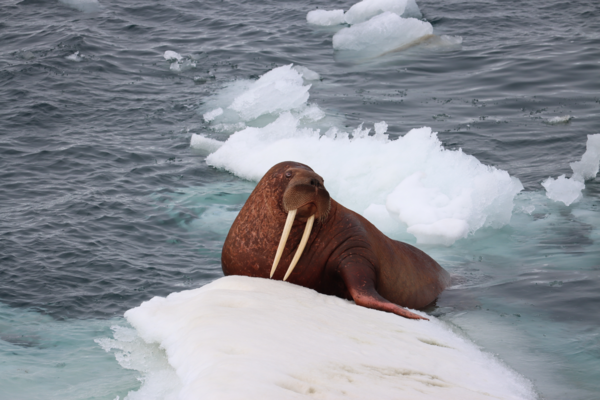
Adult female Pacific walrus sliding into the water
Adult female Pacific walrus sliding into the waterAn adult female Pacific walrus slides into the water as she assesses her surroundings. The female is 15 years or older based on the length of the tusks. USGS and the U.S.
Adult female Pacific walrus sliding into the water
Adult female Pacific walrus sliding into the waterAn adult female Pacific walrus slides into the water as she assesses her surroundings. The female is 15 years or older based on the length of the tusks. USGS and the U.S.
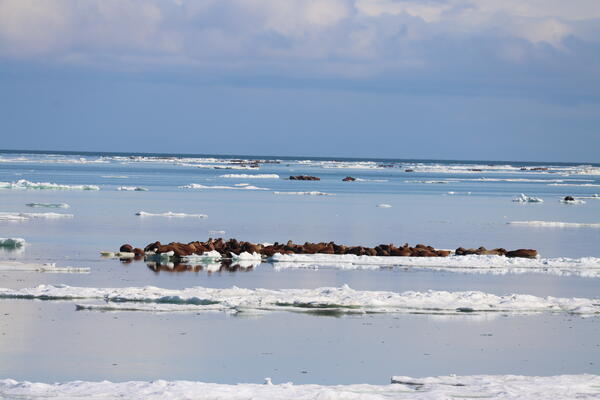
A large and noisy walrus group amidst an aggregation of groups
A large and noisy walrus group amidst an aggregation of groupsAlarge, active, and noisy walrus group hauled on sea ice in the Chukchi Sea. USGS and the U.S.
A large and noisy walrus group amidst an aggregation of groups
A large and noisy walrus group amidst an aggregation of groupsAlarge, active, and noisy walrus group hauled on sea ice in the Chukchi Sea. USGS and the U.S.
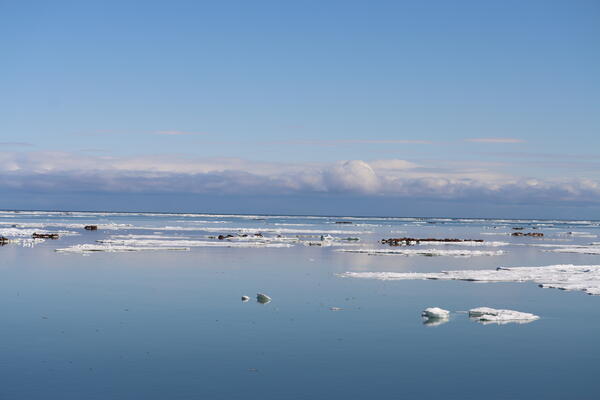
Walruses everywhere
Walrus groups hauled on sea ice as far as the eye can see in the Chukchi Sea. USGS and the U.S.
Walrus groups hauled on sea ice as far as the eye can see in the Chukchi Sea. USGS and the U.S.
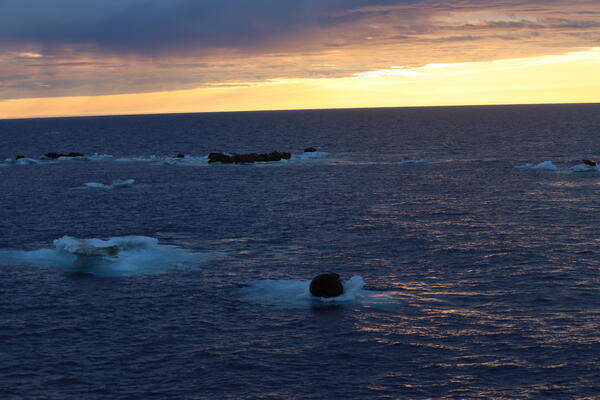
Arctic sunrise over resting walruses
A dim light shines during the summer Arctic morning in the Chukchi Sea as groups of Pacific walruses rest. USGS and the U.S.
A dim light shines during the summer Arctic morning in the Chukchi Sea as groups of Pacific walruses rest. USGS and the U.S.

Avocets flying above Farmington Bay Wildlife Management Area, Utah
Avocets flying above Farmington Bay Wildlife Management Area, UtahThe Saline Lake Ecosystems IWAA Waterbird Movement Project began tagging American Avocets in March 2023 to track their movements across the landscape. Tracking data from these birds will help scientists better understand why these birds choose to use the terminal lake and wetland habitats they do in the Great Basin.
By
Ecosystems Mission Area, Water Resources Mission Area, Species Management Research Program, Water Resources Research Act Program, Forest and Rangeland Ecosystem Science Center, Fort Collins Science Center, Nevada Water Science Center, Oregon Water Science Center, Utah Water Science Center, Western Ecological Research Center (WERC), Saline Lake Ecosystems Integrated Water Availability Assessment
Avocets flying above Farmington Bay Wildlife Management Area, Utah
Avocets flying above Farmington Bay Wildlife Management Area, UtahThe Saline Lake Ecosystems IWAA Waterbird Movement Project began tagging American Avocets in March 2023 to track their movements across the landscape. Tracking data from these birds will help scientists better understand why these birds choose to use the terminal lake and wetland habitats they do in the Great Basin.
By
Ecosystems Mission Area, Water Resources Mission Area, Species Management Research Program, Water Resources Research Act Program, Forest and Rangeland Ecosystem Science Center, Fort Collins Science Center, Nevada Water Science Center, Oregon Water Science Center, Utah Water Science Center, Western Ecological Research Center (WERC), Saline Lake Ecosystems Integrated Water Availability Assessment

Walking the shallows of Lake Abert, Oregon
Lake Abert, Oregon is one of the 20 terminal lakes identified by USGS partners as priority ecosystems for study by the Saline Lakes Ecosystems IWAA.
By
Ecosystems Mission Area, Water Resources Mission Area, Species Management Research Program, Water Availability and Use Science Program, Forest and Rangeland Ecosystem Science Center, Fort Collins Science Center, Nevada Water Science Center, Oregon Water Science Center, Utah Water Science Center, Western Ecological Research Center (WERC), Saline Lake Ecosystems Integrated Water Availability Assessment
Lake Abert, Oregon is one of the 20 terminal lakes identified by USGS partners as priority ecosystems for study by the Saline Lakes Ecosystems IWAA.
By
Ecosystems Mission Area, Water Resources Mission Area, Species Management Research Program, Water Availability and Use Science Program, Forest and Rangeland Ecosystem Science Center, Fort Collins Science Center, Nevada Water Science Center, Oregon Water Science Center, Utah Water Science Center, Western Ecological Research Center (WERC), Saline Lake Ecosystems Integrated Water Availability Assessment