



USGS announces release of updated 3D Hydrography Program data service and supporting tables
The updated service includes new geospatial data based on 3D Elevation Program data. Nationwide Flow Network Derivatives (FNDs) and flow probability statistics are included as separate, downloadable files.
The USGS has updated the 3D Hydrography Program (3DHP) web service. This updated service includes the first new hydrography data published by the 3DHP and aligned with 3D Elevation Program (3DEP) data. The updated data, in the Okanogan River area of Washington State and the Birch Creek watershed in Alaska, are integrated with older data migrated from the retired National Hydrography Dataset. As additional 3DHP data are processed the NHD-based data will be replaced.
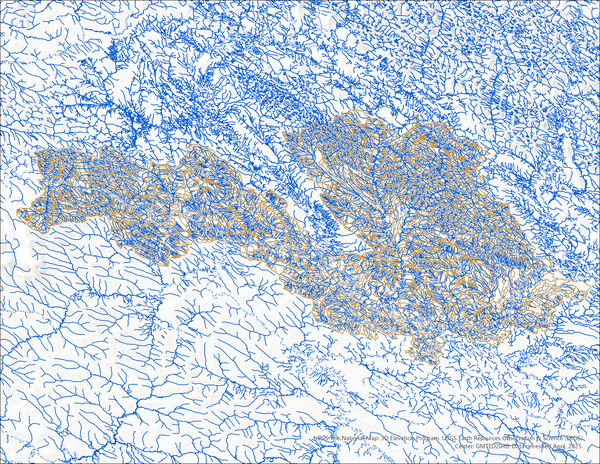
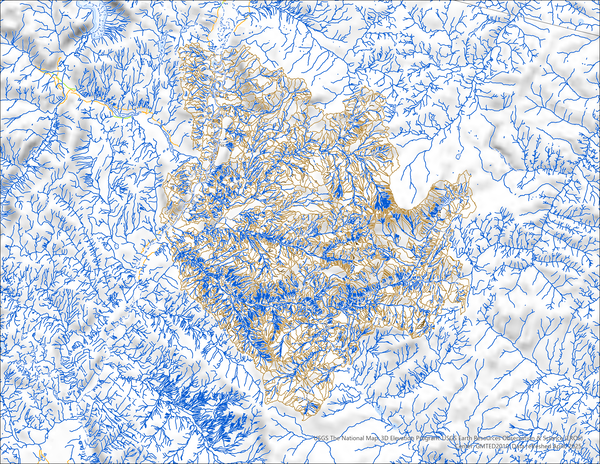
New for April 2026 are supporting data tables, available at Staged Products Directory
Flow Network Derivatives (more information is available on the 3DHP Flow Network Derivatives webpage) provide precalculated attributes and shortcuts for flow network analyses on the dendritic flow network. A table describing the entire flow network (including non-dendritic elements) is also included. In the future, these data will be delivered as standard 3DHP products. Please note that these tables apply only to the April 2026 release – these values will be updated as additional data is added to network in future quarterly releases.
A Probability of Flow table is also included. These probability estimates are based on USGS stream gage records. These estimates predict the likelihood that a given feature will experience a day of zero flow, as well as an uncertainty envelope. More information on the methods used is available at Stream permanence for the contiguous United States | Water Mission Area integrated data and tools catalog and Probabilities of stream permanence for the contiguous United States based on drainage area - ScienceBase-Catalog. As of April 2026 these estimates are available only for updated areas in CONUS, but will be expanded in the future to include all of CONUS. These estimates replace the categorical flow permanence classes (perennial, intermittent, ephemeral) that have been used for many years and are, in many cases, outdated.