



Using environmental DNA monitoring to find an extremely endangered butterfly
The USGS, U.S. Fish and Wildlife Service, and partners are working together to find the elusive checkerspot butterfly.
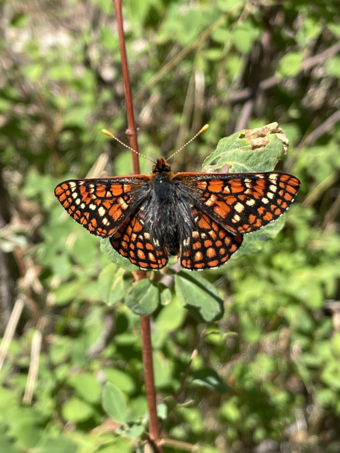
The Sacramento Mountains checkerspot butterfly (Euphydryas anicia cloudcrofti) was listed as endangered in 2023, primarily due to its very small range and the ongoing effects of climate change and habitat modification. Visual surveys detected just 15 adults in 2022 and two adults in 2023, but the butterflies could not be captured and thus the sightings were not verified. Accurate annual assessments are needed by the U.S. Fish and Wildlife Service (USFWS) to track recovery and conservation status, but visual surveys are difficult for such a rare species. Environmental DNA – or eDNA is a reliable, non-invasive method that is being used to improve surveys of rare and elusive pollinators.
To complement ongoing monitoring efforts, researchers from the USGS and USFWS are developing methods for surveying for Sacramento Mountains checkerspot butterfly using eDNA. The federal scientists are also partnering with the University of New Mexico and City of Albuquerque Biopark to obtain eDNA samples from the butterfly’s range near Cloudcroft, New Mexico and from a captive rearing program at the Biopark. Sampling kits and protocols were developed by USGS’s Pacific Northwest eDNA Laboratory. USGS is designing a molecular test that can be used to identify the species from DNA left behind on flowers or leaves. With this technology, USFWS will be better able to monitor the status of the Sacramento Mountains checkerspot butterfly, possibly identify the locations of individuals that can be brought into the ongoing captive breeding program, and prioritize habitat restoration where it’s most needed.
Wildlife Ecology and Habitat Restoration Team
The USGS, U.S. Fish and Wildlife Service, and partners are working together to find the elusive checkerspot butterfly.
The Sacramento Mountains checkerspot butterfly (Euphydryas anicia cloudcrofti) was listed as endangered in 2023, primarily due to its very small range and the ongoing effects of climate change and habitat modification. Visual surveys detected just 15 adults in 2022 and two adults in 2023, but the butterflies could not be captured and thus the sightings were not verified. Accurate annual assessments are needed by the U.S. Fish and Wildlife Service (USFWS) to track recovery and conservation status, but visual surveys are difficult for such a rare species. Environmental DNA – or eDNA is a reliable, non-invasive method that is being used to improve surveys of rare and elusive pollinators.
To complement ongoing monitoring efforts, researchers from the USGS and USFWS are developing methods for surveying for Sacramento Mountains checkerspot butterfly using eDNA. The federal scientists are also partnering with the University of New Mexico and City of Albuquerque Biopark to obtain eDNA samples from the butterfly’s range near Cloudcroft, New Mexico and from a captive rearing program at the Biopark. Sampling kits and protocols were developed by USGS’s Pacific Northwest eDNA Laboratory. USGS is designing a molecular test that can be used to identify the species from DNA left behind on flowers or leaves. With this technology, USFWS will be better able to monitor the status of the Sacramento Mountains checkerspot butterfly, possibly identify the locations of individuals that can be brought into the ongoing captive breeding program, and prioritize habitat restoration where it’s most needed.