



USGS Awarded NOAA Effects of Sea Level Rise (ESLR) Grant
The U.S. Geological Survey’s St. Petersburg Coastal and Marine Science Center, in collaboration with Florida Gulf Coast University (FGCU), has been awarded a competitive NOAA Effects of Sea Level Rise (ESLR) grant to improve coastal resilience across Southwest Florida.
The project aims to provide science-based insights that help coastal communities better understand and manage the growing risks associated with sea-level rise and storm-driven coastal change.
A Science-Based Approach to Understanding Flood Risk
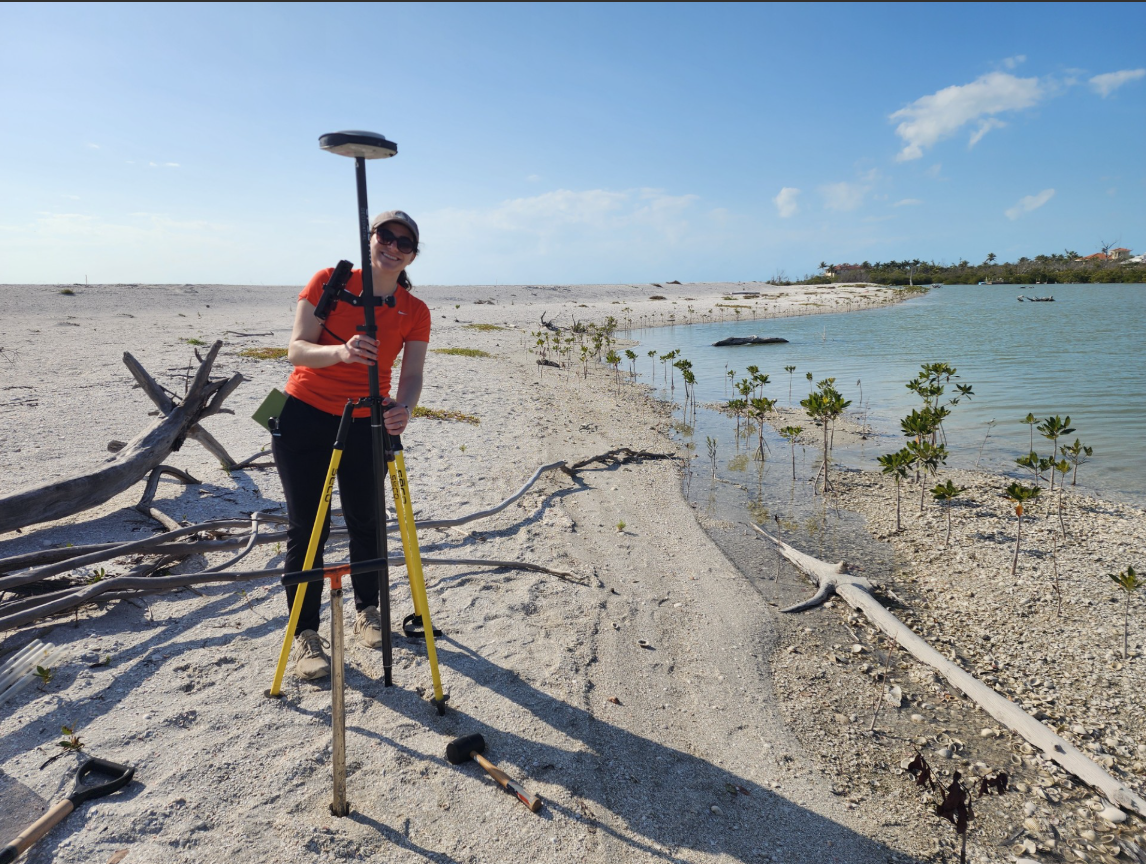
The funded initiative will monitor and model key coastal processes including how storms move sediment and reshape shorelines to support smarter, more cost-effective flood risk management for barrier island communities. By examining how barrier islands respond under different combinations of storm frequency, dune vegetation conditions, and management actions, the research team will produce actionable information tailored to both regional and local needs.
Modeling will compare a variety of restoration and mitigation strategies against “no action” scenarios. These comparisons will give community leaders and resource managers clearer guidance on which interventions can offer the greatest long-term benefits in the face of rising seas and evolving coastal hazards.
Communities and Partners Across Southwest Florida
Stakeholders participating in and benefiting from this project represent a broad cross-section of coastal communities and managed lands across Lee and Collier counties. These include:
- City of Sanibel
- Bunche Beach Preserve
- Town of Fort Myers Beach
- Lovers Key State Park
- Barefoot Beach Preserve
- Delnor-Wiggins Pass State Park
- City of Naples
- Rookery Bay National Estuarine Research Reserve
Together, these partners manage some of Florida’s most dynamic and vulnerable coastline. The ESLR-funded effort will help them evaluate flood protection strategies, plan effective restoration projects, and prepare for future decades of coastal change.