



Artificial light is changing the nighttime environment of Lake Washington and reshaping the survival of salmon.
As you look out across Lake Washington on a peaceful night, you may feel a sense of serenity and stillness. The water resembles a blanket shimmering and opaque under the nighttime sky. However, just beneath the water’s surface, a game of survival is underway for young salmon.
Artificial light at night is reshaping our nighttime environment, and these changes have measurable effects on the fish that depend on darkness to survive. Scientists at US Geological Survey’s Western Fisheries Research Center (WFRC) are studying how increases in light, especially in urban areas, influence juvenile salmon, their predators, and the broader ecosystem.
A Brighter Night Than Ever Before
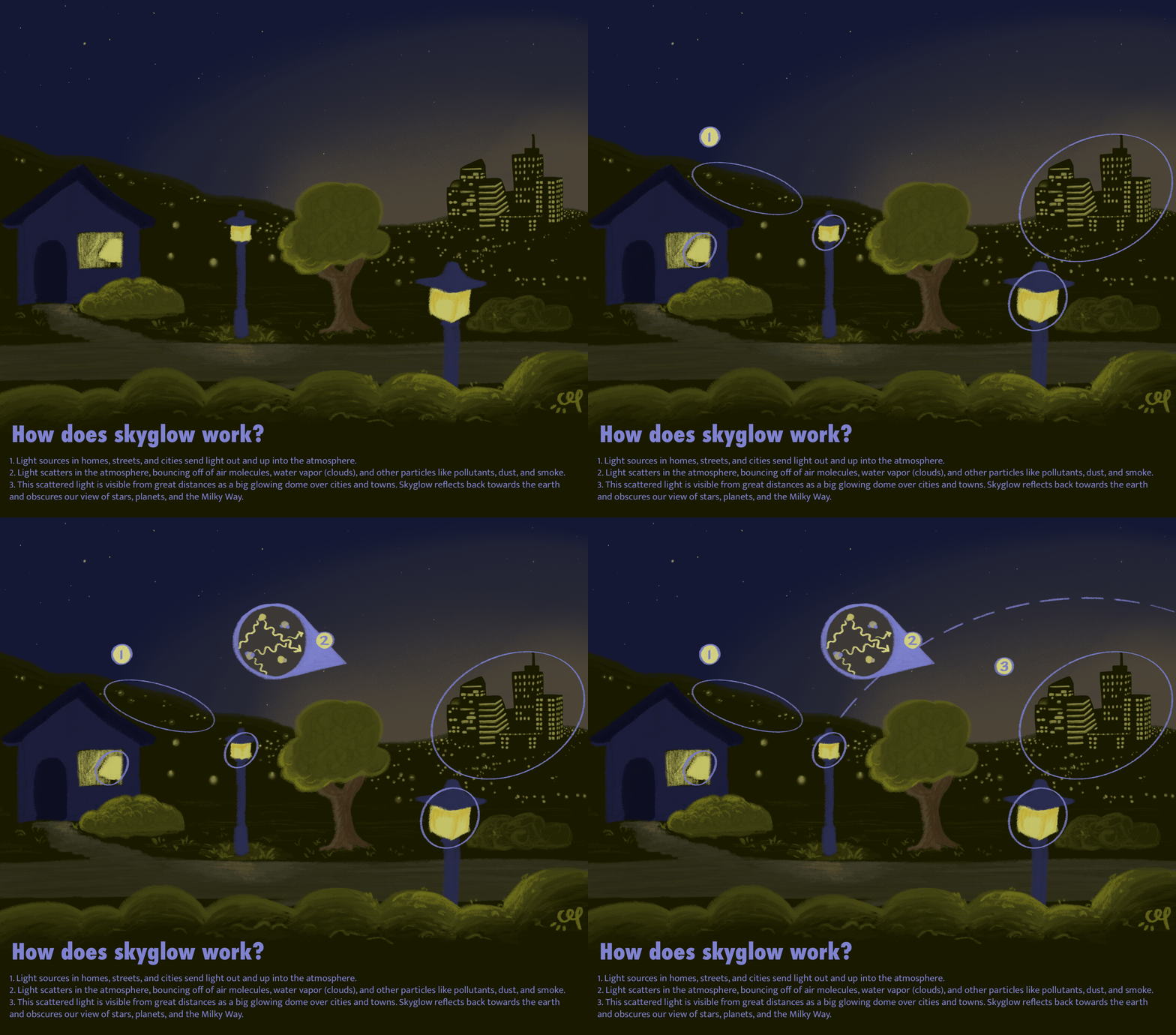
Across the globe, the night sky is growing steadily brighter. Skyglow—an overall brightening of the night sky caused by artificial lighting—now obscures natural darkness for much of the world’s population. Nearly everyone lives under skyglow in the United States and Europe, and modern lighting technologies, especially blue‑rich LEDs, are contributing to rapid increases in nighttime brightness. This rise in artificial light can have far‑reaching consequences for people, wildlife, and the ecosystems we share.
Artificial light affects biological rhythms, disrupts wildlife behavior, and can alter sleep and health in people. For fish and other aquatic organisms, nighttime lighting can fundamentally change how they feed, move, and avoid predators. As the area around Lake Washington has become more urbanized, these nighttime conditions have increasingly diverged from the natural environments salmon evolved to navigate.
Why Salmon Are Vulnerable to Artificial Light
Salmon are essential to the Pacific Northwest’s ecosystems, cultures, and economies. For centuries in the Pacific Northwest, salmon have been a symbol of strength, the lifeblood of Tribes and recreational fishers alike. They transport nutrients from the ocean to inland watersheds and support thousands of jobs and a wide network of species that rely on them. Yet young salmon face many challenges as they grow and migrate through increasingly urbanized waterways.
Light plays a key role in salmon behavior. Under natural conditions, salmon use daylight and darkness to guide their movement. At dusk, juvenile salmon rise in the water column to feed on zooplankton. After nightfall, darkness provides critical protection by making it harder for predators to see them. As artificial lighting brightens the water throughout the night, it can extend the twilight period that favors predators and reduces the safe window salmon depend on to feed and rest.
Measuring Light Across Lake Washington
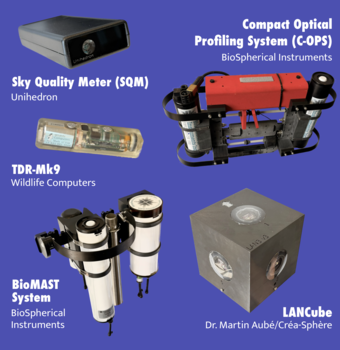
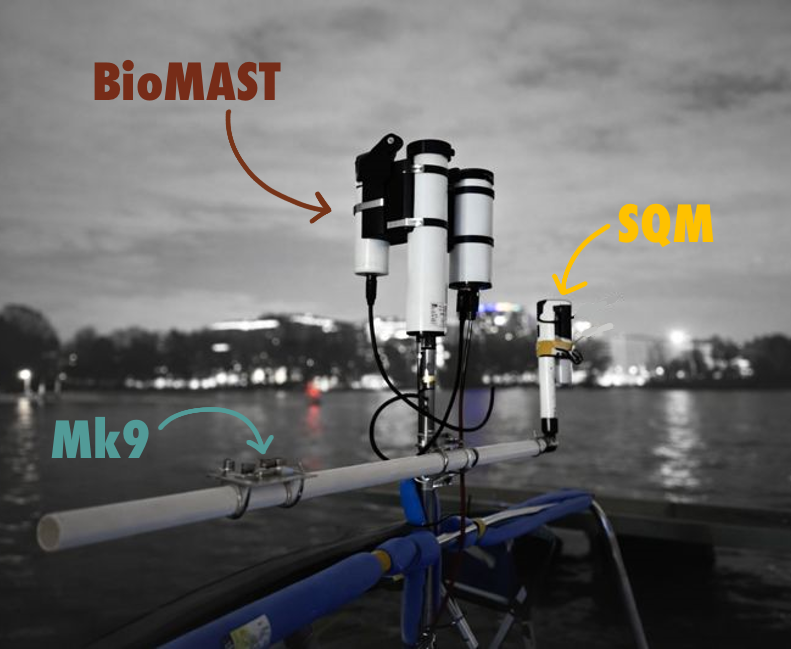
WFRC scientists are mapping nighttime light across Lake Washington and the Lake Washington Ship Canal to understand how bright these waters have become. Using a suite of specialized sensors, researchers measure both the intensity and the color of light above and below the water’s surface. Ongoing work suggests that not all parts of the lake experience the same conditions. It appears that the northern end of Lake Washington remains relatively dark, surrounded by forested shorelines and large parks. In contrast, the southern end appears significantly brighter due to airports, industrial areas, and densely developed neighborhoods.
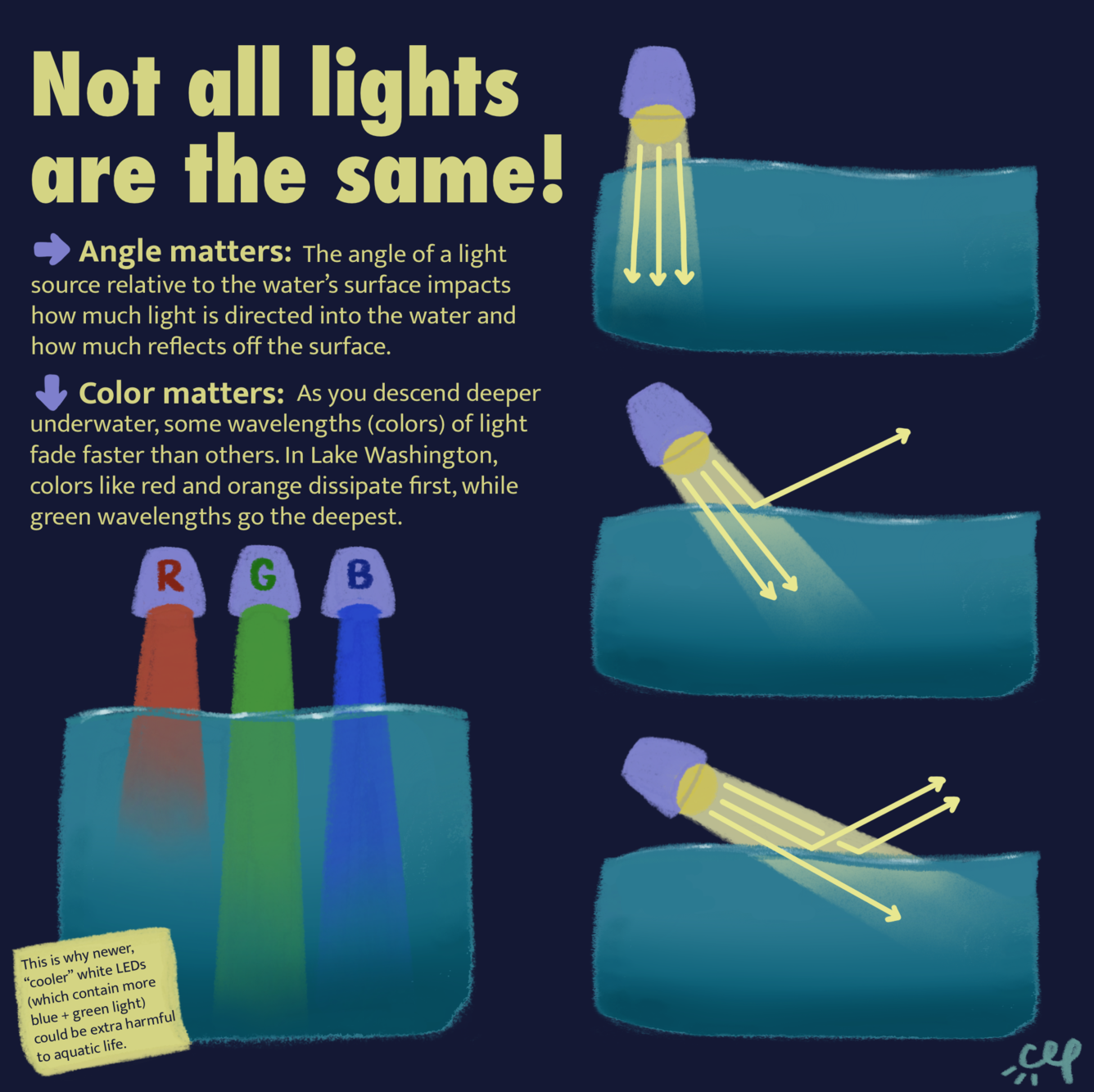
Cloud cover can dramatically intensify brightness by reflecting light back toward the water. As a result, even areas far from direct shoreline lighting can experience increased underwater brightness. This reflected light often contains more green wavelengths, which may penetrate deeper into the greenish waters of Lake Washington.
What Fish Experience Underwater
Light behaves differently underwater than it does in air. Water absorbs light quickly, and different colors disappear at different depths. Red light fades first, while green and blue light travel farther. Because lake water contains particles and phytoplankton that scatter and absorb light, the color and clarity of the underwater environment can change rapidly with weather and season.
By measuring light underwater and observing fish behavior, scientists can estimate how well predators are able to see and respond to their prey under different lighting conditions. When artificial light extends visibility at night, it may give predators more opportunities to hunt and reduce the chances young salmon have to remain hidden.
Studying Salmon Distribution and Predation Risk
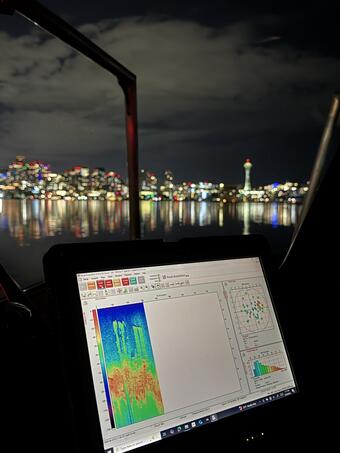
WFRC researchers are studying how salmon move through the lake and its connecting waterways at night. Hydroacoustic surveys, conducted in collaboration with our partners, will help identify where salmon congregate at night. In the Lake Washington Ship Canal—where every salmon must pass on their way to or from the ocean—conditions are particularly concerning. The canal is shallow and narrow, with light coming from homes, bridges, marinas, and nearby businesses. Our researchers are monitoring juvenile salmon migration through the canal during the spring, when their out-migrating numbers peak. Additional gillnet sampling near the south end of the lake will determine which nearshore predators are present and how often they consume young salmon under different lighting conditions caused by waterfront homes and nearby industrial areas. This data will help inform any future restoration efforts to aid salmon on their journey.
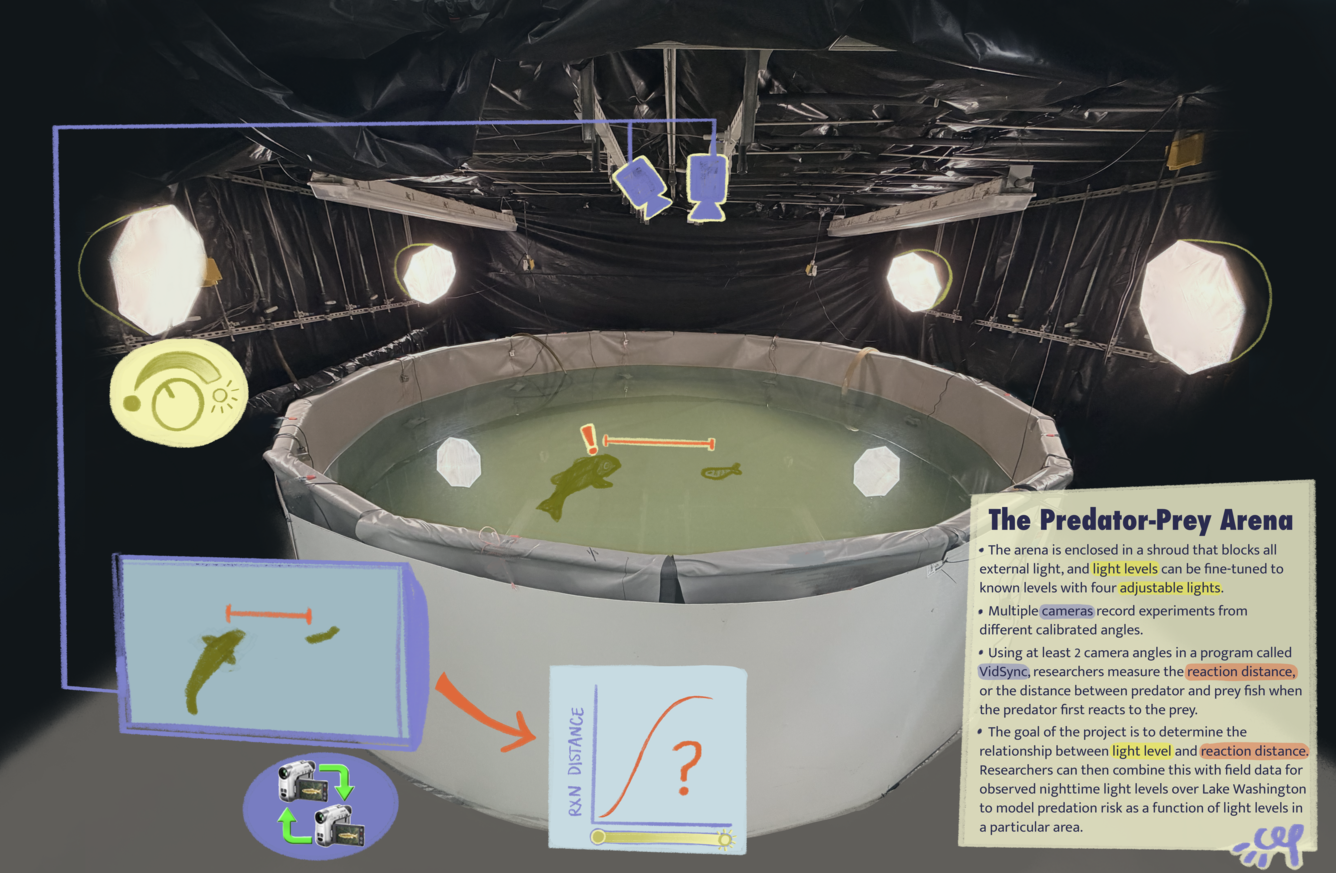
Ongoing laboratory experiments at the WFRC Seattle facility complement fieldwork by measuring how predator fish react to juvenile salmon at various known light levels. These experiments help scientists understand how light conditions influence predator efficiency and allow them to estimate predation risk across different areas of the lake.
Exploring Approaches to Reduce Light Impacts
Communities around the world are testing ways to reduce the ecological impacts of nighttime lighting. While WFRC focuses on understanding how artificial light affects salmon, many organizations are evaluating potential solutions that balance human needs with ecological health. These approaches include using warmer‑colored lights that emit less blue light, directing lights downward or shielding fixtures to prevent skyglow, reducing intensity where possible, and installing timers or motion‑activated systems. Trees and shrubs can also help block or diffuse light near shorelines.
Each approach has different benefits, and solutions that support salmon must also consider the needs of other species and the surrounding community.
Why This Research Matters
Reducing unnecessary light at night can protect the health of ecosystems, conserve energy, and benefit both wildlife and people. By understanding how urban light shapes salmon behavior and survival, WFRC scientists are helping resource managers and communities make informed decisions that support salmon recovery. Their work in Lake Washington offers insights that can guide land-use planning and conservation efforts in urban watersheds across the region and beyond.
Partners
Artificial light is changing the nighttime environment of Lake Washington and reshaping the survival of salmon.
As you look out across Lake Washington on a peaceful night, you may feel a sense of serenity and stillness. The water resembles a blanket shimmering and opaque under the nighttime sky. However, just beneath the water’s surface, a game of survival is underway for young salmon.
Artificial light at night is reshaping our nighttime environment, and these changes have measurable effects on the fish that depend on darkness to survive. Scientists at US Geological Survey’s Western Fisheries Research Center (WFRC) are studying how increases in light, especially in urban areas, influence juvenile salmon, their predators, and the broader ecosystem.
A Brighter Night Than Ever Before
Across the globe, the night sky is growing steadily brighter. Skyglow—an overall brightening of the night sky caused by artificial lighting—now obscures natural darkness for much of the world’s population. Nearly everyone lives under skyglow in the United States and Europe, and modern lighting technologies, especially blue‑rich LEDs, are contributing to rapid increases in nighttime brightness. This rise in artificial light can have far‑reaching consequences for people, wildlife, and the ecosystems we share.
Artificial light affects biological rhythms, disrupts wildlife behavior, and can alter sleep and health in people. For fish and other aquatic organisms, nighttime lighting can fundamentally change how they feed, move, and avoid predators. As the area around Lake Washington has become more urbanized, these nighttime conditions have increasingly diverged from the natural environments salmon evolved to navigate.
Why Salmon Are Vulnerable to Artificial Light
Salmon are essential to the Pacific Northwest’s ecosystems, cultures, and economies. For centuries in the Pacific Northwest, salmon have been a symbol of strength, the lifeblood of Tribes and recreational fishers alike. They transport nutrients from the ocean to inland watersheds and support thousands of jobs and a wide network of species that rely on them. Yet young salmon face many challenges as they grow and migrate through increasingly urbanized waterways.
Light plays a key role in salmon behavior. Under natural conditions, salmon use daylight and darkness to guide their movement. At dusk, juvenile salmon rise in the water column to feed on zooplankton. After nightfall, darkness provides critical protection by making it harder for predators to see them. As artificial lighting brightens the water throughout the night, it can extend the twilight period that favors predators and reduces the safe window salmon depend on to feed and rest.
Measuring Light Across Lake Washington
WFRC scientists are mapping nighttime light across Lake Washington and the Lake Washington Ship Canal to understand how bright these waters have become. Using a suite of specialized sensors, researchers measure both the intensity and the color of light above and below the water’s surface. Ongoing work suggests that not all parts of the lake experience the same conditions. It appears that the northern end of Lake Washington remains relatively dark, surrounded by forested shorelines and large parks. In contrast, the southern end appears significantly brighter due to airports, industrial areas, and densely developed neighborhoods.
Cloud cover can dramatically intensify brightness by reflecting light back toward the water. As a result, even areas far from direct shoreline lighting can experience increased underwater brightness. This reflected light often contains more green wavelengths, which may penetrate deeper into the greenish waters of Lake Washington.
What Fish Experience Underwater
Light behaves differently underwater than it does in air. Water absorbs light quickly, and different colors disappear at different depths. Red light fades first, while green and blue light travel farther. Because lake water contains particles and phytoplankton that scatter and absorb light, the color and clarity of the underwater environment can change rapidly with weather and season.
By measuring light underwater and observing fish behavior, scientists can estimate how well predators are able to see and respond to their prey under different lighting conditions. When artificial light extends visibility at night, it may give predators more opportunities to hunt and reduce the chances young salmon have to remain hidden.
Studying Salmon Distribution and Predation Risk
WFRC researchers are studying how salmon move through the lake and its connecting waterways at night. Hydroacoustic surveys, conducted in collaboration with our partners, will help identify where salmon congregate at night. In the Lake Washington Ship Canal—where every salmon must pass on their way to or from the ocean—conditions are particularly concerning. The canal is shallow and narrow, with light coming from homes, bridges, marinas, and nearby businesses. Our researchers are monitoring juvenile salmon migration through the canal during the spring, when their out-migrating numbers peak. Additional gillnet sampling near the south end of the lake will determine which nearshore predators are present and how often they consume young salmon under different lighting conditions caused by waterfront homes and nearby industrial areas. This data will help inform any future restoration efforts to aid salmon on their journey.
Ongoing laboratory experiments at the WFRC Seattle facility complement fieldwork by measuring how predator fish react to juvenile salmon at various known light levels. These experiments help scientists understand how light conditions influence predator efficiency and allow them to estimate predation risk across different areas of the lake.
Exploring Approaches to Reduce Light Impacts
Communities around the world are testing ways to reduce the ecological impacts of nighttime lighting. While WFRC focuses on understanding how artificial light affects salmon, many organizations are evaluating potential solutions that balance human needs with ecological health. These approaches include using warmer‑colored lights that emit less blue light, directing lights downward or shielding fixtures to prevent skyglow, reducing intensity where possible, and installing timers or motion‑activated systems. Trees and shrubs can also help block or diffuse light near shorelines.
Each approach has different benefits, and solutions that support salmon must also consider the needs of other species and the surrounding community.
Why This Research Matters
Reducing unnecessary light at night can protect the health of ecosystems, conserve energy, and benefit both wildlife and people. By understanding how urban light shapes salmon behavior and survival, WFRC scientists are helping resource managers and communities make informed decisions that support salmon recovery. Their work in Lake Washington offers insights that can guide land-use planning and conservation efforts in urban watersheds across the region and beyond.
Partners