



Can we cause earthquakes? Is there any way to prevent earthquakes?
Earthquakes induced by human activity have been documented at many locations in the United States and in many other countries around the world. Earthquakes can be induced by a wide range of causes including impoundment of reservoirs, surface and underground mining, withdrawal of fluids and gas from the subsurface, and injection of fluids into underground formations. While most induced earthquakes are small and present little hazard, larger and potentially damaging manmade earthquakes have occurred in the past.
The hazard posed by manmade earthquakes can be mitigated by minimizing or in some cases stopping the activity that is causing the earthquakes to occur. For example, earthquakes linked to wastewater disposal in deep wells in Colorado, Ohio and Arkansas stopped occurring after injection was halted.
We cannot prevent natural earthquakes from occurring but we can significantly mitigate their effects by identifying hazards, building safer structures, and providing education on earthquake safety. By preparing for natural earthquakes we can also reduce the risk from human induced earthquakes.
Related

Do earthquakes occur in Antarctica? Do earthquakes occur in Antarctica?
Earthquakes do occur in Antarctica, but not very often. There have been some big earthquakes--including one magnitude 8.1--in the Balleny Islands (between Antarctica and New Zealand). The boundary between the Scotia Plate and the Antarctic Plate just grazes the north tip of the Antarctic Peninsula (look "northwest" from the Pole toward South America). There is also a hint of a line of seismicity...
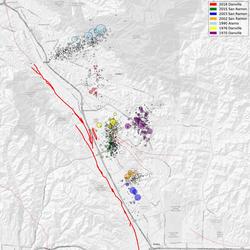
What is the difference between aftershocks and swarms? What is the difference between aftershocks and swarms?
Aftershocks are a sequence of earthquakes that happen after a larger mainshock on a fault. Aftershocks occur near the fault zone where the mainshock rupture occurred and are part of the "readjustment process” after the main slip on the fault. Aftershocks become less frequent with time, although they can continue for days, weeks, months, or even years for a very large mainshock. A swarm, on the...
Related
Do earthquakes occur in Antarctica? Do earthquakes occur in Antarctica?
Earthquakes do occur in Antarctica, but not very often. There have been some big earthquakes--including one magnitude 8.1--in the Balleny Islands (between Antarctica and New Zealand). The boundary between the Scotia Plate and the Antarctic Plate just grazes the north tip of the Antarctic Peninsula (look "northwest" from the Pole toward South America). There is also a hint of a line of seismicity...
What is the difference between aftershocks and swarms? What is the difference between aftershocks and swarms?
Aftershocks are a sequence of earthquakes that happen after a larger mainshock on a fault. Aftershocks occur near the fault zone where the mainshock rupture occurred and are part of the "readjustment process” after the main slip on the fault. Aftershocks become less frequent with time, although they can continue for days, weeks, months, or even years for a very large mainshock. A swarm, on the...