



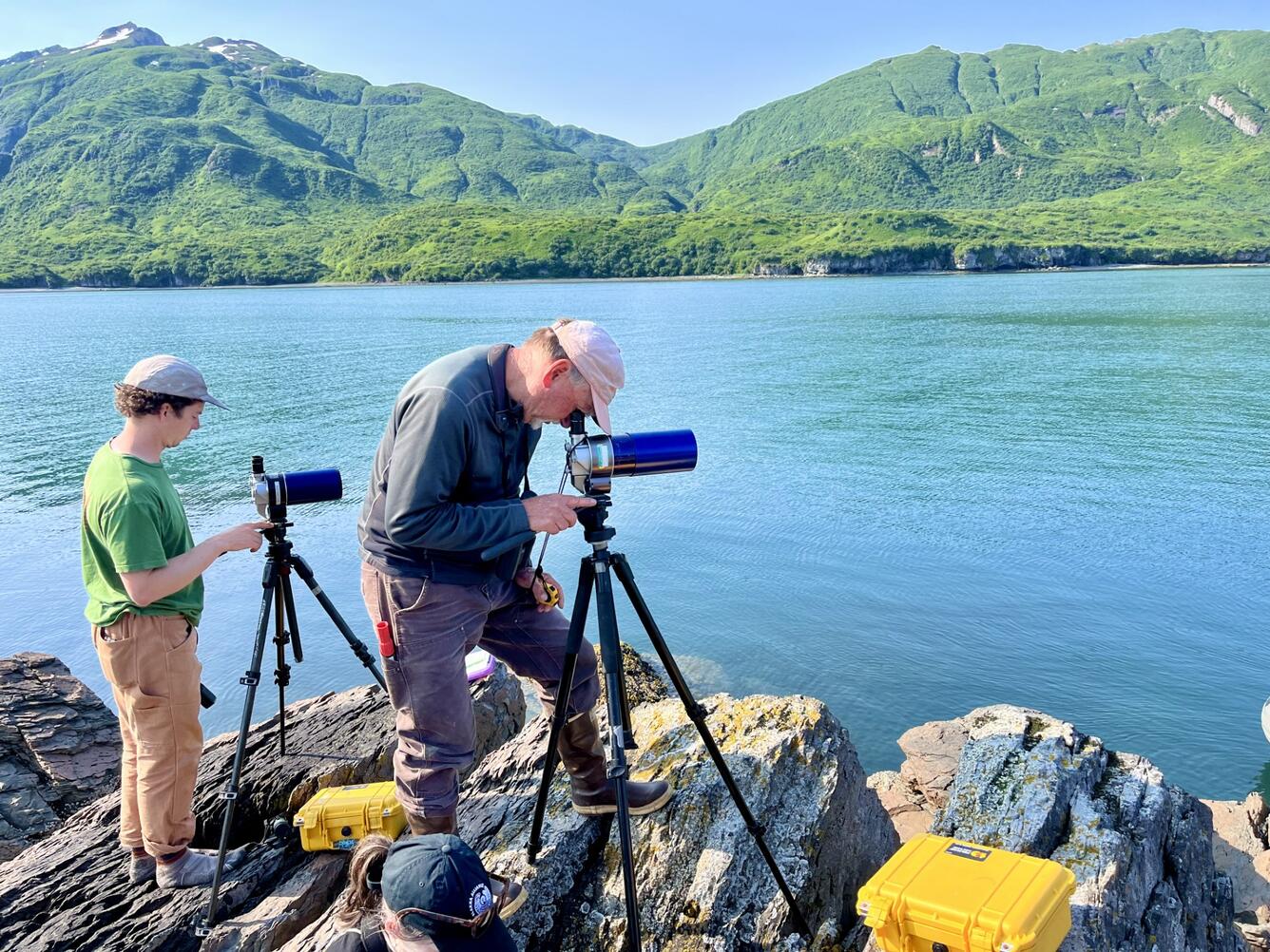
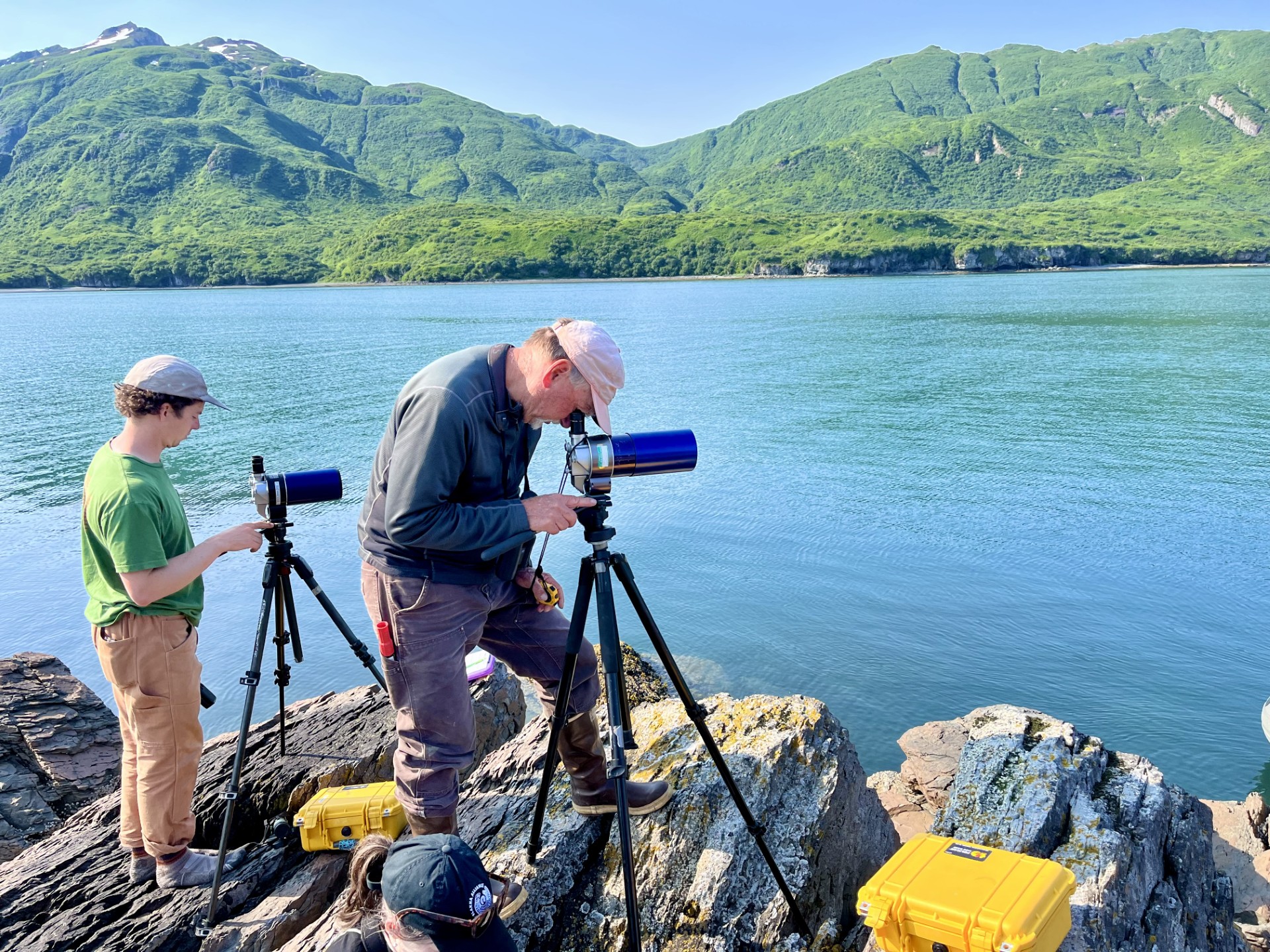
Scientists observing foraging sea otters through telescopes


Detailed Description
A pair of scientists observe sea otter foraging behavior at Katmai National Park and Preserve. Questar telescopes are used to assist with prey identification.
Sources/Usage
Public Domain.
Related
Glacier Bay National Park and Preserve Sea Otter Forage Data, 1993-2019 Glacier Bay National Park and Preserve Sea Otter Forage Data, 1993-2019
These data describe observations of sea otter foraging behavior in Glacier Bay National Park and Preserve. Data consist of dive and surface times, success in prey retrieval, prey item, prey quantity, and size. Additionally, location of observations, and age class, sex, and pup status of the focal sea otter were also recorded.
Sea Otter Spraint Data from Kachemak Bay, Katmai National Park and Preserve, Kenai Fjords National Park and Prince William Sound Sea Otter Spraint Data from Kachemak Bay, Katmai National Park and Preserve, Kenai Fjords National Park and Prince William Sound
These data are part of the Gulf Watch Alaska (GWA) long-term monitoring program. This dataset consist of observations of sea otter (Enhydra lutris) fecal samples (spraint). Observers examined fresh spraint piles to identify major prey classes in the samples and to determine sea otter diets in the Gulf of Alaska region.
Sea Otter Forage Observations from Kachemak Bay, Katmai National Park and Preserve, Kenai Fjords National Park and Prince William Sound Sea Otter Forage Observations from Kachemak Bay, Katmai National Park and Preserve, Kenai Fjords National Park and Prince William Sound
These data are part of the Gulf Watch Alaska (GWA) long term monitoring program, nearshore component and a seasonal diet study in Kenai Fjords National Park. This dataset consists of observations made of foraging sea otters (Enhydra lutris). Observers used Questar field model spotting scopes and binoculars to identify prey. Date, local time, dive duration, success, prey type, prey size...
Related
Glacier Bay National Park and Preserve Sea Otter Forage Data, 1993-2019 Glacier Bay National Park and Preserve Sea Otter Forage Data, 1993-2019
These data describe observations of sea otter foraging behavior in Glacier Bay National Park and Preserve. Data consist of dive and surface times, success in prey retrieval, prey item, prey quantity, and size. Additionally, location of observations, and age class, sex, and pup status of the focal sea otter were also recorded.
Sea Otter Spraint Data from Kachemak Bay, Katmai National Park and Preserve, Kenai Fjords National Park and Prince William Sound Sea Otter Spraint Data from Kachemak Bay, Katmai National Park and Preserve, Kenai Fjords National Park and Prince William Sound
These data are part of the Gulf Watch Alaska (GWA) long-term monitoring program. This dataset consist of observations of sea otter (Enhydra lutris) fecal samples (spraint). Observers examined fresh spraint piles to identify major prey classes in the samples and to determine sea otter diets in the Gulf of Alaska region.
Sea Otter Forage Observations from Kachemak Bay, Katmai National Park and Preserve, Kenai Fjords National Park and Prince William Sound Sea Otter Forage Observations from Kachemak Bay, Katmai National Park and Preserve, Kenai Fjords National Park and Prince William Sound
These data are part of the Gulf Watch Alaska (GWA) long term monitoring program, nearshore component and a seasonal diet study in Kenai Fjords National Park. This dataset consists of observations made of foraging sea otters (Enhydra lutris). Observers used Questar field model spotting scopes and binoculars to identify prey. Date, local time, dive duration, success, prey type, prey size...