



Watershed Monitoring in Clear Lake Tributaries


Detailed Description
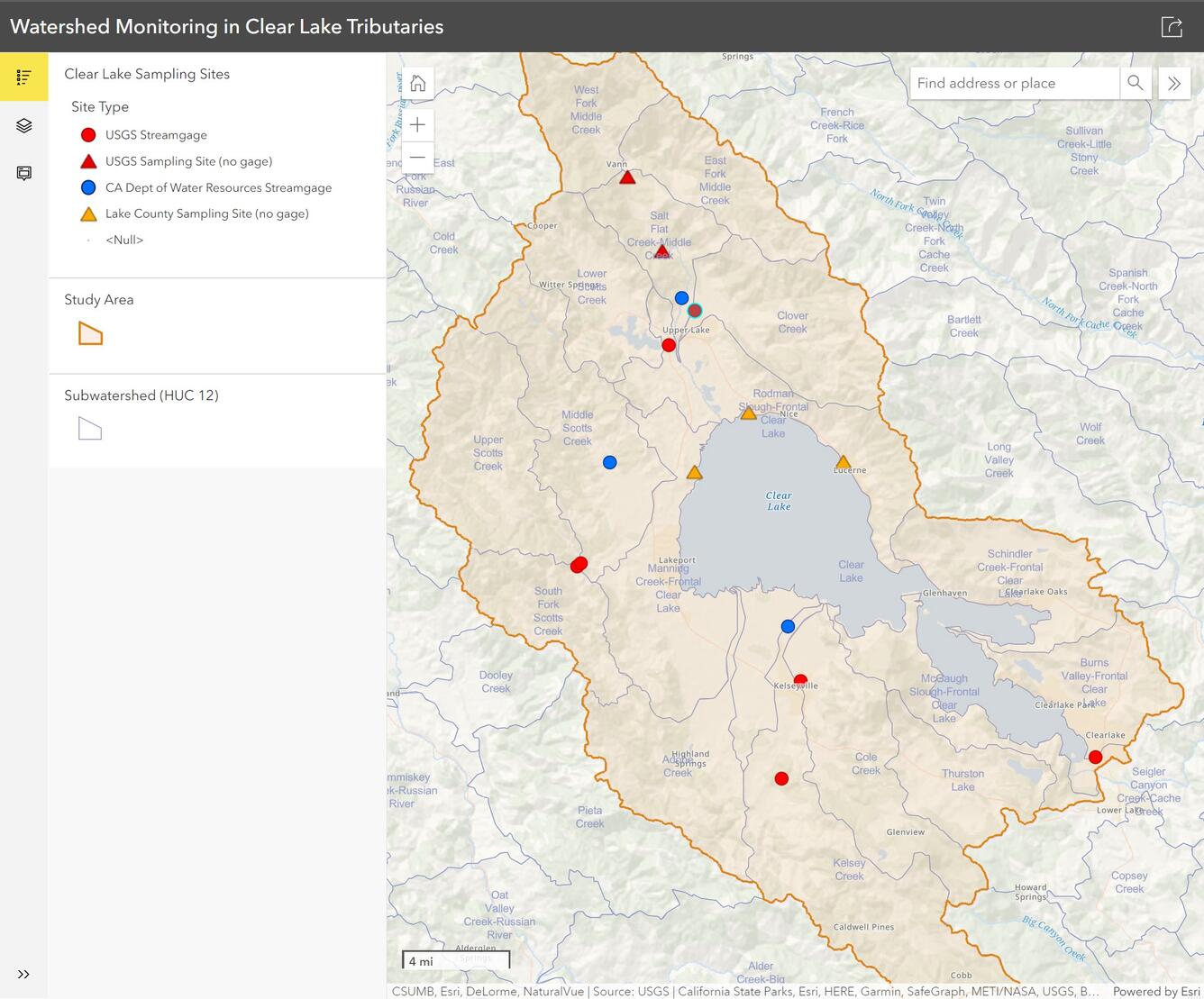
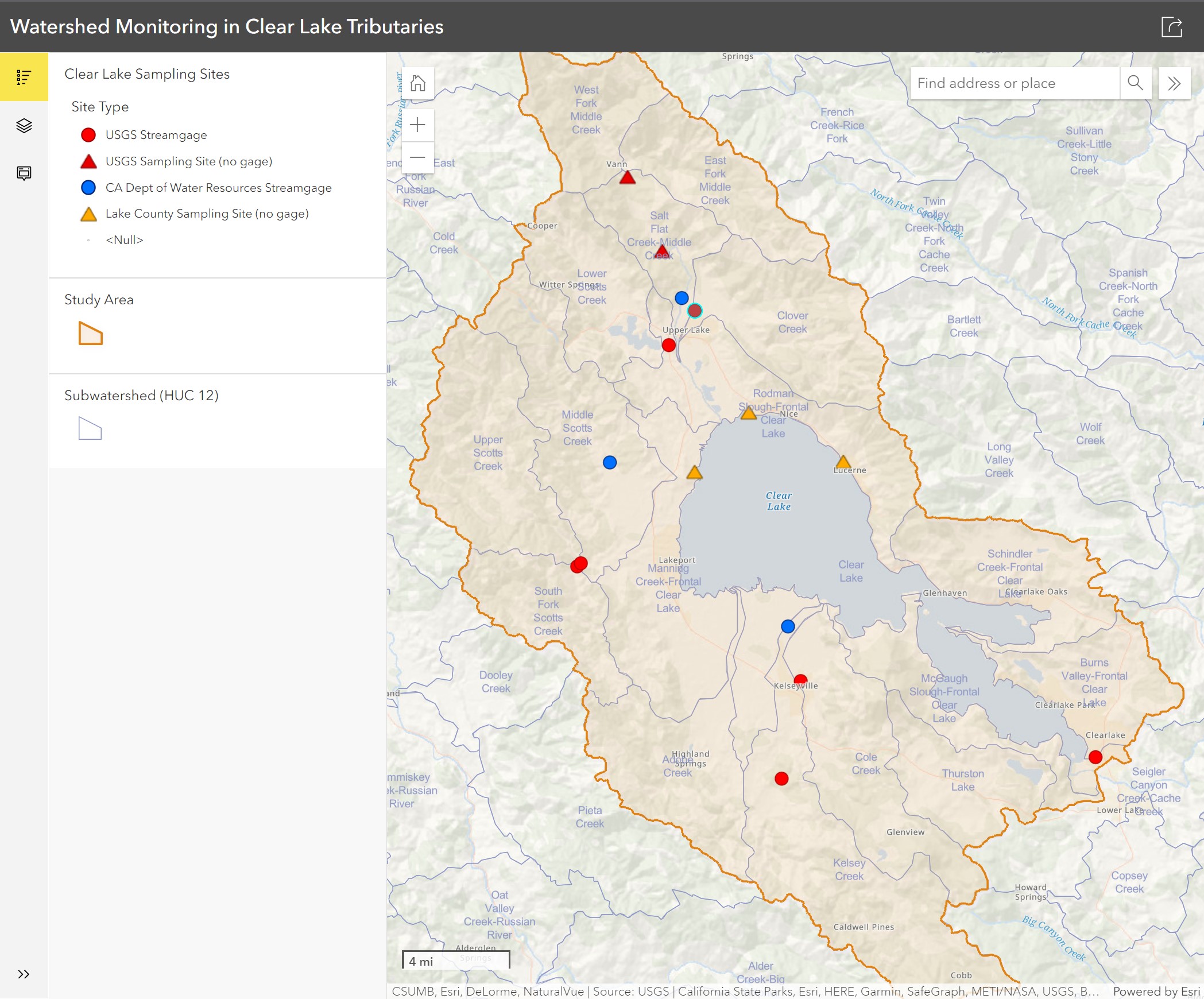
The Watershed Monitoring in Clear Lake Tributaries data viewer allows users to explore the USGS, California Department of Water Resources, and Lake County surface-water monitoring sites at Clear Lake. Site information includes links to the respective agency water data repositories.
Sources/Usage
Public Domain.
Related

Hydrologic and Aquatic Ecology Studies at Clear Lake, California
The USGS California Water Science Center conducts a variety of research activities at Clear Lake, California, including surface-water monitoring and water quality and aquatic habitat studies.
Monitoring and Modeling of Nutrients and Other Water-Quality Constituents in Tributaries to Clear Lake, California
Clear Lake, the largest natural lake entirely within California, has a severe problem with harmful algal blooms (HABs). HABs can be detrimental to aquatic life because when the algae dies, sinks, and decays, the lake is deprived of the dissolved oxygen that fish need to breathe. A driving factor of these conditions are the nutrient loads being carried into the lake by soil erosion and the...
Related
Hydrologic and Aquatic Ecology Studies at Clear Lake, California
The USGS California Water Science Center conducts a variety of research activities at Clear Lake, California, including surface-water monitoring and water quality and aquatic habitat studies.
Monitoring and Modeling of Nutrients and Other Water-Quality Constituents in Tributaries to Clear Lake, California
Clear Lake, the largest natural lake entirely within California, has a severe problem with harmful algal blooms (HABs). HABs can be detrimental to aquatic life because when the algae dies, sinks, and decays, the lake is deprived of the dissolved oxygen that fish need to breathe. A driving factor of these conditions are the nutrient loads being carried into the lake by soil erosion and the...