An official website of the United States government
Here's how you know
Official websites use .gov
A .gov website belongs to an official government organization in the United States.
Secure .gov websites use HTTPS
A lock () or https:// means you’ve safely connected to the .gov website. Share sensitive information only on official, secure websites.
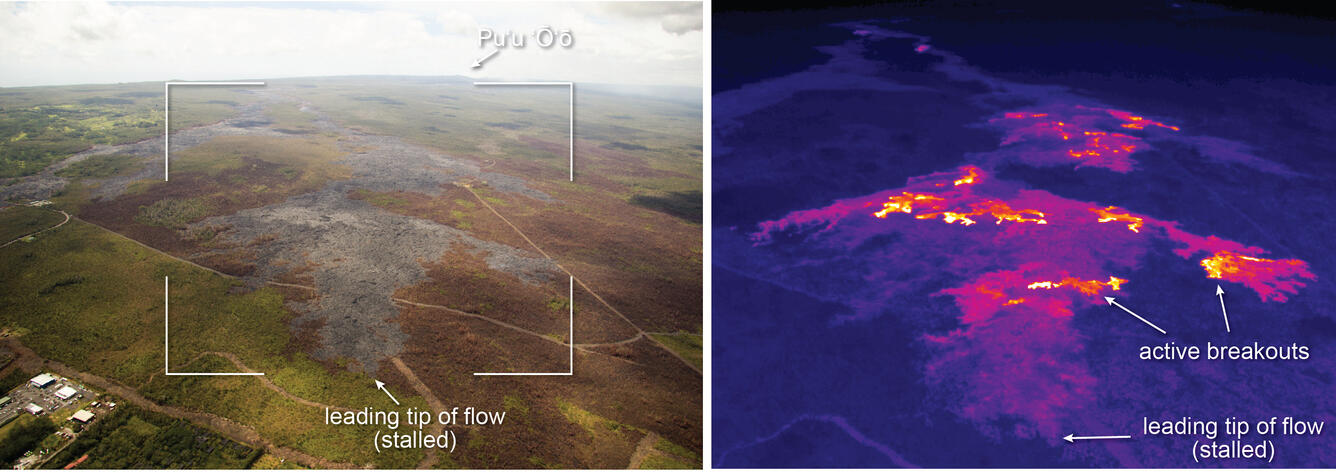
The leading tip of the June 27th flow remains stalled about 500 meters (550 yards) from Highway 130, but scattered breakouts remain active upslope of the stalled tip.
This comparison of a normal photograph and a thermal image shows the leading portion of the June 27th flow. The white box shows the rough extent of the thermal image. In the thermal image, the active breakouts are visible as yellow and white pixels, and these areas are scattered upslope of the stalled tip of the flow.
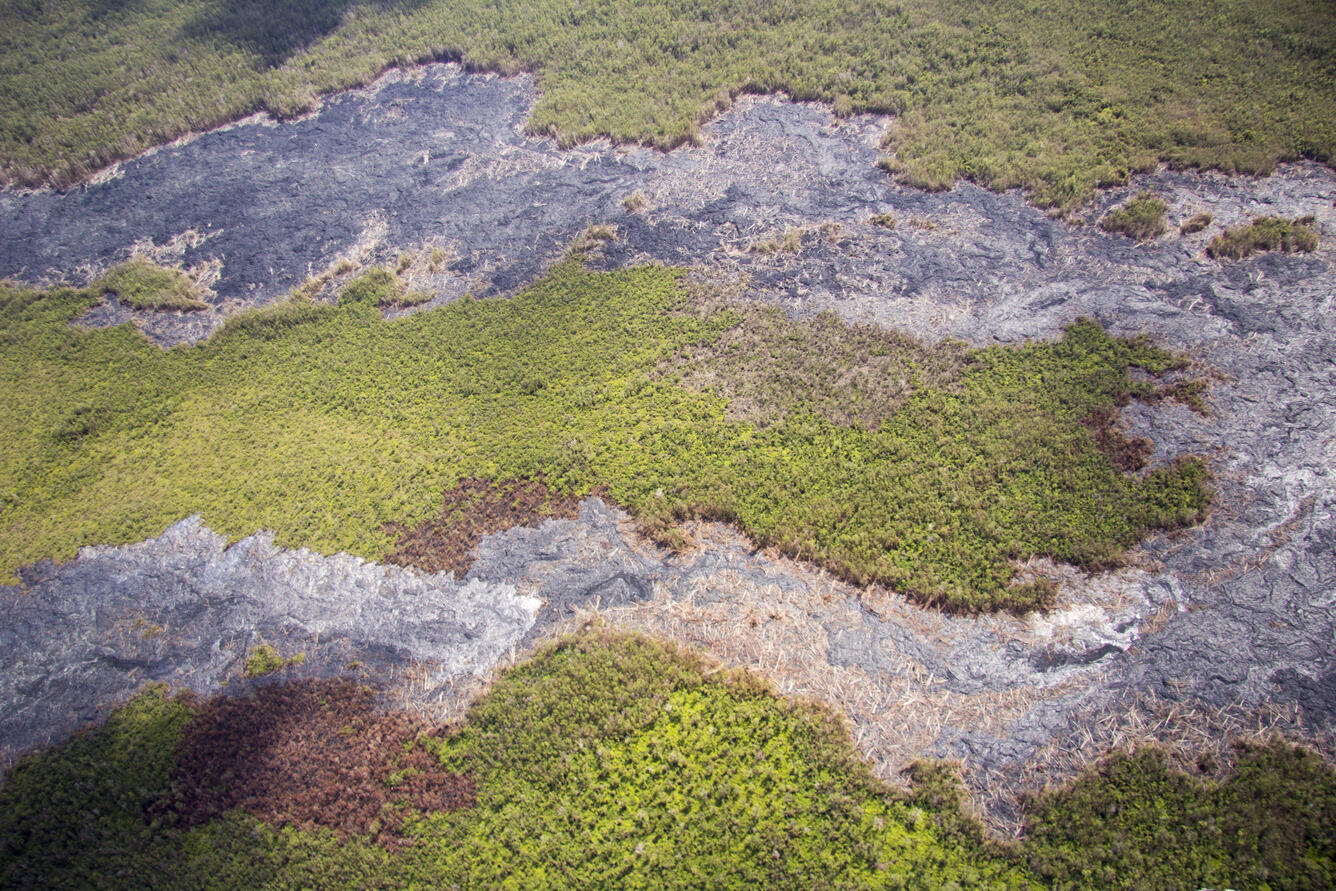
This photograph looks southeast at the fork in the June 27th flow that is just west of Kaohe Homesteads. The east branch (top portion of photo) crossed AP‘A‘ā St. and entered Pāhoa in late October, and this branch is now inactive. The west branch (lower portion of photo) has headed towards areas at the north end of Pāhoa, and remains active.
The breakout on the north flank of Pu‘u ‘Ō‘ō that began last weekend remains active, but has advanced only a minor distance over the past four days. The new breakout is visible as the light-colored area just to the right of the center of the photograph. Pu‘u ‘Ō‘ō Crater is in the upper left portion of the photograph.
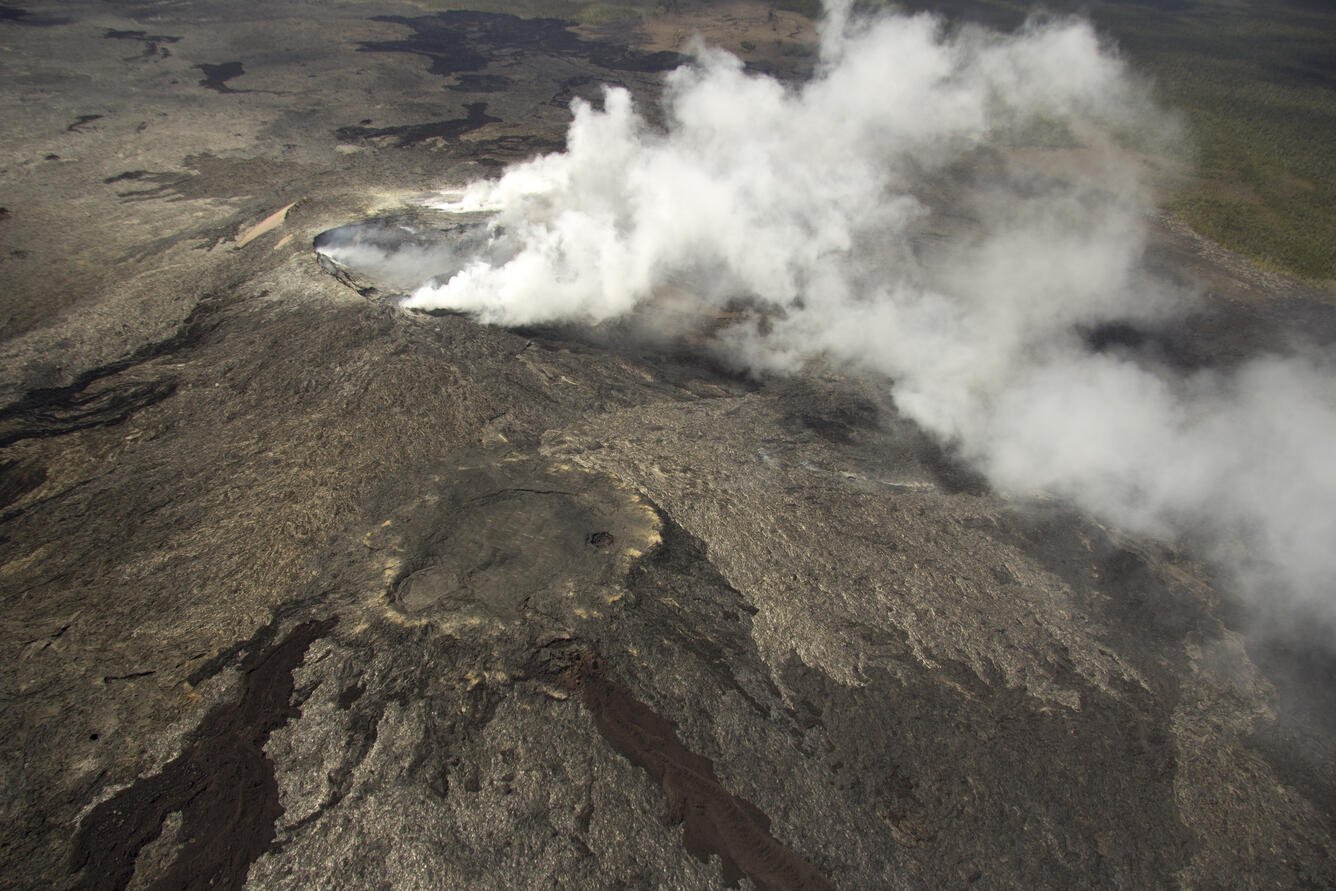
This view looks north and shows Pu‘u ‘Ō‘ō. Much of the original cone has been covered by subsequent lava flows, many of which poured out of the crater. Within the crater, a depression holds a number of smaller pits, some of which contain active lava ponds.
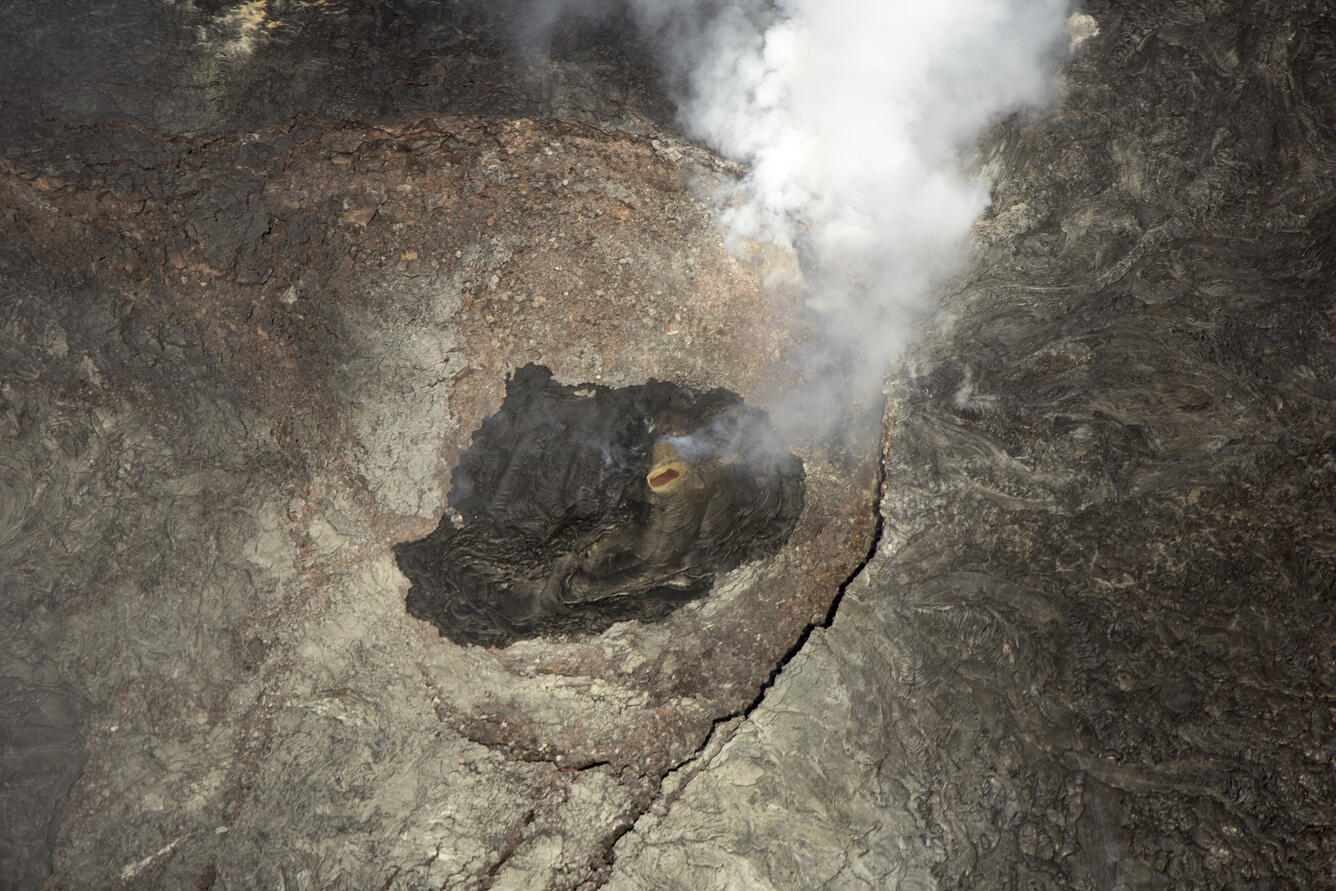
A closer look at a glowing hole in the northeast pit in Pu‘u ‘Ō‘ō Crater. Recent overflows from the opening created the dark flows filling the bottom of the pit.
This lava pond was active in the southern pit in Pu‘u ‘Ō‘ō crater. The diameter of the lava pond was roughly 18 m (60 ft). Weak spattering was active on the pond margin.