



Analyzing the age of Cinder Cone in the Lassen Volcanic Center
Interpreting the age of Cinder Cone in Lassen Volcanic National Park has has long been a challenge and point of contention for geologists.
The California Volcano Monitor is a weekly column written by scientists and collaborators of the California Volcano Observatory. This week's contribution is from Mike Clynne, research geologist with the U.S. Geological Survey.
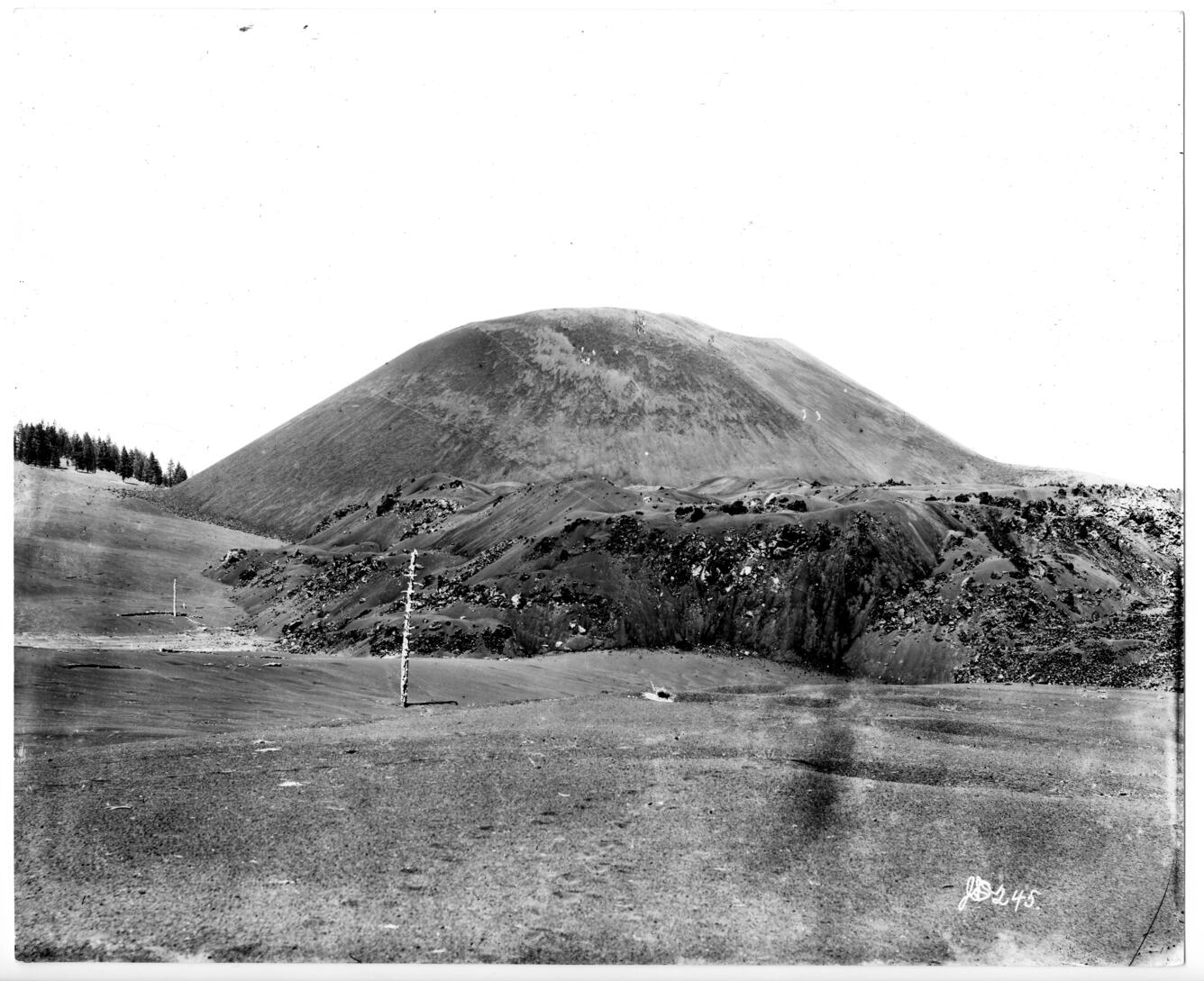
Found in the northern reaches of the park, Cinder Cone is a 700-foot- (213 meter-) high volcano made of 5 lava flows and an extensive tephra (ash and scoria) deposit. Two characteristics made it tricky to date: it's made of basaltic andesite, which lacks some of the minerals geologists usually rely on for radiometric dating; and it appears very "fresh" and young. H.W. Harkness, a medical doctor and amateur scientist who visited the area in 1870s, recognized that the cone was very (geologically) young and relied on reports by local prospectors that it had erupted in the winter of 1850–51. The first geologist to study the cone, Joseph Diller, visited the area in the late 1800s, recognized that trees growing on the deposits were older than 40–50 years, and suggested that the eruption had occurred about 200 years prior to 1851. In 1937, USGS geologist and Lassen Volcano Observatory chief R.H. Finch used tree ring studies to decide that the 5 lava flows had different ages and that there were 5 different eruptions between 1567 and 1851, including one in 1666. However, his final eruption in 1851 was still based on the “witnessed” eruption reported by Harkness.
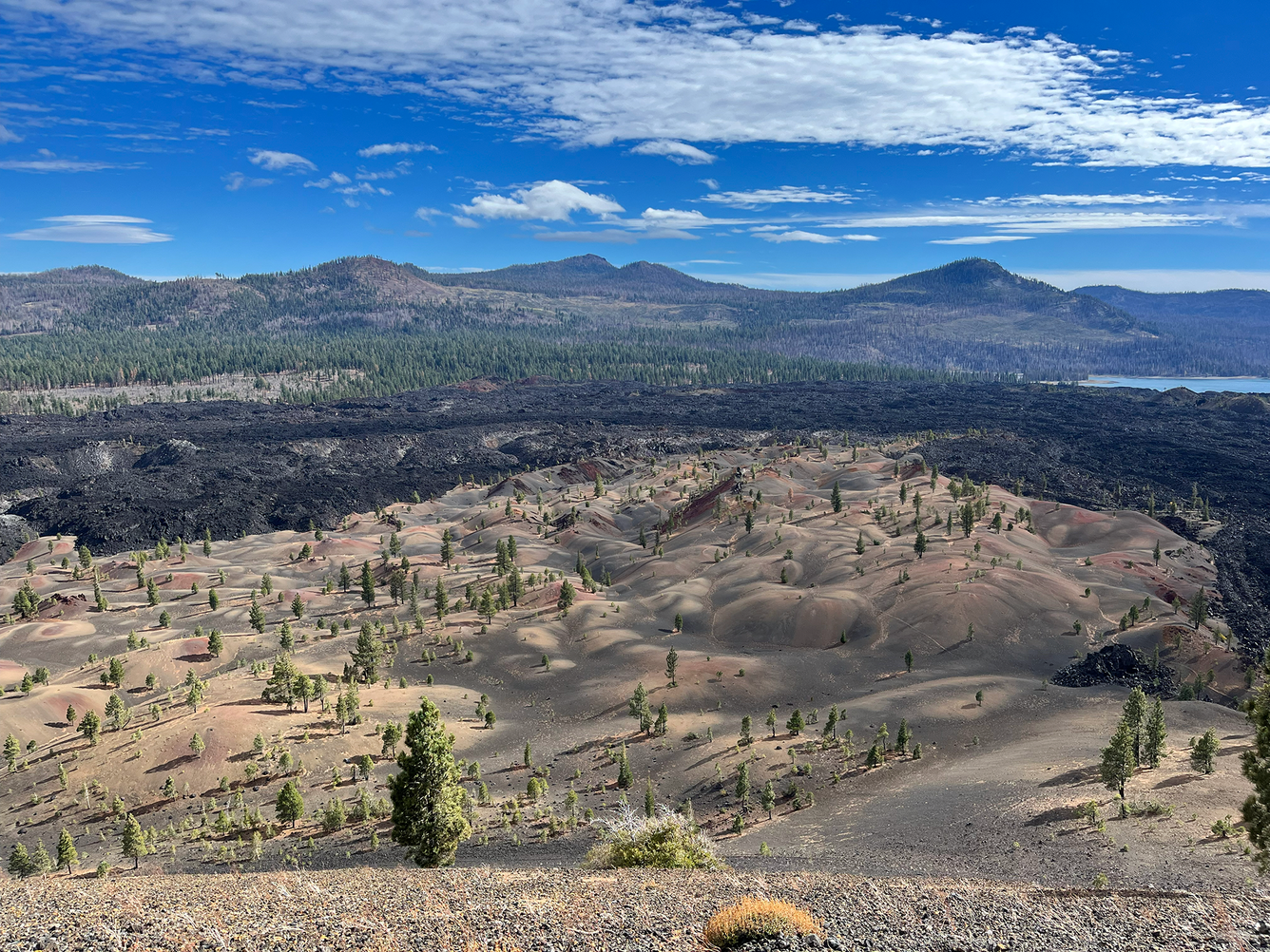
This interpretation was used by the National Park Service and other geologists and remained "official" until work by California Volcano Observatory scientists and colleagues in the late 1990s and early 2000s. CalVO scientists mapped the Cinder Cone lava flows and ash deposits and, based on the observation that the oldest lava flow was still hot when the youngest tephra was deposited on it, interpreted that all the lava flows and ash were deposited in a single eruption. They also analyzed the paleomagnetic direction of the lava flows to confirm that they had all erupted within no more than a few decades. Moreover, the paleomagnetic direction was not consistent with the Earth’s magnetic field in 1851. Charcoal samples from trees killed by the lava flows also produced radiocarbon ages of 1650 ± 20 years, and tree ring analysis of living trees showed that they had all experienced a significant defoliation event in 1666. Chemical analysis of the tree rings confirmed that the defoliation event was not a forest fire but was a volcanic eruption. Thus, Cinder Cone formed in a single eruption, and possibly in a single year: 1666, long before prospectors arrived in that part of California.
What did CalVO scientists learn from this research? It's important to carefully examine conclusions made by scientists before advanced analytical techniques came about, especially those based "eyewitness" testimony which was never confirmed. It's also difficult to scientifically disprove secondhand events, and sometimes requires a combination of multiple techniques to accurately determine the age of geologic features like Cinder Cone.