



CalVO geologists help build a new eruptive history for the Springerville Volcanic Field in Arizona
Scientists at the California Volcano Observatory often travel far afield to answer volcanic questions, especially when it comes to regions where there isn't just one volcano, but many.
"Distributed volcanic fields" are so named because they contain many small volcanoes scattered over a large area instead of a central vent. These volcanoes are often – but not always - small "one-and-done" eruptions which erupt once and then never again.
Springerville volcanic field (SVF), Arizona, is a distributed volcanic field that covers about 3000 km2 (1,160 mi2) and has at least 405 vents in the form of fissures, cones, and maar craters (see photo of the Cerro Hueco maar crater below).
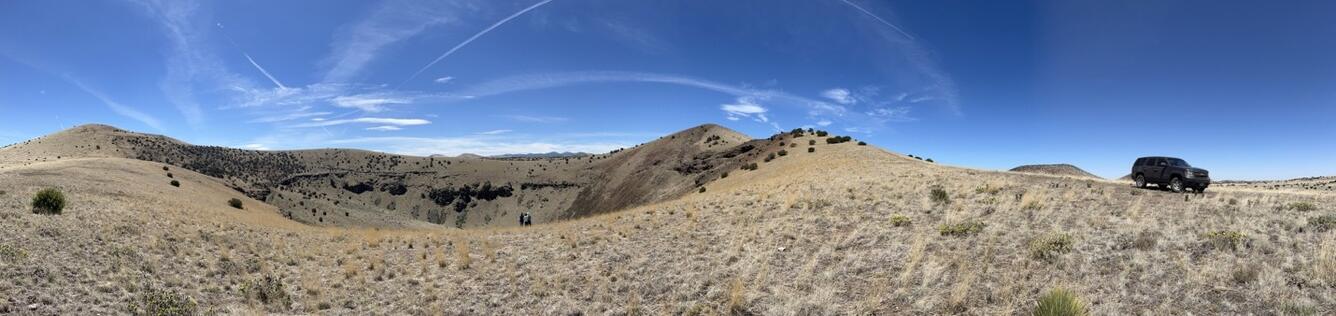
The SVF is one of seven distributed volcanic fields found along the margin between the Colorado Plateau and the Basin and Range. When trying to understand how volcanic fields like this form, scientists ask questions about when and how often eruptions occurred in order to build an eruptive history. Mark Stelten and Dawnika Blatter from USGS California Volcano Observatory, in collaboration with Professors Marissa Mnich (Sonoma State University) and Chris Condit (University of Massachusetts, Amherst), joined forces to do just that. Samples of volcanic rock from several key stratigraphic units were collected at volcanoes in the SVF and taken back to California for radiometric dating in the USGS 40Ar/39Ar lab at Moffett Field, California.
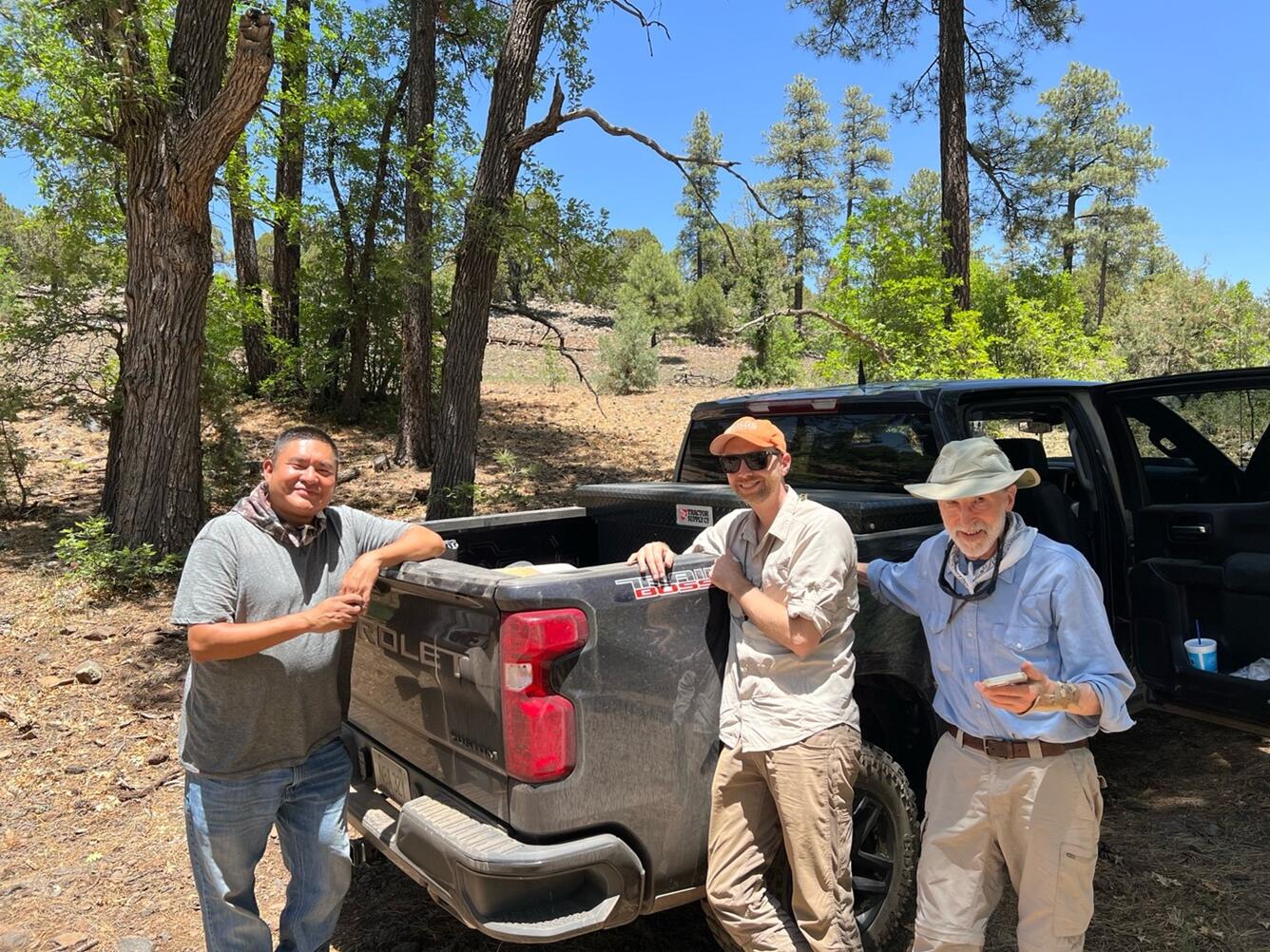
40Ar/39Ar ages revealed that many SVF units are younger than previously thought (one unit thought to be ~500,000 years old is actually ~50,000 years old!). These new results prompted new questions about whether hazardous eruptions might still occur in the SVF in human lifetimes. That required some more sleuthing. Field work in 2025 collected samples from the newly-recognized 50,000-year-old rocks in what we now know is the youngest part of the volcanic field. This included sampling on White Mountain Apache Reservation land, done with help from White Mountain Apache Tribe Hydrologist Javis Davis.
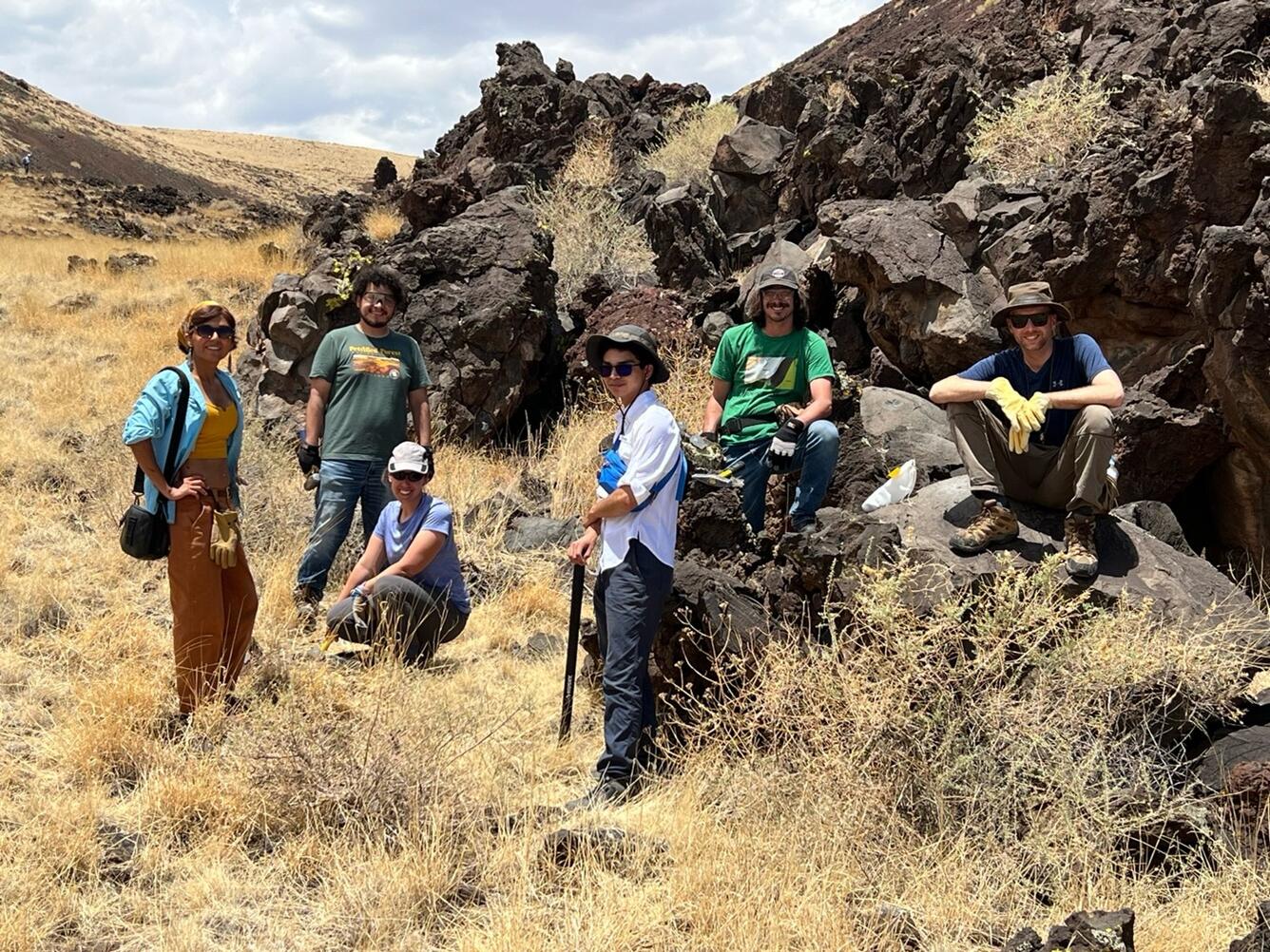
It was also a great opportunity to train geology students from Sonoma State University and San Jose State University, two of the California schools that regularly work with USGS scientists.
You're probably asking, what was the result of that work? Well, radiometric dating requires a lot of processing time before our labs can produce an age for a rock, so the work is still underway. Stay tuned for future updates on the Springerville volcanic field!