



Don't try to have a pillow fight with these pillows!
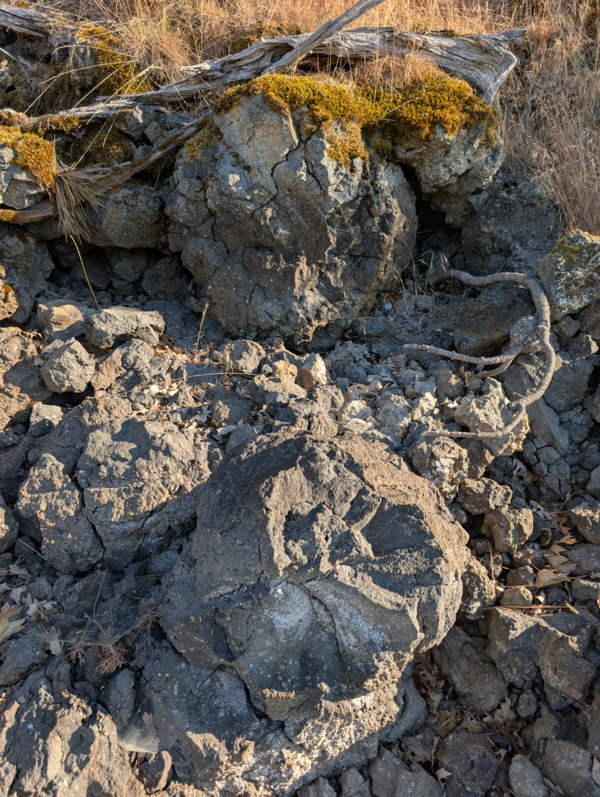
Geology can be a very descriptive science, and sometimes the terms they use are both informative and playful. When lava is extruded underwater, or flows into water, a diagnostic shape called “pillow lava” can form.
The California Volcano Monitor is a weekly column written by scientists and collaborators of the California Volcano Observatory. This week's contribution is from Anthony Pivarunas, paleomagnetic specialist with the U.S. Geological Survey.
The pillows are ellipsoidal (rounded pill) shapes, which can be closely packed on top of each other in thick stacks. These pillow shapes form because of the temperature difference between the lava and the water. The exterior of the lava lobe that flowed into the water cools rapidly, which forms a glassy skin. That chilled skin of rock is a great insulator, and inside it molten lava can continue to inflate the pillow. A protip: even though they’ve cooled down a lot since they formed, they still probably don’t make a good pillow for your head!
Usually, geologists associate pillow lava with the ocean floor, since the majority of new crust formed at mid-ocean ridges is made up of pillowed basalt lava flows. However, the example in this photo isn’t from the ocean floor at all, but from a basalt lava flow in northern California (near the former Copco Lake). This tells geologists that when this lava flowed out of a volcano, the flow entered a body of water and underwent the same process of chilling and inflation that it would have under the ocean. There are two nicely shaped pillow lava forms visible in the upper and lower center of the picture; some others may have disintegrated with the passage of time. There are also some crude radiating columns in the lower pillow. These actually form from the same process which forms more elegant, shapely columns in places like Devil’s Postpile – as the lava cooled from the outside inward, it shrank and cracked away from the lava surrounding it in geometric shapes.