



Photo & Video Chronology — January 27, 2026 — Tephra fall from Kīlauea episode 41
By Hawaiian Volcano Observatory
January 29, 2026
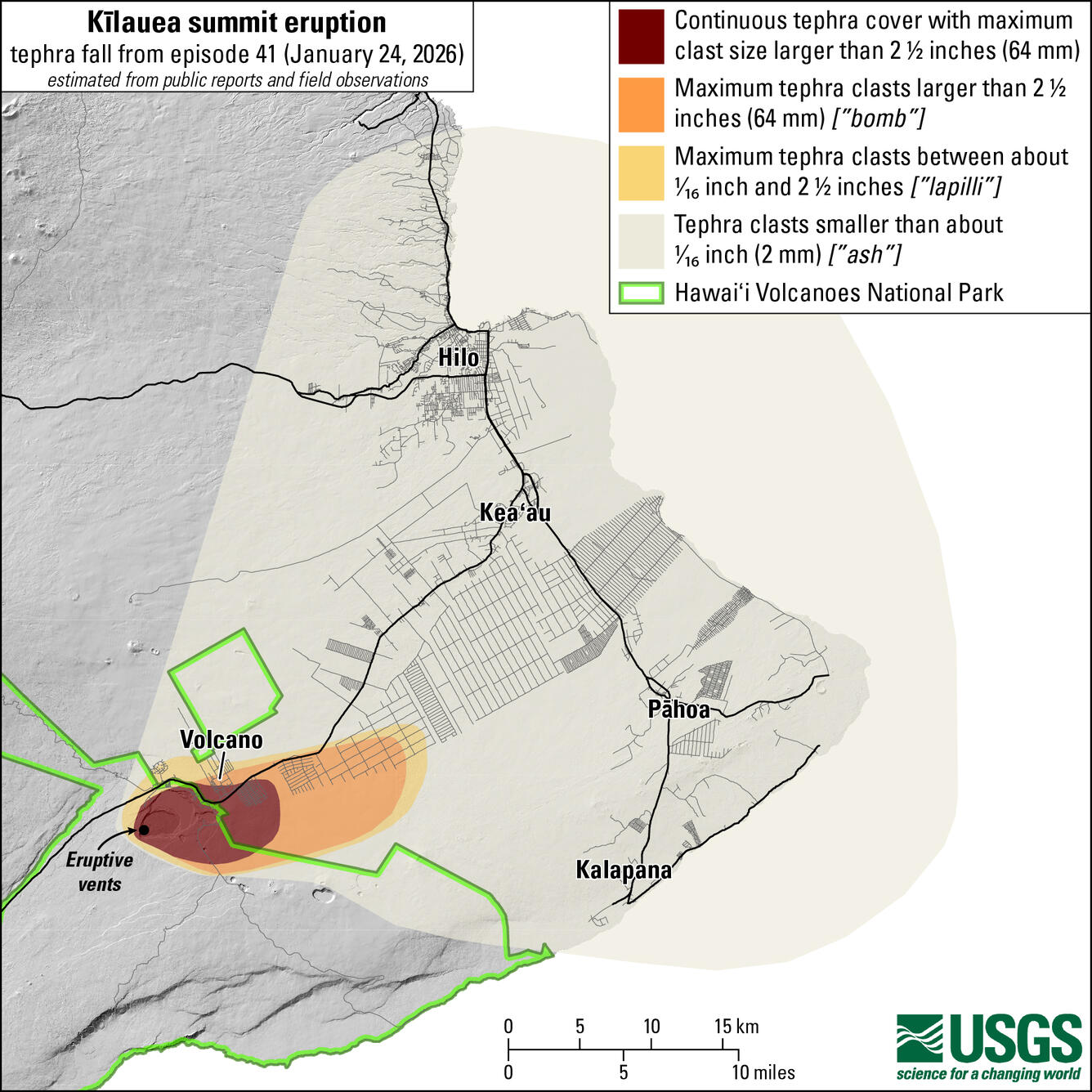
During episode 41 on January 24, lava fountains from the north and south vents in Halemaʻumaʻu at the summit of Kīlauea reached up at least 450 m (1475 feet). Weak surface winds in combination with stronger upper-level winds blowing to the east and north resulted in widespread tephra fall in communities to the northeast and east within the Districts of Kaʻū, Puna, and South Hilo.
Media
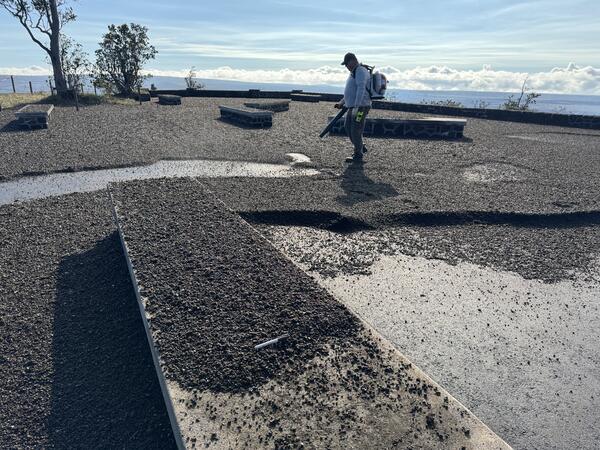
Tephra fall from episode 41 of lava fountaining at the summit of Kīlauea at the former Jaggar Museum Overlook near Uēkahuna in Hawaiʻi Volcanoes National Park. Hawaiʻi Volcanoes National Park staff wear personal protective equipment, including masks, gloves, eye protection, covered shoes, a hat, and long pants/long-sleeve shirt as they use blowers to clear the lightweight tephra from the ground and benches. USGS photo by K. Mulliken.
Sources/Usage: Public Domain. View Media Details
Media
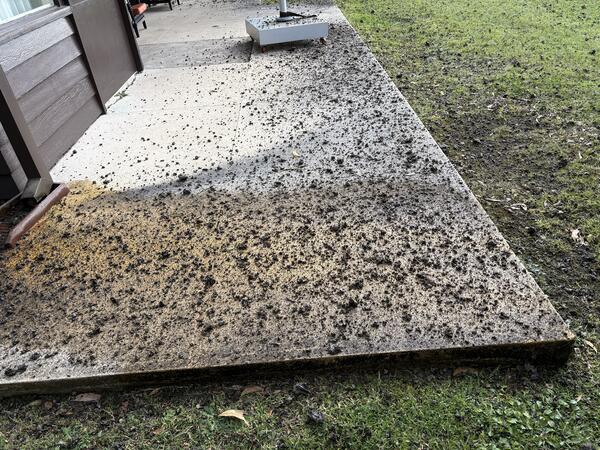
Photograph taken of concrete pad located at the Volcano House Hotel, in Hawaiʻi Volcanoes National Park, covered with reticulite tephra clasts that fell throughout most of episode 41 lava fountaining at the summit of Kīlauea on January 24, 2026. These clasts tend to be light weight and consist mostly of glass with sharp edges that can cut skin and cause splinters. USGS photo by D. downs.
Sources/Usage: Public Domain. View Media Details
Media
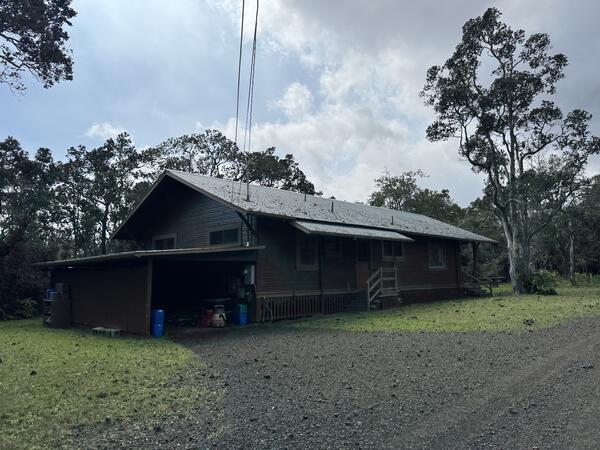
Tephra fall from episode 41 of lava fountaining at the summit of Kīlauea on a structure in Hawaiʻi Volcanoes National Park. USGS photo by K. Mulliken.
Sources/Usage: Public Domain. View Media Details
Media
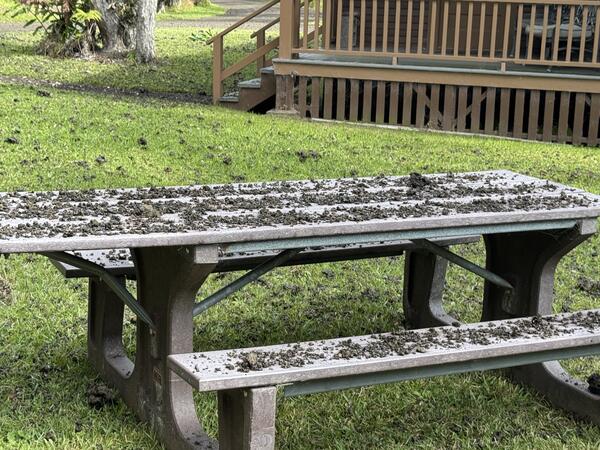
Tephra fall from episode 41 of lava fountaining at the summit of Kīlauea on a picnic table in Hawaiʻi Volcanoes National Park. USGS photo by K. Mulliken.
Sources/Usage: Public Domain. View Media Details
Media
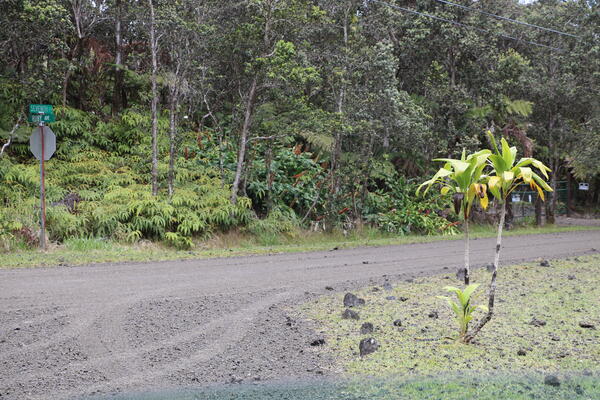
At the intersection of Seventh Street and Ruby Avenue in Mauna Loa Estates, tephra from Kīlauea episode 41 has been crushed by vehicles driving the roadway, while intact tephra covers the grassy area next to the road. USGS photo by K. Mulliken.
Sources/Usage: Public Domain. View Media Details
Media
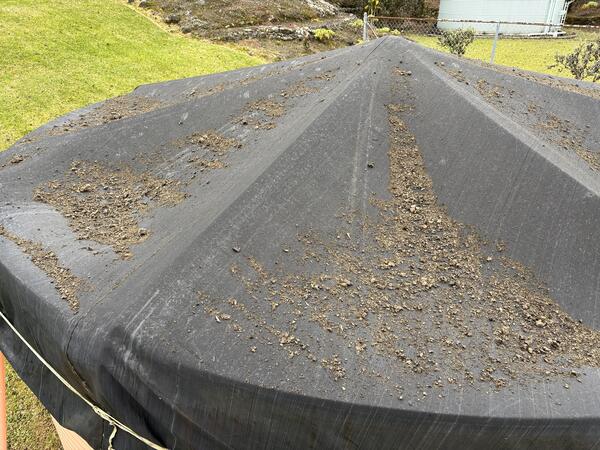
Photo of tephra on a water tank catchment cover in the Volcano area. Large clasts of reticulite, Pele's hair, and other ash particles fell heavily throughout the Volcano area and east side of the Island of Hawaiʻi during lava fountaining episode 41 at the summit of Kīlauea on January 24, 2026. This photo is from a residence in Ohia Estates, about 8.5 km (about 5.3 miles) to the east of the north and south vents that produced the episode 41 lava fountains. USGS photo by D. Downs.
Sources/Usage: Public Domain. View Media Details
Media
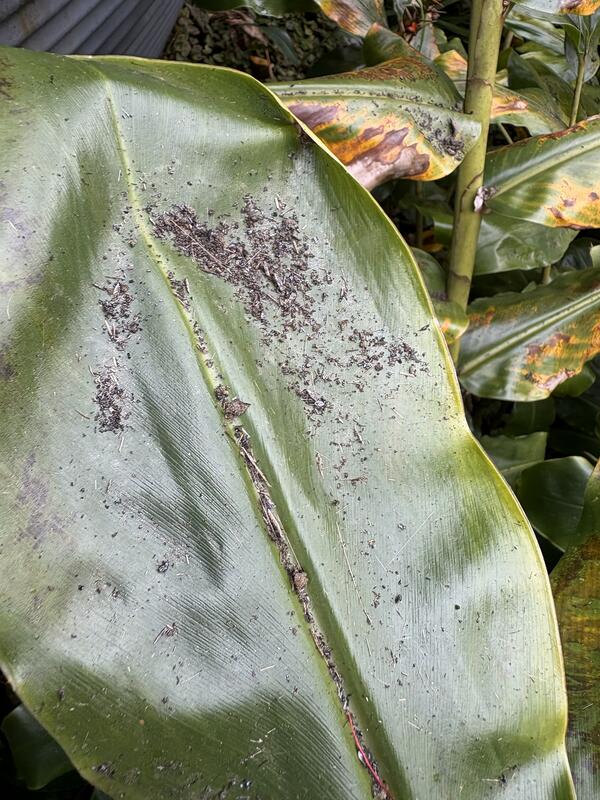
Photo of broken pieces of reticulite, fine ash, and Pele's hair on a ginger leaf in the Volcano area, following episode 41 of lava fountaining on January 24, 2026. This photo was taken at a residence about 7.3 km (4.5 miles) away from the eruptive vents in Halemaʻumaʻu at the summit of Kīlauea. Many of these tephra deposits are ephemeral and will eventually get removed by wind and rain over the coming weeks and months. USGS photo by D. Downs.
Sources/Usage: Public Domain. View Media Details
Media
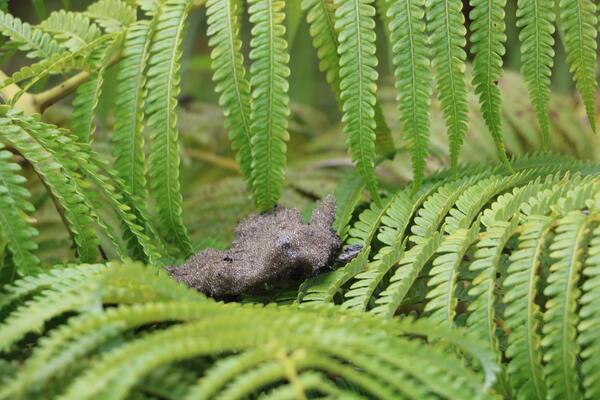
A piece of reticulite, a very frothy type of tephra full of bubbles, remains perched on top of a Hapuʻu tree fern frond in Volcano Village on January 27, 2026. This material was erupted during episode 41 lava fountaining at the summit of Kīlauea on January 24, 2026. USGS photo by K. Mulliken.
Sources/Usage: Public Domain. View Media Details
Media
Sources/Usage: Public Domain. View Media Details
Media
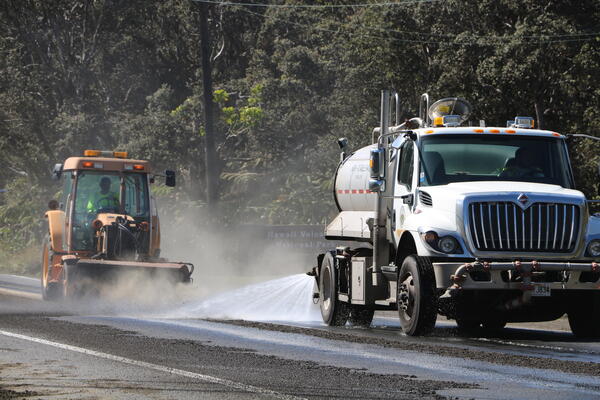
Tephra clean-up efforts on Highway 11, near the entrance to Hawaiʻi Volcanoes National Park, on January 26, 2026. Water was sprayed on the pavement before machinery scrubs the pavement to remove the tephra particles. Water helps to prevent some of this lightweight material from wafting upwards when it is scrubbed, but some material is still visibly resuspended in this photo. The Hawaiʻi Volcanoes National Park sign is visible in the background between the two pieces of equipment. USGS photo by K. Mulliken.
Sources/Usage: Public Domain. View Media Details
Media
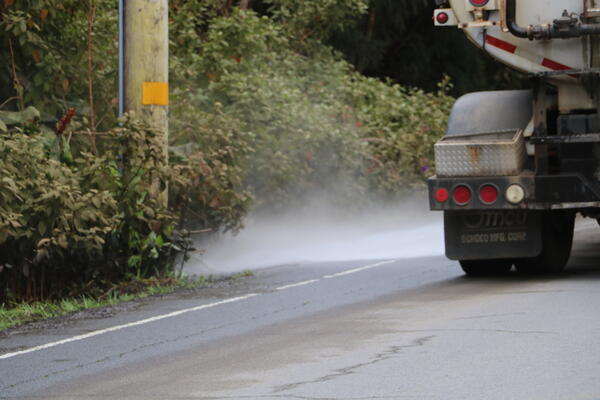
Volcanic ash is washed off a road in Volcano Village on January 27, 2026, and coats the plants adjacent to the road. USGS photo by K. Mulliken.
Sources/Usage: Public Domain. View Media Details
Media
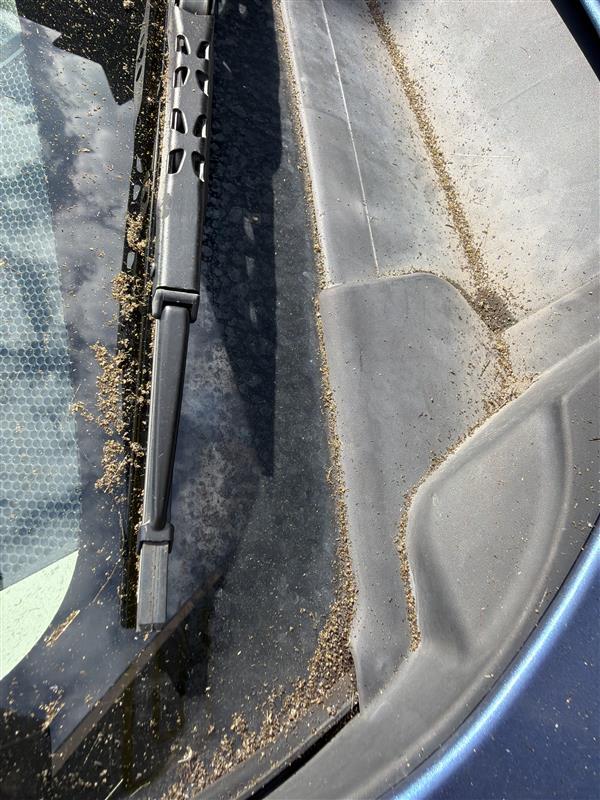
Volcanic ash, tephra particles that are less than 2 mm in size (less than 0.08 in), collecting on a vehicle windshield and hood in Hawaiian Paradise Park during episode 41 lava fountaining at the summit of Kīlauea. This vehicle was parked approximately 25 miles (40 km) away from the eruptive vents. Volcanic ash fell over much of the District of Puna and part of South Hilo during episode 41 of lava fountaining at the summit of Kīlauea on January 24, 2026. USGS photo by L. DeSmither.
Sources/Usage: Public Domain. View Media Details
Media
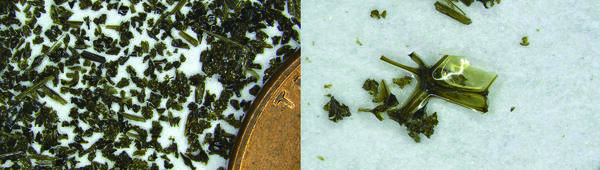
Tephra is a word that describes any material erupted by a volcano that travels through the air before landing on the ground. Volcanic ash is tephra particles that are less than 2 mm in size (less than 0.08 in). Volcanic ash fell over much of the District of Puna and part of South Hilo during episode 41 of lava fountaining at the summit of Kīlauea on January 24, 2026. The lefthand photo shows many of these volcanic ask particles that were collected from a residence in Orchidland Estates that is about 33 km (20.5 miles) away from where lava fountains reaching heights of 450 m (1475 ft) were erupting from the north and south vents in Halemaʻumaʻu crater at the summit of Kīlauea. These volcanic ash particles include long, but thin and pointy, strands of Pele's hair, as well as small, blocky particles and broken pieces of reticulite with flat flakes that were bubble walls and jagged, spiked triple junctions (look similar to a jacks game set). The righthand photo is zoomed in on one of these broken reticulite particles, with its jagged, points and with a bit of bubble wall still attached that is reflecting the light. These volcanic ash particles are compared to a penny for size and most around about the size of the letter "T" in the words along the circumference of the penny, which is about 1 mm (0.04 in tall). USGS photos.
Sources/Usage: Public Domain. View Media Details
Media
Sources/Usage: Public Domain. View Media Details