



Photo & Video Chronology — Kīlauea summit monitoring overflight
By Hawaiian Volcano Observatory
September 18, 2026
USGS Hawaiian Volcano Observatory staff conducted a monitoring overflight of the eruption site in Halemaʻumaʻu at the summit of Kīlauea during the afternoon of September 18, 2026. No active lava was observed on the surface during the overflight, though spatter was visible in the north vent overnight.
Media
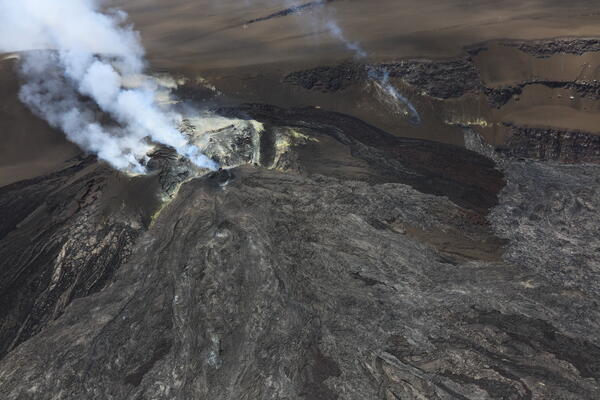
During a USGS Hawaiian Volcano Observatory monitoring overflight of Kīlauea summit the afternoon of September 18, 2026, geologists captured this view showing several of the vents degassing. In the left side of the image, the main vent complex in Halemaʻumaʻu (the north/south/west vents) that has been erupting episodically since December 2024 makes up a shield-shaped structure within the crater. The degassing feature in the right side of the photo is one of the vents that recently erupted between September 14-16, and another of these recently active vents is visible just below and to the right of it but not degassing. USGS photo by K. Lynn.
Sources/Usage: Public Domain. View Media Details
Media
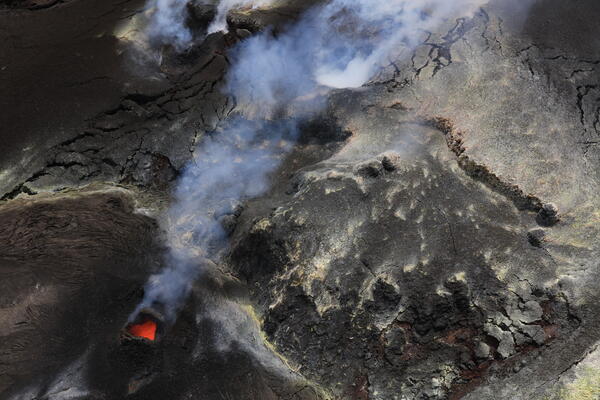
The north vent in Halemaʻumaʻu, at the summit of Kīlauea, was incandescent during a USGS Hawaiian Volcano Observatory monitoring overflight the afternoon of September 18, 2026. The south (upper left part of image) and west vents (upper center part of image) were degassing, and only a very minor area of incandescence was visible in the south vent. USGS photo by K. Lynn.
Sources/Usage: Public Domain. View Media Details
Media
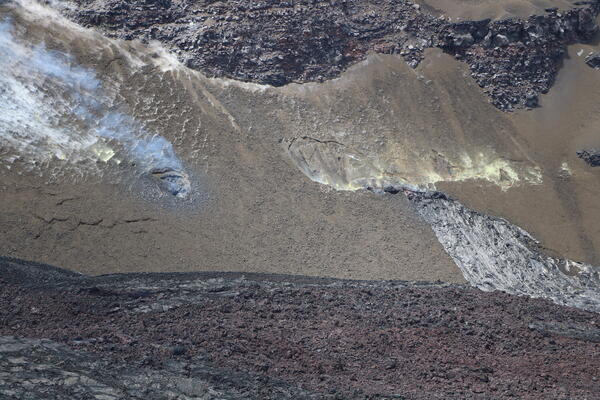
This low-angle aerial view, taken during a USGS Hawaiian Volcano Observatory monitoring overflight of Kīlauea summit on September 18, 2026, shows two of the six vents that erupted between September 14-16, 2026. Several of the vents, including these, were in the northwest wall of Halemaʻumaʻu crater, while the others occurred where the wall of the crater meets the crater floor. USGS photo by K. Mulliken.
Sources/Usage: Public Domain. View Media Details
Media
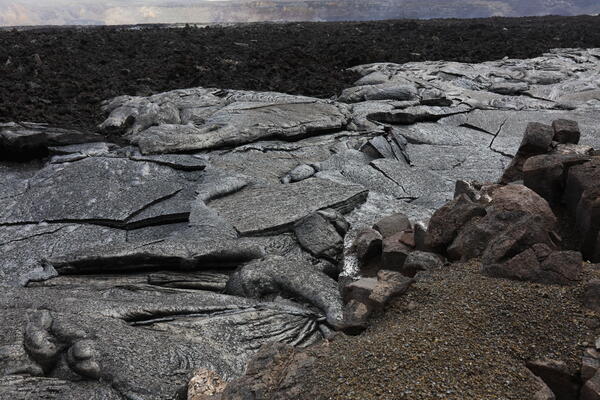
The shiny grey lava flow in the foreground of this photograph was erupted between September 14-16, 2026, by one of several new vents that opened in and along the northwest wall of Halemaʻumaʻu crater at the summit of Kīlauea. No lava flows have been active in Halemaʻumaʻu over the past day, though some spatter was visibel in the north vent overnight, indicated that magma remains high in the volcanic conduit. USGS photo by K. Lynn.
Sources/Usage: Public Domain. View Media Details
Media
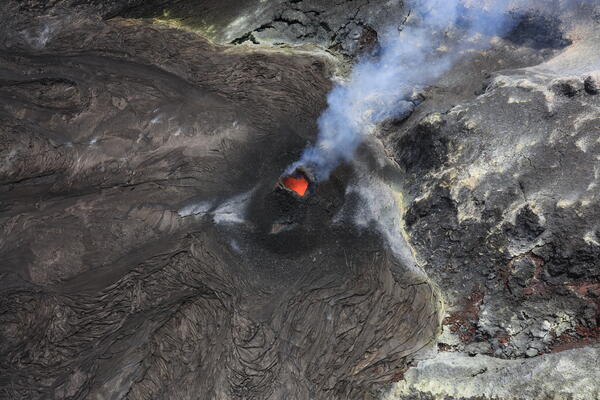
Glow and flames were observed in Kīlauea summit webcam imagery overnight, with occasional spatter, but only incandescence was visible within the vent during a USGS Hawaiian Volcano Observatory monitoring overflight the afternoon of September 18, 2026. USGS photo by K. Lynn.
Sources/Usage: Public Domain. View Media Details
Media
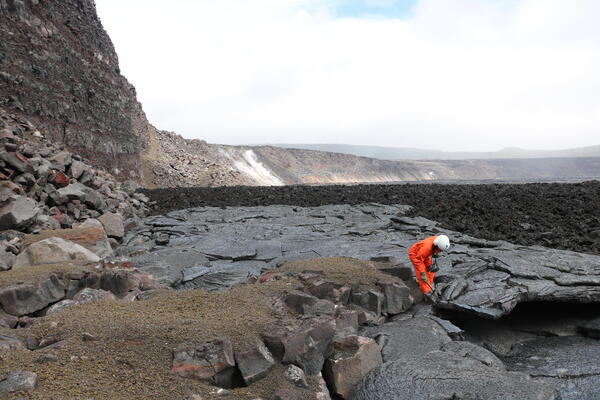
With permission from Hawaiʻi Volcanoes National Park, USGS Hawaiian Volcano Observatory geologists collected a sample of lava that erupted from new vents in Halemaʻumaʻu between September 14-16, 2026. This photograph gives a sense of scale between the floor of Halemaʻumaʻu crater and the upper floor of Kaluapele (the summit caldera). The floor remains about 200 feet (60 meters) between the upper and larger part of the floor of Kaluapele. The rim of the caldera is another 500 feet (150 meters) above that. USGS photo by K. Mulliken.
Sources/Usage: Public Domain. View Media Details