



Photo & Video Chronology — Kīlauea summit overflight
By Hawaiian Volcano Observatory
November 18, 2026
USGS Hawaiian Volcano Observatory scientists conducted a monitoring and mapping overflight of Kīlauea's summit region on November 18, 2026.
Media
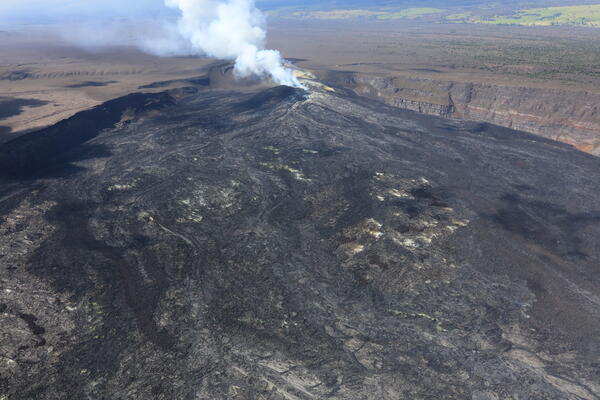
Aerial view taken during a late morning USGS Hawaiian Volcano Observatory helicopter overflight of the lava flows and vents in Halemaʻumaʻu at the summit of Kīlauea. Recent lava flows from episode 56 on November 5, 2026, cover much of the crater floor. The southwest and north vents are visible in the background with a robust gas plume blowing to the southwest into the Kaʻū Desert. USGS photo by D. Downs.
Sources/Usage: Public Domain. View Media Details
Media
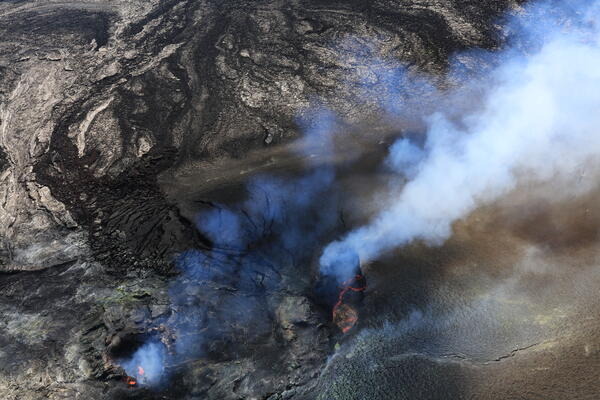
View of the southwest and north vents in Halemaʻumaʻu during a USGS Hawaiian Volcano Observatory monitoring and mapping helicopter overflight on November 18, 2026. The southwest vent is to the right in the image and during the overflight contained a roiling lava lake. The north vent is to the left in the image and during the overflight contained a few hornitos on its north side that have been emitting flames and occasional spatter. The north vent conduit quickly narrows at depth and incandescence is visible a few tens of yards (meters) below the rim. USGS photo by D. Downs.
Sources/Usage: Public Domain. View Media Details
Media
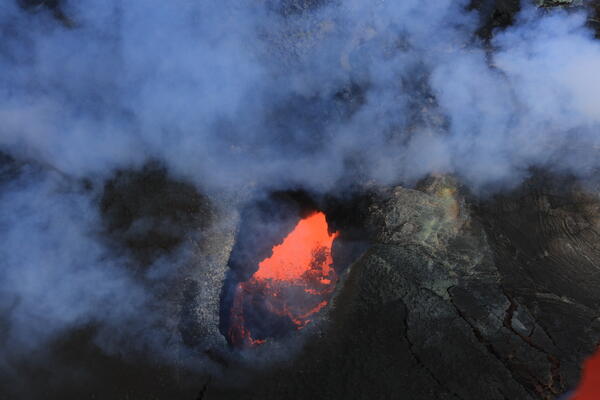
Telephoto view of the roiling lava lake within the southwest vent of Halemaʻumaʻu at the summit of Kīlauea, taken during a USGS Hawaiian Volcano Observatory monitoring helicopter overflight on November 18, 2026. The southwest vent is about 65 feet long (20 meters) and 50 feet wide (15 meters) and contains a roiling lava lake not far below its rim. This vent has been glowing brightly at night with occasional spatter thrown out. USGS photo by D. Downs.
Sources/Usage: Public Domain. View Media Details
Media
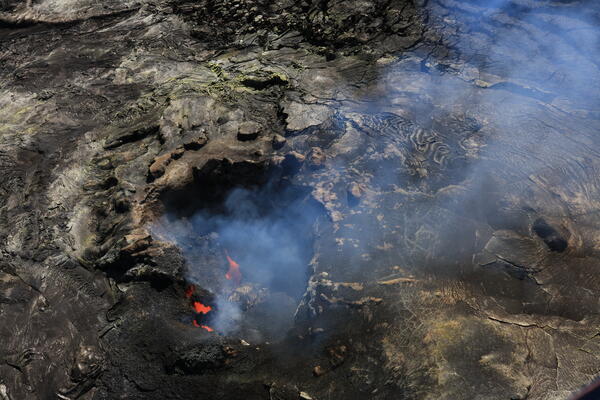
Telephoto view of the north vent in Halemaʻumaʻu during a helicopter overflight of Kīlauea's summit on November 18, 2026. The north vent has a few hornito-like features on its north side (bottom left of image) that have been emitting flames and occasional spatter over the past few days. The main part of the conduit quickly narrows below the rim and has incandescent lava deeper down. USGS photo by D. Downs.
Sources/Usage: Public Domain. View Media Details