



Photo & Video Chronology — Maintaining volcano monitoring instrumentation
By Hawaiian Volcano Observatory
August 3, 2026
USGS Hawaiian Volcano Observatory field engineers and gas scientists conducted maintenance in July 2026 on volcano monitoring stations located on Mauna Loa, Hualālai, and Kohala volcanoes.
Kohala and Hualālai repeater station maintenance
Media
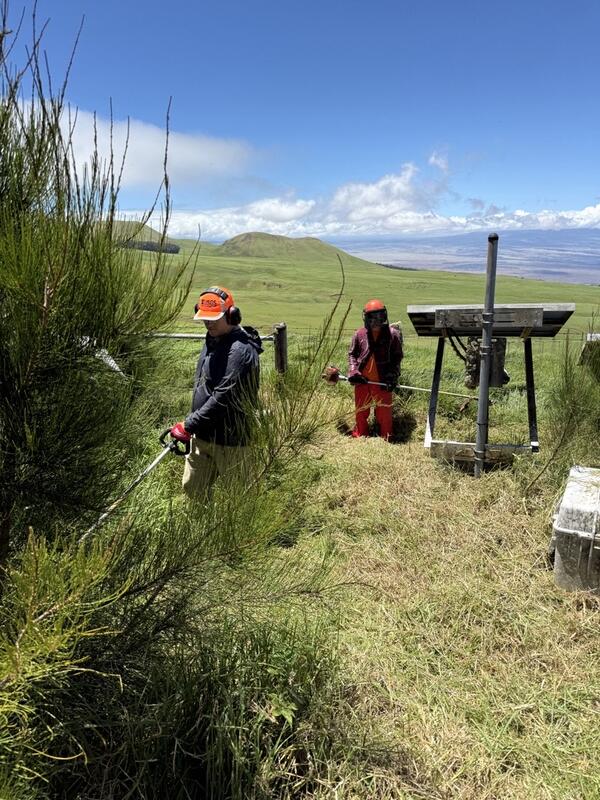
Repeater station KOHD is located on Kohala volcano, and it is an important volcano monitoring hub as it receives data from monitoring stations nearby and relays it back to the USGS Hawaiian Volcano Observatory (HVO). Grass grows abundantly in this area, and HVO field engineers must visit the site routinely to conduct maintenance and clear the ground of vegetation (as seen in this photo). The pu‘u (hills) in the background of this photo are cinder cones erupted by Kohala over one hundred thousand years ago. USGS photo by M. Warren.
Sources/Usage: Public Domain. View Media Details
Media
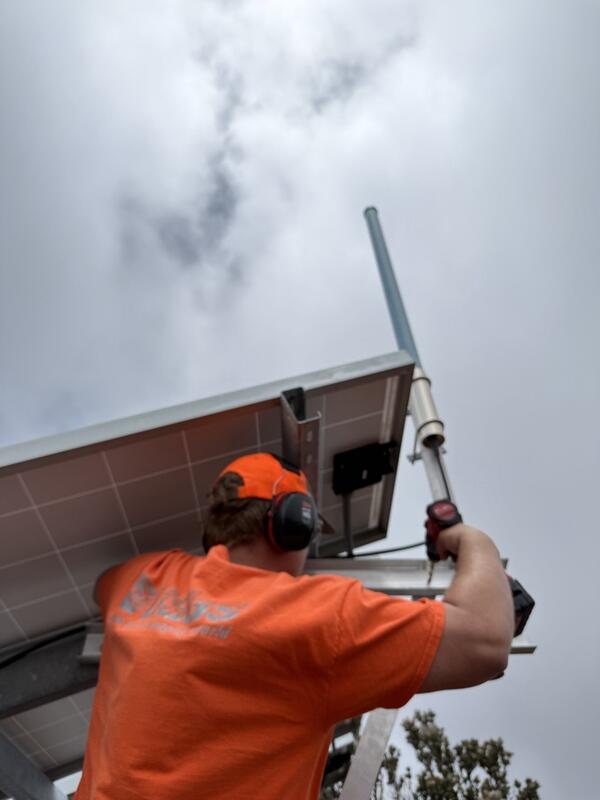
The Hualālai repeater site is located on the southeast side of Hualālai volcano, which erupted most recently in 1800-1801. At an elevation of 2,160 meters (7,090 feet) above sea level, the repeater site is a telecommunications hub. It receives data from multiple volcano monitoring stations and relays that information back to the USGS Hawaiian Volcano Observatory. Here, a field engineer maintains the antenna hardware at the site. USGS photo by M. Warren.
Sources/Usage: Public Domain. View Media Details
Mauna Loa monitoring station maintenance
Media
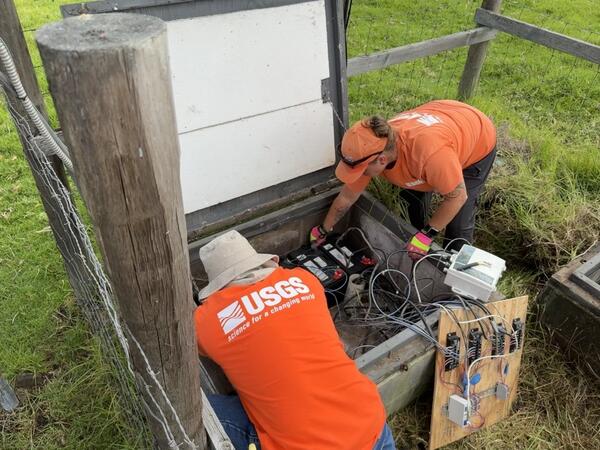
USGS Hawaiian Volcano Observatory field engineers replace the batteries at the HOK tiltmeter, located on the west flank of Mauna Loa volcano. USGS photo.
Sources/Usage: Public Domain. View Media Details
Media
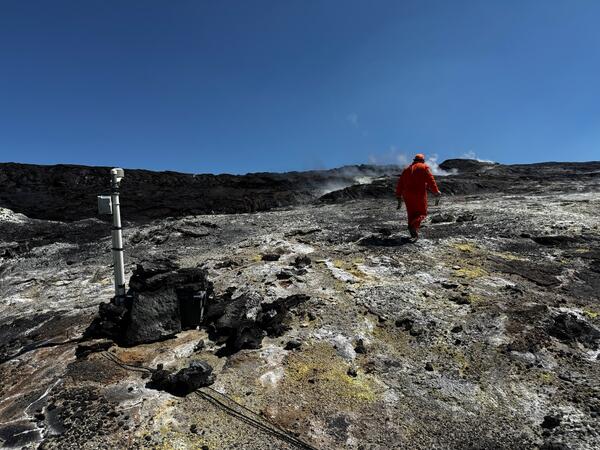
The continuously monitoring Multi-Gas instrument at Sulfur Cone is housed inside a black Pelican case, held down by rocks piled on top to keep secure from high winds. Air is pulled into the instrument via a small pump to be analyzed for volcanic gases (Sulfur Dioxide, Hydrogen Sulfide, Carbon Dioxide and Water Vapor). Meteorological parameters (Wind Speed/Wind Direction, Temperature/Humidity) along with fumarole temperature are also collected at the site. Monitoring the ratios of the different volcanic gases here can help USGS Hawaiian Volcano Observatory gas scientists identify any changes to the magmatic system beneath Mauna Loa. A gas scientist works in the background with the steaming 1950 eruptive fissure extending behind. USGS photo by C. Sealing.
Sources/Usage: Public Domain. View Media Details
Media
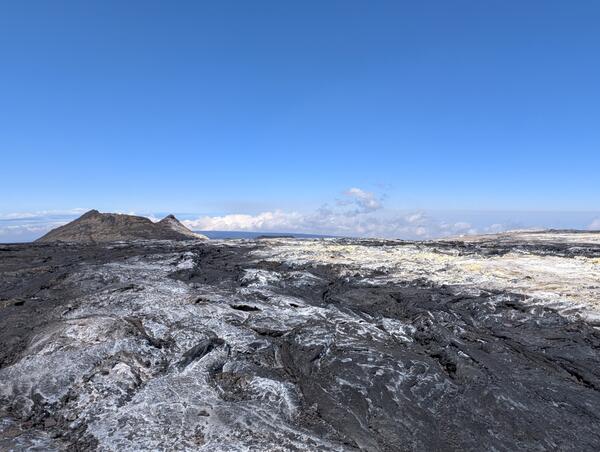
Photo looking down the axis of Mauna Loa's Southwest Rift Zone towards Ocean View Estates, with Sulfur Cone in the foreground at an elevation of 3,430 meters (11,240 feet) above sea level. Elemental sulfur blankets the ground all around this site, as is its deposited due to the constant degassing of sulfur gases here. USGS photo by M. Cappos.
Sources/Usage: Public Domain. View Media Details
Media
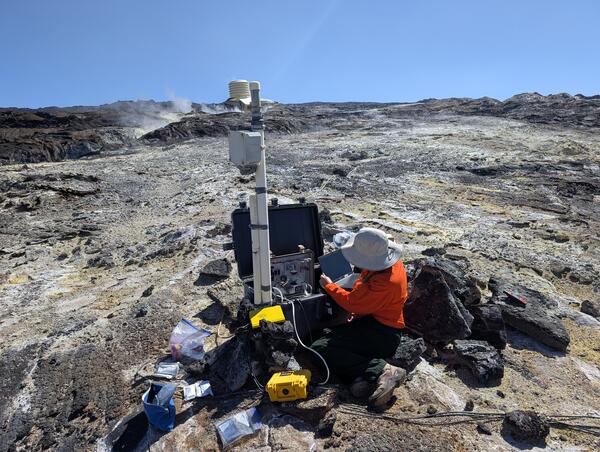
On July 29, 2026, USGS Hawaiian Volcano Observatory gas scientists flew via helicopter to the Sulfur Cone Multi-Gas instrumentation site on Mauna Loa's Southwest Rift Zone, which is at an elevation of 3,430 meters (11,240 feet) above sea level. Their mission was to perform routine maintenance of the monitoring site and to swap in a newly calibrated Multi-Gas instrument. In this photo, a gas scientist works to install the new Multi-Gas instrument which is used to monitor volcanic gas emissions emanating from the still steaming fissure formed during the 1950 Mauna Loa eruption in the background. USGS Photo by M. Cappos.
Sources/Usage: Public Domain. View Media Details
Media
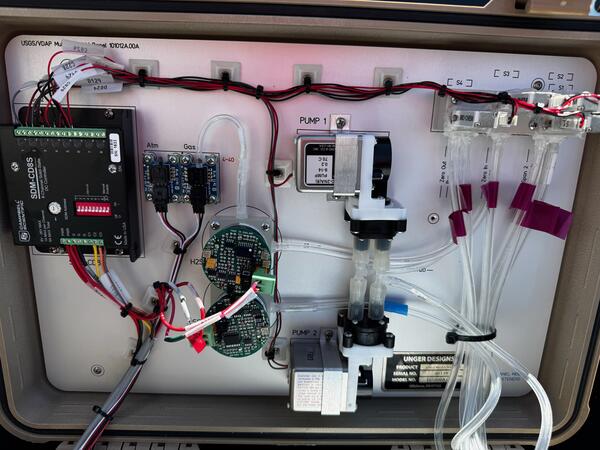
This photograph shows the inside of the USGS Hawaiian Volcano Observatory (HVO) Multi-Gas site at Sulfur Cone high up on Mauna Loa's Southwest Rift Zone. Volcanic gas (Sulfur Dioxide, Hydrogen Sulfide, Carbon Dioxide, and Water vapor) concentrations are measured then telemetered back to HVO to be monitored and analyzed by HVO gas scientists. USGS photo by C. Sealing.
Sources/Usage: Public Domain. View Media Details
Media
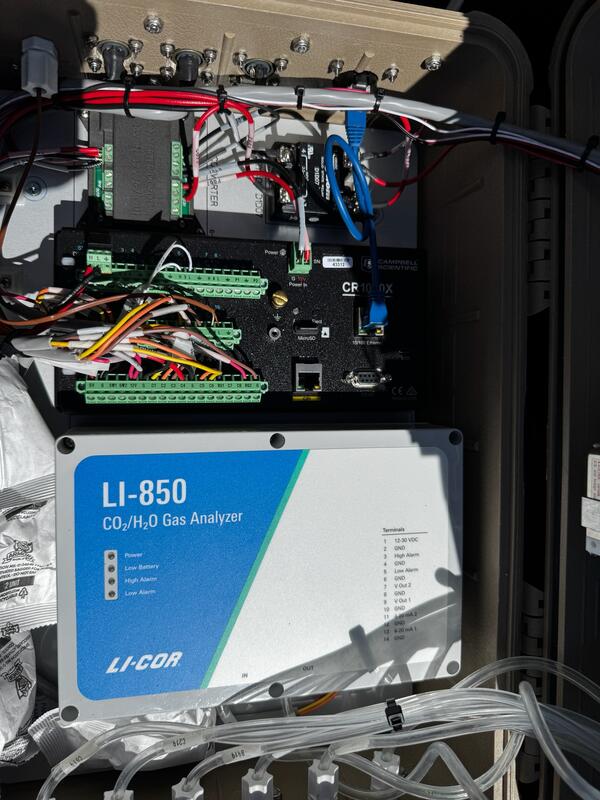
This photograph shows the inside of the USGS Hawaiian Volcano Observatory (HVO) Multi-Gas site at Sulfur Cone. Sensors measure concentrations of emitted volcanic gases (Sulfur Dioxide, Hydrogen Sulfide, Carbon Dioxide, and Water vapor). Volcanic gas concentration data are telemetered back to HVO to be viewed and monitored by HVO gas scientists. USGS photo by C. Sealing.
Sources/Usage: Public Domain. View Media Details