U.S. flag

An official website of the United States government

On May 12, 2026, the USGS Hawaiian Volcano Observatory conducted a helicopter overflight around Halema‘uma‘u crater and the eruptive vents at Kīlauea summit.


Media
Color photograph of volcanic vents degassing
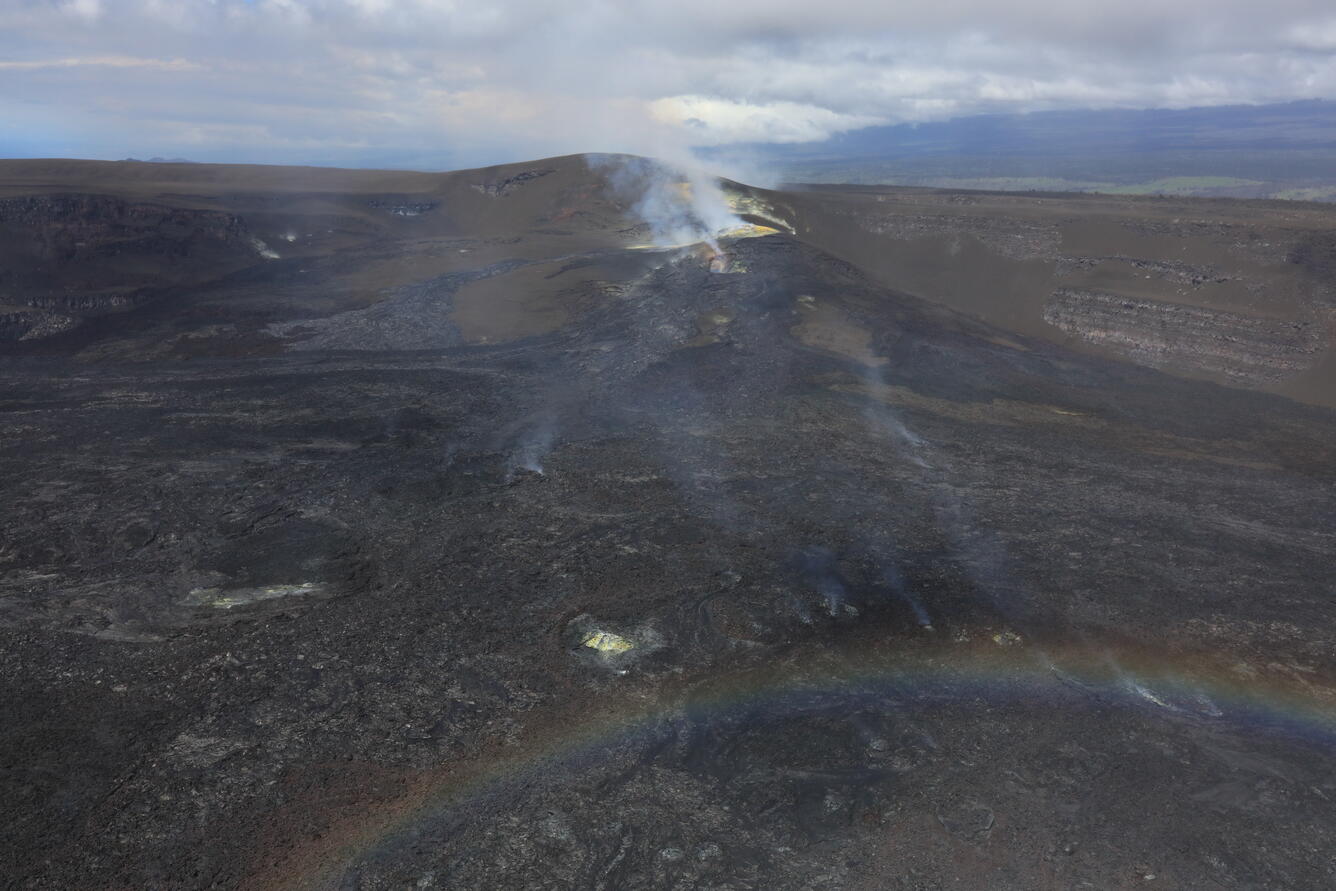
The arrival of misty rains during the USGS Hawaiian Volcano Observatory helicopter overflight on May 12, 2026, precluded a full imaging of the Halema‘uma‘u crater floor, but it did offer views of an ānuenue (rainbow) in front of the Kīlauea summit eruptive vents. USGS photo by P. Dotray.
Media
Color photograph of volcanic vents degassing
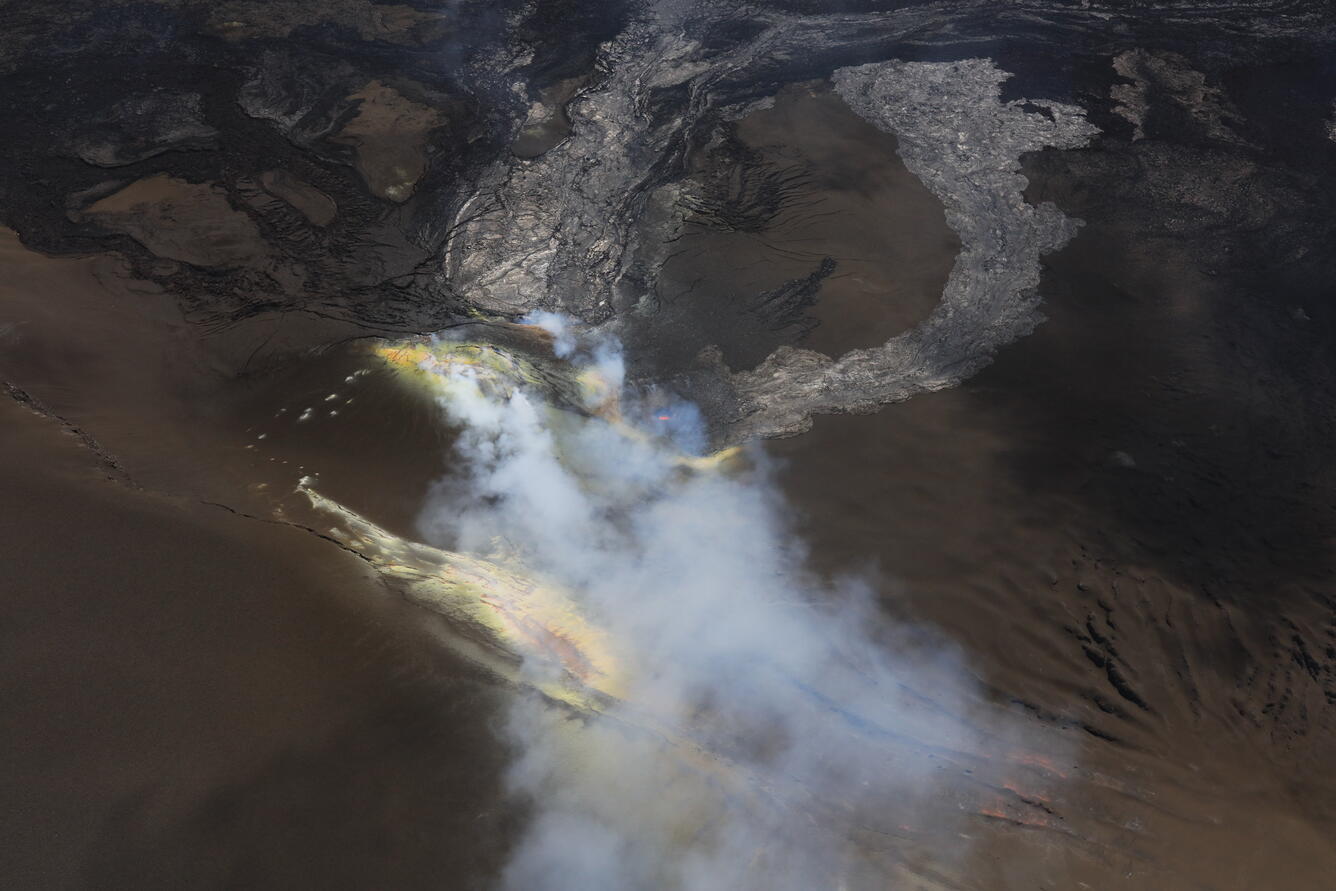
On May 12, 2026, a USGS Hawaiian Volcano Observatory helicopter overflight around Halema‘uma‘u crater flew past the Kīlauea summit eruptive vents to the southwest, offering a rarely seen view of the vents from the crater wall side. Large patches of sulfur minerals (yellow and brown) have formed in the tephra deposits on this side of the vents. Incandescence can be seen in the south vent from this angle, but the helicopter crew reported seeing lava ponds at shallow levels in both the north and south vents during the flight. The silvery lava flows stretching into the crater from the eruptive vents are remnants of recent eruptive episodes, as there have not yet been any overflows in advance of lava fountaining episode 47. USGS photo by P. Dotray.
Media
Color photograph of geologist collecting sample of lava flow with helicopter in background
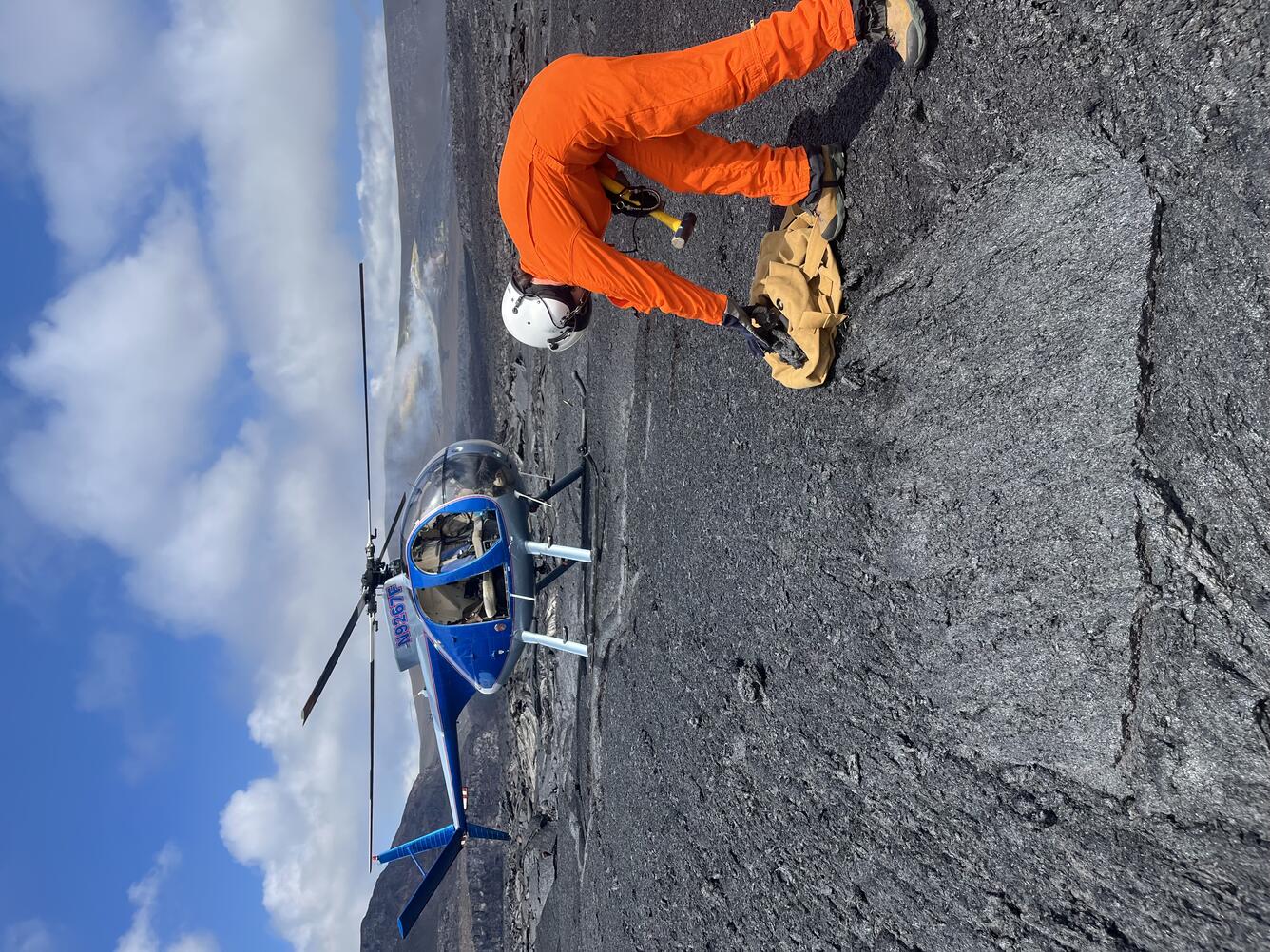
During a USGS Hawaiian Volcano Observatory helicopter overflight of Kīlauea summit on May 12, 2026, scientists landed on Halema‘uma‘u crater floor with permission from Hawaiʻi Volcanoes National Park. This area, culturally significant and sacred to Native Hawaiians as the home of Pele, is only accessible via helicopter and is covered with a patchwork of lava flows from lava fountaining episodes over the past year and a half. Scientists collected a sample of lava flows from episode 46 that occurred on May 5, 2026. Ongoing analyses of samples of each eruptive episode allow scientists at the USGS Hawaiian Volcano Observatory to track changes in magma temperature and chemistry over time, which informs hazard assessments and scientific understanding of the ongoing eruption. USGS photo by P. Dotray. 
Was this page helpful?