



Are those volcanoes…or a volcanic field?
Although not as dramatic as past explosive eruptions at Yellowstone, Idaho is home to several young volcanic eruptions. Geologists are currently evaluating whether many of these young eruptions should be considered individual volcanoes or lumped together as a volcanic field.
Yellowstone Caldera Chronicles is a weekly column written by scientists and collaborators of the Yellowstone Volcano Observatory. This week's contribution is from Mark Stelten, research geologist with the U.S. Geological Survey and deputy Scientist-in-Charge of the Yellowstone Volcano Observatory.
What is the difference between a volcano and a volcanic field? This isn’t the start of a bad joke, but rather an important question geologists try to answer when they seek to characterize volcanic hazards in a particular region. First let’s consider what types of volcanoes are common in the world.
Volcanoes come in all shapes and sizes. Typically, we think of volcanoes as steep, conical structures the size of a mountain, such as Mount St. Helens in Washington or Mount Shasta in northern California, that are built from successive lava flows and ash deposits. These are referred to as stratovolcanoes. Or perhaps we think of calderas like Yellowstone that are large, basin-shaped depressions formed when large volumes of magma are erupted from a shallow reservoir. Another common volcano type is a shield volcano, which is a broad, low relief volcano built up by successive lava flows, like Mauna Loa in Hawaiʻi. A more common type of volcanic feature is a cinder cone, or scoria cone, that consists of a conical hill formed by accumulation of solidified fragments of lava that fall around the vent of a single eruption (typically basalt to basaltic-andesite in composition). Cinder cones often have lava flows associated with them. Each one of these features is considered an individual volcano. However, it is often the case that multiple volcanoes in a similar geographic area are related to each other. This is where the concept of a volcanic field comes from.
Volcanic fields, or volcanic centers, are places where there are many different volcanoes in a similar location, and generally the eruptions that formed these volcanoes are thought to be related to a common magma source or a magma generation process. For example, the Yellowstone Plateau Volcanic Field consists not only of the modern-day Yellowstone Caldera, but two older calderas that formed approximately 2.1 million years ago and 1.3 million years ago, as well as numerous rhyolite lava flows and lava domes that fill in these calderas and numerous basalt eruptions that occurred outside these calderas and formed small cinder cones and lava flows.
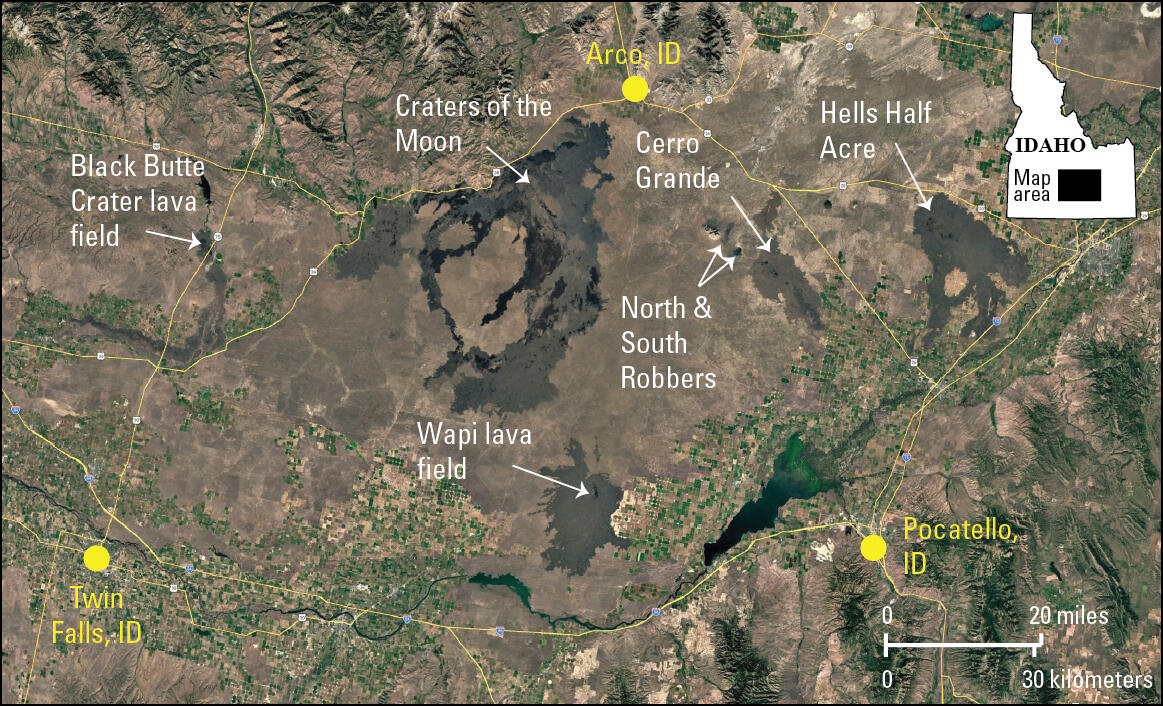
Although it is sometimes clear when separate volcanoes are related, this is not always the case—it can be quite hard to tell if a volcano exists in isolation or is part of a volcanic field. A good example of this is young volcanism in the eastern Snake River Plain in Idaho. Over the last 15,000 years, eruptions in the Eastern Snake River plain include the Cerro Grande lava field, North Robbers lava field, South Robbers lava field, Hells Half Acre lava field, Wapi lava field, and the Black Butte Crater lava field. These eruptions occurred over an area that is approximately 100 miles east-west by 55 miles north-south. Each lava field is interpreted to have formed from a single eruption event (although the length of each event varied) and formed small shield volcanoes or long lava flows. In the past, these have been treated as individual volcanoes and not as part of a volcanic field. The similar timing, compositions, and overall locations, however, suggest that the eruptions are broadly related.
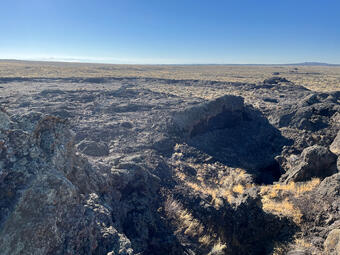
Based on this geologic evidence and a recent analysis of volcanic hazards that could impact the Idaho National Laboratory, USGS scientists are proposing to define a new volcanic field tentatively called the “Idaho volcanic field” that includes all these lava fields. Notably, Craters of the Moon, which is in the same area, is not included in the Idaho volcanic field. This is because Craters of the Moon is unique from the other volcanoes in that it has erupted numerous times from the same general location (although not from the same specific volcanoes), and recent eruptions have a unique composition compared to other young eruptions in the eastern Snake River Plain.
So, why does any of this matter in a practical sense when it comes to understanding volcanic hazards? The main benefit of defining a volcanic field that encompasses all of the abovementioned volcanoes is that it better reflects the geologic reality in that area. For example, if we treat each of those volcanoes as an individual feature, then the implication is that future eruptive activity would probably be in the same area as those volcanoes. Instead, a more realistic view may be that an eruption could occur within any part of the Idaho volcanic field, even somewhere where it has not erupted before. This eruption would likely have characteristics similar to other eruptions in the eastern Snake River Plain, but because these earlier eruptions were essentially “one-off” events they do not dictate where the next eruption will take place.
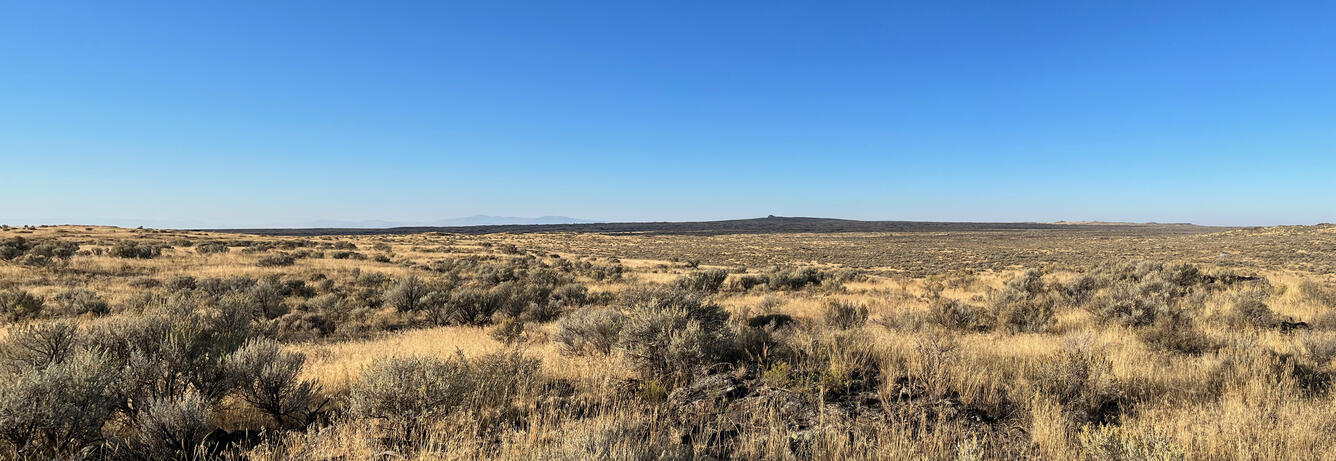
This type of detailed work performed by geologists is fundamental to our ability to accurately characterize and monitor volcanic hazards. Understanding the linkages between different volcanoes within a geographic area helps scientists to better anticipate where future eruptions may take place and what those eruptions may be like. So, if you find yourself viewing a volcano, whether it be a massive stratovolcano or a small cinder cone, keep in mind that you may not only be looking at a single volcanic vent, but possibly just one piece of a much larger volcanic field.