



USGS researchers at the Vermont Cooperative Fish and Wildlife Research Unit have released AMMonitor 2, an R package designed for remote wildlife monitoring. An R package is a collection of documentation, data, and functions that allow users to reuse the code and tools
Terri Donovan, PhD
Assistant Unit Leader - Vermont Cooperative Fish and Wildlife Research Unit
Research Interests
Terri's research emphases include population dynamics, population modeling and structured decision making, landscape ecology, and conservation biology. Current research efforts focus on adaptive management for both game and non-game species.
Teaching Interests
With a background in education, Terri is an avid teacher and enjoys working with all age groups. Current teaching efforts include an on-line Principles of Modeling course geared for graduate students and professionals, and studies abroad course in Costa Rica, where the focus is on how to re-establish and monitor a wildlife corridor for the three-wattled bellbird (Pajaro campana). Terri also directs the Spreadsheet Project, a suite of tutorials on quantitative data analysis and modeling in ecology.
Science and Products

Vermont Cooperative Fish and Wildlife Research Unit
The Vermont Cooperative Fish and Wildlife Research Unit (est. 1989) is a partnership among the Vermont Fish and Wildlife Department, University of Vermont, the U.S. Geological Survey, the U.S. Fish and Wildlife Service, and the Wildlife Management Institute.
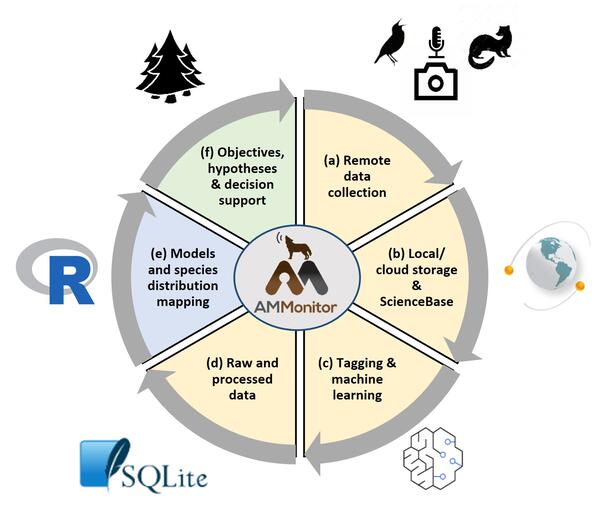
AMMonitor 2
USGS researchers at the Vermont Cooperative Fish and Wildlife Research Unit have released AMMonitor 2, an R package designed for remote wildlife monitoring. An R package is a collection of documentation, data, and functions that allow users to reuse the code and tools
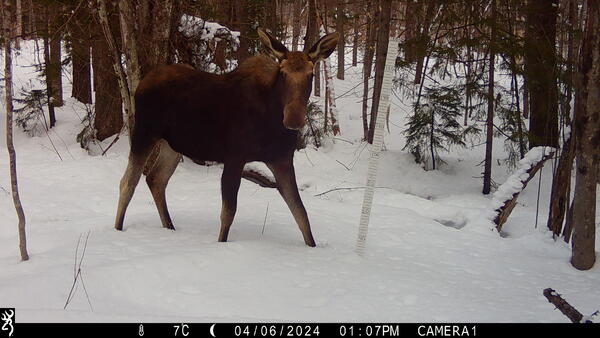
Moose sighting on a trail camera
USGS researchers at the Vermont Cooperative Fish and Wildlife Research Unit released AMMonitor 2, a fully open-source wildlife monitoring R package useful for students and users with some coding experience who desire a standardized yet flexible data management framework.
USGS researchers at the Vermont Cooperative Fish and Wildlife Research Unit released AMMonitor 2, a fully open-source wildlife monitoring R package useful for students and users with some coding experience who desire a standardized yet flexible data management framework.
Science and Products
Vermont Cooperative Fish and Wildlife Research Unit
The Vermont Cooperative Fish and Wildlife Research Unit (est. 1989) is a partnership among the Vermont Fish and Wildlife Department, University of Vermont, the U.S. Geological Survey, the U.S. Fish and Wildlife Service, and the Wildlife Management Institute.
AMMonitor 2
USGS researchers at the Vermont Cooperative Fish and Wildlife Research Unit have released AMMonitor 2, an R package designed for remote wildlife monitoring. An R package is a collection of documentation, data, and functions that allow users to reuse the code and tools
USGS researchers at the Vermont Cooperative Fish and Wildlife Research Unit have released AMMonitor 2, an R package designed for remote wildlife monitoring. An R package is a collection of documentation, data, and functions that allow users to reuse the code and tools
Moose sighting on a trail camera
USGS researchers at the Vermont Cooperative Fish and Wildlife Research Unit released AMMonitor 2, a fully open-source wildlife monitoring R package useful for students and users with some coding experience who desire a standardized yet flexible data management framework.
USGS researchers at the Vermont Cooperative Fish and Wildlife Research Unit released AMMonitor 2, a fully open-source wildlife monitoring R package useful for students and users with some coding experience who desire a standardized yet flexible data management framework.