An official website of the United States government
Here's how you know
Official websites use .gov
A .gov website belongs to an official government organization in the United States.
Secure .gov websites use HTTPS
A lock () or https:// means you’ve safely connected to the .gov website. Share sensitive information only on official, secure websites.
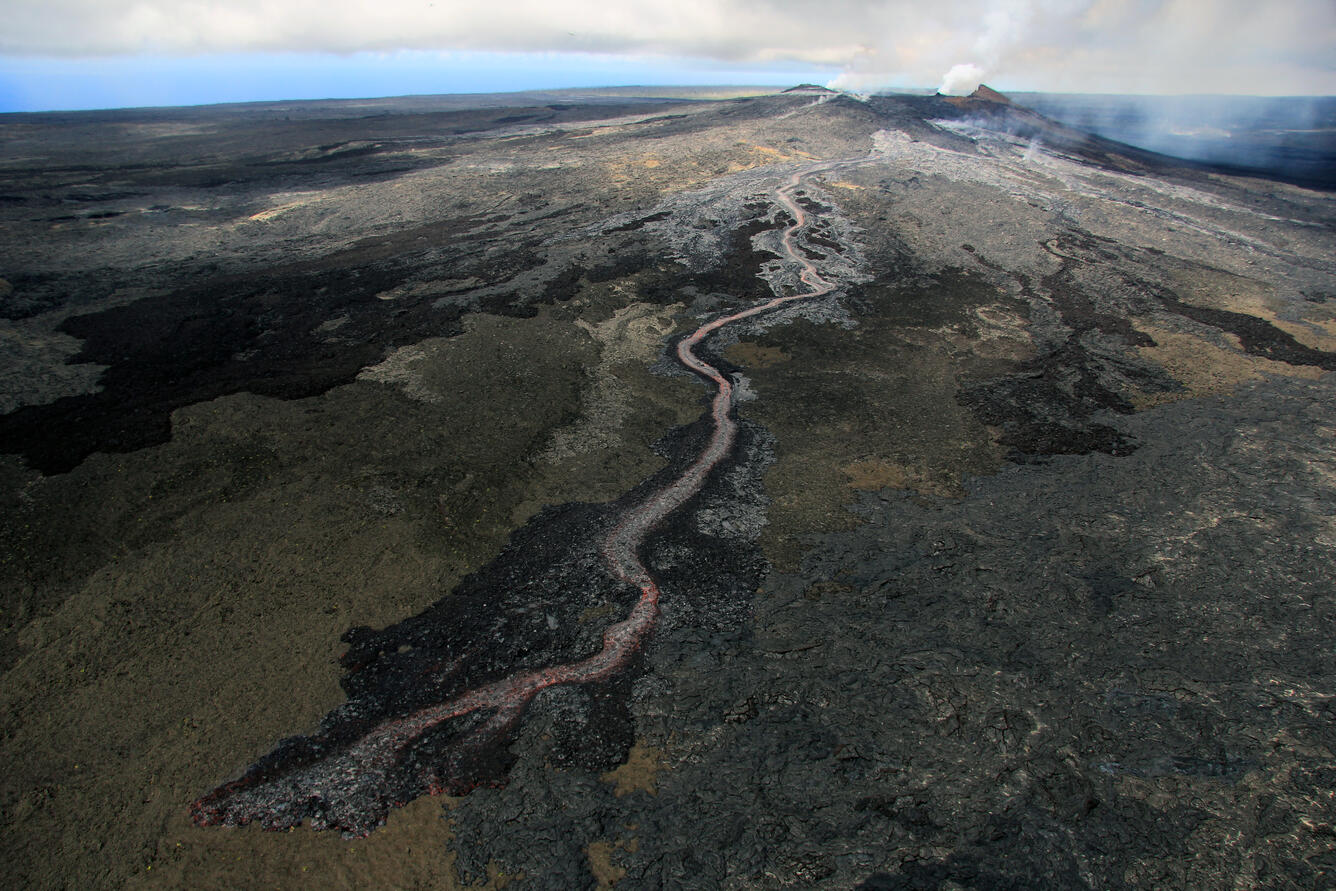
Elevated pressure within Pu‘u ‘Ō‘ō cone reached a breaking point this morning with magma intruding through the cone and erupting from fissures on the northeast flank of the cone. These new vents fed a vigorous, but still relatively short, channelized flow that had reached about 1.5 km (0.9 miles) northeast of Pu‘u ‘Ō‘ō by 11 am. This new activity was accompanied by minor sagging of the Pu‘u ‘Ō‘ō crater floor, due to withdrawal of magma within the cone.
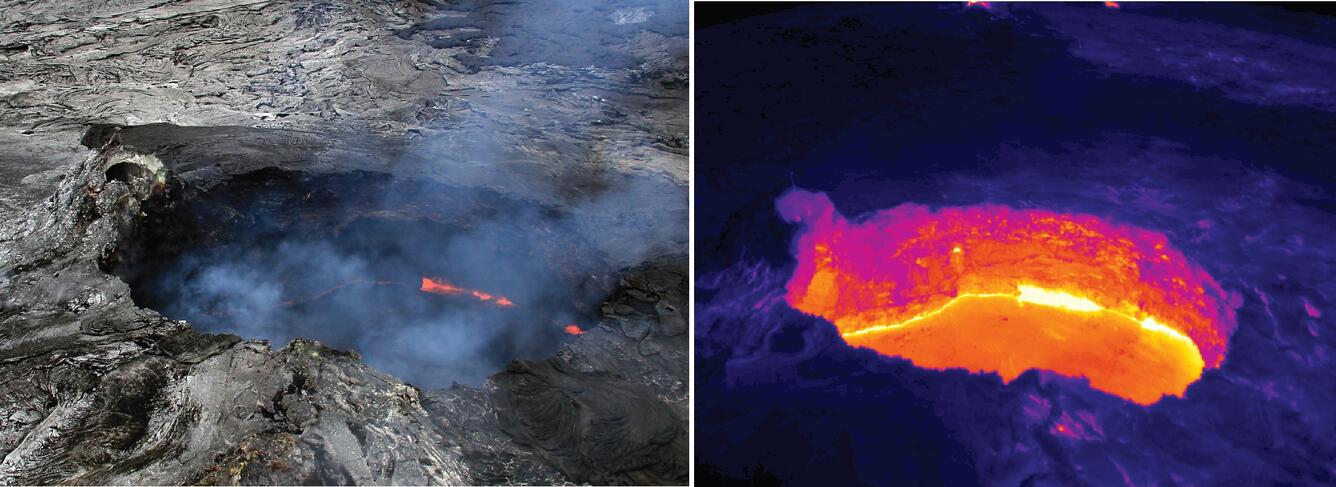
As noted above, the new flows have caused withdrawal of magma within Pu‘u ‘Ō‘ō and small collapses of the several cones on the crater floor. Dropping lava levels in the northeast lava pond in Pu‘u ‘Ō‘ō crater caused collapses and enlargement of the pond, which has nearly claimed the time-lapse camera (left side of images) observing the lava pond.
Surface flows remained active this morning on the Kahauale‘a 2 flow, but today's observations suggest that the new breakouts at Pu‘u ‘Ō‘ō may have interrupted the lava supply to the Kahauale‘a 2 flow field. Observations over the next few days will be able to determine if the lava supply to the Kahauale‘a 2 flow has ceased.
Thermal image of the channelized lava flow. Pu‘u ‘Ō‘ō is at the top of the image. The line of slightly lower temperatures down the center of the channel represents more intact (and cooler) crust, which is less disrupted than the lava near the channel margins.
This comparison of a normal photograph with a thermal image shows the distribution of activity northeast of Pu‘u ‘Ō‘ō. Today's breakouts originated from several fissures on the upper northeast flank of Pu‘u ‘Ō‘ō cone, sending out flows to the northeast. These partially overlap with the existing Kahauale‘a 2 flow, which had scattered surface flows this morning.
A closer look at the breakout points of today's new activity. The lava erupted from several fissures which broke through, and slightly uplifted, older lava on the cone.
The withdrawal of magma from within Pu‘u ‘Ō‘ō, to feed the new flows, has caused minor subsidence of the Pu‘u ‘Ō‘ō crater floor since this morning. This was associated with small collapses at the spatter cones on the crater floor. A partial collapse of this cone revealed a small pond of lava just below the surface.