



Novel Management Techniques for Colonial Nesting Waterbirds
This project focuses on USGS collaborating with USFWS colleagues to understand how management practices on Poplar Island impact target and non-target wildlife species.
Wildlife species are actively managed for any number of reasons, ranging from population conservation to minimizing conflict with humans. However, many situations requiring manager intervention are novel and require innovative solutions for which there are limited or no pre-existing management tools. This partnership with USFWS personnel working on Poplar Island seeks to leverage the skills sets of USFWS biologists and USGS researchers to address management needs in a data informed manner – identifying when management interventions are needed, testing established and emergent solutions, and using these results to inform future efforts on site and across the broader community.
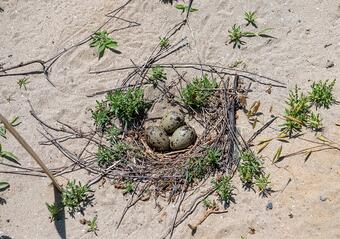
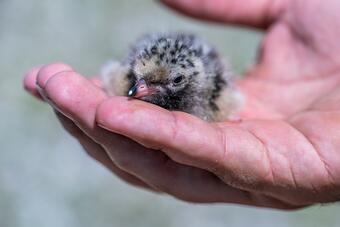
One example of this collaboration is our efforts to reduce disturbance to nesting Common Terns from ongoing habitat restoration activities by relocating the colony to a new nearby site using over-head lines and social attractants to keep terns from nesting where we won’t want them to. Over-head lines are strung above the ground, while social attractants include decoy birds and audio devices. This effort allowed for the continuation of timely construction activities as well as the successful breeding of this target species. Furthermore, overhead-lines have been employed on-site in subsequent years as habitat development continues.
This collaboration is ongoing, with current studies exploring methods to reduce the impact of construction related dust on migratory Monarchs, reduce avian predation on nesting waterbirds, and facilitate habitat recovery in the face of pressure from double-crested cormorants. Explore all previous results from our efforts in the publications tab above.
This project focuses on USGS collaborating with USFWS colleagues to understand how management practices on Poplar Island impact target and non-target wildlife species.
Wildlife species are actively managed for any number of reasons, ranging from population conservation to minimizing conflict with humans. However, many situations requiring manager intervention are novel and require innovative solutions for which there are limited or no pre-existing management tools. This partnership with USFWS personnel working on Poplar Island seeks to leverage the skills sets of USFWS biologists and USGS researchers to address management needs in a data informed manner – identifying when management interventions are needed, testing established and emergent solutions, and using these results to inform future efforts on site and across the broader community.
One example of this collaboration is our efforts to reduce disturbance to nesting Common Terns from ongoing habitat restoration activities by relocating the colony to a new nearby site using over-head lines and social attractants to keep terns from nesting where we won’t want them to. Over-head lines are strung above the ground, while social attractants include decoy birds and audio devices. This effort allowed for the continuation of timely construction activities as well as the successful breeding of this target species. Furthermore, overhead-lines have been employed on-site in subsequent years as habitat development continues.
This collaboration is ongoing, with current studies exploring methods to reduce the impact of construction related dust on migratory Monarchs, reduce avian predation on nesting waterbirds, and facilitate habitat recovery in the face of pressure from double-crested cormorants. Explore all previous results from our efforts in the publications tab above.