



FORT Science in Action 2026, Part 17: Large mammal science for management of public lands
FORT researchers investigate the foraging ecology and habitat suitability of species like bison and mule deer, to assist management partners in 1) understanding how large mammals are shaping ecosystems on public lands, and 2) maintaining quality habitat for large mammals in the face of escalating drought and fire severity in the West.
Don’t fence me in
Bison grazing is a powerful ecological force with the potential to restore native prairie habitat but also reduce forage for livestock. Exactly how bison influence habitat depends on the scale and distribution of grazing behaviors across time and space, information that until recently has largely been lacking. A team of scientists at FORT are working with multiple partners to fill this knowledge gap. For example, a study published earlier this year found that grazing bison in the North Rim of Grand Canyon National Park improved plant productivity and nitrogen uptake, highlighting the important role bison play in semi-arid, high-elevation grasslands.
FORT and partner scientists also investigated the influence of fencing on bison grazing behavior and potential impacts of grazing. Although bison maintained some habitat diversity through patchy foraging across fenced lands, fences ultimately restricted bison movement, reducing potential restoration benefits of bison grazing to smaller areas. To maximize potential ecological benefits, the project emphasizes that herd managers with limited space could decrease bison population density, and where possible, expand bison space allocation across larger landscapes where feasible.
Changing wildlands
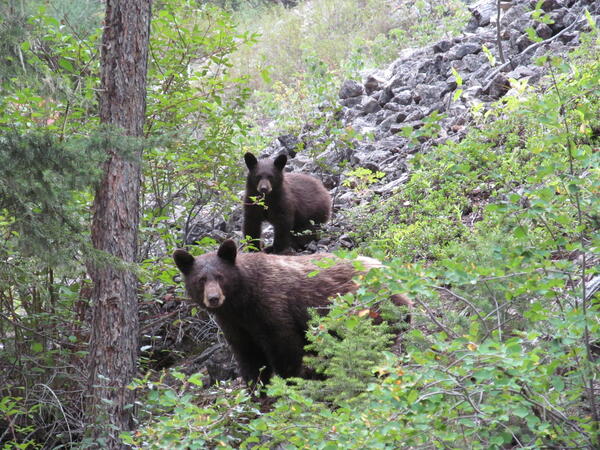
FORT researchers have also partnered with scientists across the country to look at the effects of wildfire and drought on large mammal species in the West. They found that low-severity fires improved forage quality and habitat for mule deer, black bears, and mountain lions. However, the same species avoided high-severity burned areas for decades.
Similarly, drought reduced habitat quality and shrunk the area of suitable habitat for the studied mammals, forcing wildlife into smaller regions. These studies provide critical insights into the magnitude of threat that wildfire and droughts pose to large mammals. Resource managers can use these insights to inform fire and drought management practices, prioritizing efforts in core habitats for each species.
More FORT Science in Action
This September, FORT is highlighting how our science projects support sound decision-making. Each day, we will highlight a new project and its applications. To see more, follow the tabs below.
Related

Research to support conservation of America’s national mammal, the bison
Related