



FORT Science in Action, Part 3: Science for cooperative conservation and management of our national mammal, the American bison
FORT researchers provide science expertise to interagency teams focused on the conservation and stewardship of bison on lands managed by the DOI. These projects deliver critical science for management of free-roaming bison, ensuring the long-term health of bison populations and public lands in America.
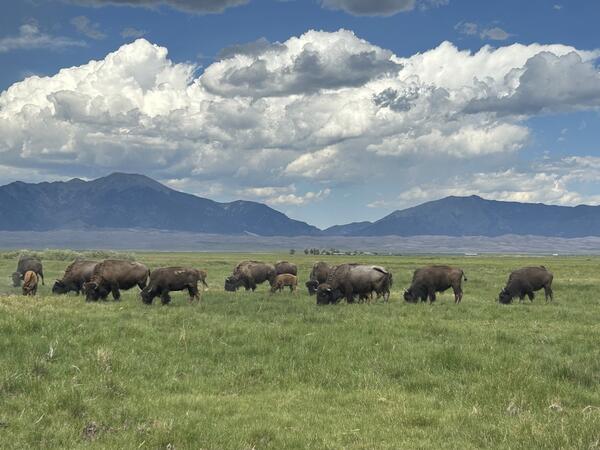
Once numbering in the tens of millions, American bison were nearly extirpated with only a few hundred individuals remaining by the late 19th century. They have since recovered to approximately 20,000 animals managed in conservation herds throughout North America, yet substantial challenges to their recovery remain. DOI agencies manage most of the bison which occur in discrete, isolated herds within limited habitats and amidst various competing land uses. This requires careful monitoring and strategic transfers of animals to align herd sizes with local resources and promote long-term genetic health.
Effective cooperative management of bison among federal, tribal, and state partners depends on science-based tools to determine when to transfer animals and which source herds will provide the best long-term benefits. USGS has developed a framework for monitoring key metrics like demographics and genetics that includes a centralized database for all federally, tribally, and state-managed herds, to aid transfer decisions. Additionally, USGS is actively working to refine genetic monitoring tools as technology advances.
The USGS-developed bison metapopulation dashboard is a centralized database that coordinates bison management across institutions and relieves individual herd managers of some of the logistical burden of implementing transfers. Additionally, data informed management actions increase the likelihood of positive outcomes, reduces the risk of wasted efforts, and provides a mechanism to update strategies as new data and genetic monitoring tools become available.
More FORT Science in Action
This September, FORT is highlighting how our science projects support sound decision-making. Each day, we will highlight a new project and its applications. To see more, follow the tabs below.
FORT Science In Action, Part 2
FORT Science in Action, Part 4
Related

Molecular Ecology Lab (MEL)

Research to support conservation of America’s national mammal, the bison
Related
Molecular Ecology Lab (MEL)