



Induced Seismicity Associated with Carbon Dioxide Geologic Storage
Microseismic Monitoring at Decatur, IL
The USGS monitors microseismic activity to better understand the possible hazard associated with deep-well injection of carbon dioxide at Decatur
As a national science agency, the USGS is responsible for assessing hazards from earthquakes throughout the United States. The USGS studies induced seismicity across the spectrum of energy issues: carbon sequestration, geothermal energy, and conventional and unconventional oil and gas. In the central and eastern United States, earthquakes induced by fluid injection activities contribute significantly to the total seismic hazard, partly because the modern boom in oil and gas production is taking place in this vast region and because the background level of seismicity is relatively low in this geologically stable part of country.
Surface Monitoring
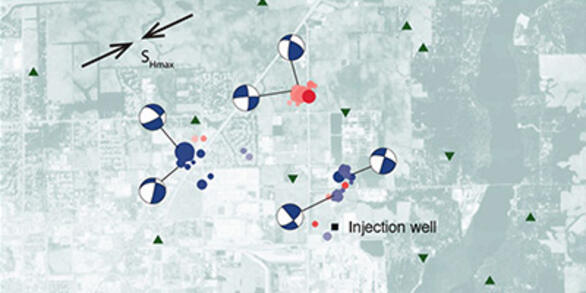
The USGS monitors microseismic activity to better understand the possible hazard associated with deep-well injection of carbon dioxide at Decatur, Illinois.
Decatur Microseismicity Map

Microseismic activity has not negatively impacted the safe sequestration of carbon dioxide at Decatur, Illinois.
Geologic Carbon Dioxide Utilization Topics
This task, which is also supported by the USGS Natural Hazards Mission, is operating a dedicated seismic network at the Decatur, IL, CO2 sequestration site to study the potential for induced seismicity related to CO2 storage in regionally extensive sedimentary formations. Given the importance of geologic carbon storage to our energy and climate future, we are assessing if injecting super-critical CO2 into deep formations is similar to the injection of comparable volumes of wastewater with regard to causing earthquakes. The seismic network in Decatur provides some of the important information needed to achieve this goal. Lessons learned will be applied not only to the Decatur injection project, but also to future geologic carbon storage projects to ensure that these facilities are designed and operated as safely as possible.
Data from the seismic network is publicly accessible at the IRIS+ data management center (network code=GS, stations=DEC*)
Slideshows Associated with Project Member Talks:
- Overview of USGS Carbon Sequestration - Geologic Research and Assessments Project [.pdf] [2.1 MB]
- Microseismicity Monitoring at the Decatur, IL, CO2 Sequestration Demonstration Site [.pdf] [8.9 MB]
- Induced Seismicity Monitoring at the Decatur, IL, CO2 Sequestration Demonstration Site [YouTube]
Below are FAQ associated with this project task.

What is carbon sequestration? What is carbon sequestration?
Carbon dioxide is the most commonly produced greenhouse gas. Carbon sequestration is the process of capturing and storing atmospheric carbon dioxide. It is one method of reducing the amount of carbon dioxide in the atmosphere with the goal of reducing global climate change. The USGS is conducting assessments on two major types of carbon sequestration: geologic and biologic.
As a national science agency, the USGS is responsible for assessing hazards from earthquakes throughout the United States. The USGS studies induced seismicity across the spectrum of energy issues: carbon sequestration, geothermal energy, and conventional and unconventional oil and gas. In the central and eastern United States, earthquakes induced by fluid injection activities contribute significantly to the total seismic hazard, partly because the modern boom in oil and gas production is taking place in this vast region and because the background level of seismicity is relatively low in this geologically stable part of country.
Surface Monitoring
The USGS monitors microseismic activity to better understand the possible hazard associated with deep-well injection of carbon dioxide at Decatur, Illinois.
Decatur Microseismicity Map
Microseismic activity has not negatively impacted the safe sequestration of carbon dioxide at Decatur, Illinois.
Geologic Carbon Dioxide Utilization Topics
This task, which is also supported by the USGS Natural Hazards Mission, is operating a dedicated seismic network at the Decatur, IL, CO2 sequestration site to study the potential for induced seismicity related to CO2 storage in regionally extensive sedimentary formations. Given the importance of geologic carbon storage to our energy and climate future, we are assessing if injecting super-critical CO2 into deep formations is similar to the injection of comparable volumes of wastewater with regard to causing earthquakes. The seismic network in Decatur provides some of the important information needed to achieve this goal. Lessons learned will be applied not only to the Decatur injection project, but also to future geologic carbon storage projects to ensure that these facilities are designed and operated as safely as possible.
Data from the seismic network is publicly accessible at the IRIS+ data management center (network code=GS, stations=DEC*)
Slideshows Associated with Project Member Talks:
- Overview of USGS Carbon Sequestration - Geologic Research and Assessments Project [.pdf] [2.1 MB]
- Microseismicity Monitoring at the Decatur, IL, CO2 Sequestration Demonstration Site [.pdf] [8.9 MB]
- Induced Seismicity Monitoring at the Decatur, IL, CO2 Sequestration Demonstration Site [YouTube]
Below are FAQ associated with this project task.
What is carbon sequestration? What is carbon sequestration?
Carbon dioxide is the most commonly produced greenhouse gas. Carbon sequestration is the process of capturing and storing atmospheric carbon dioxide. It is one method of reducing the amount of carbon dioxide in the atmosphere with the goal of reducing global climate change. The USGS is conducting assessments on two major types of carbon sequestration: geologic and biologic.