



USGS Scientists Publish Paper Reporting a Multi-Project Assessment of Decision Makers’ Needs for Coastal Marsh Models
U.S. Geological Survey scientists Amanda Stoltz, Dawn Kotowicz and Davina Passeri have co-authored a new study examining how coastal marsh models can better support the people who rely on them to make critical management decisions.
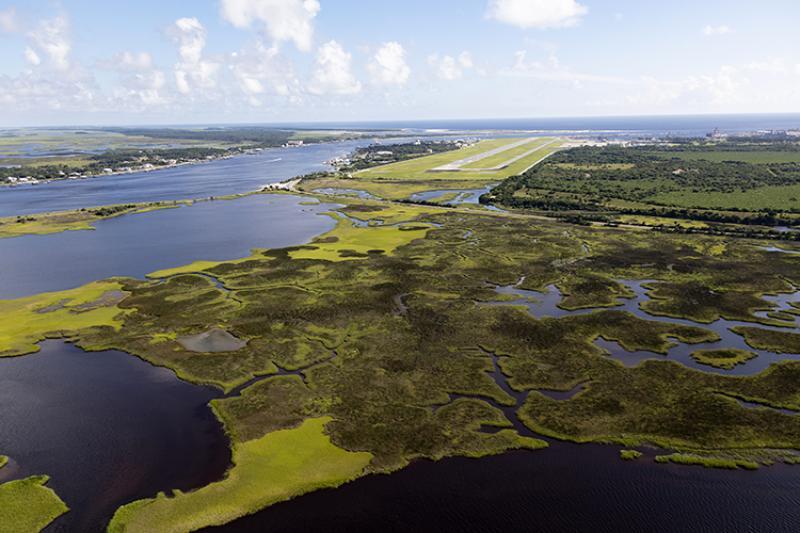
Published in Wetlands and available through ScienceBase, the study uses qualitative social science methods to analyze the needs of coastal decision makers engaged in projects along the U.S. Atlantic and Gulf coasts that use coastal marsh model to forecast wetland resilience.
The authors found that decision‑making tasks generally center on three themes:
• Marsh restoration
• Planning with uncertainty
• Conserving habitat for marsh‑dependent wildlife
According to the research, current model outputs often fall short of what decision makers need. The authors identify several key gaps, including the need for higher‑resolution spatial data to support local planning, clearer and more accessible descriptions of uncertainty, and improved integration of human‑dimensions data. Addressing these gaps, they note, would strengthen how modeling tools inform on-the-ground decisions about marsh migration/land loss, habitat management, and resilience planning to reduce flooding in coastal communities.
The work reflects ongoing collaboration between the USGS Coastal and Marine Hazards and Resources Program, and NOAA’s National Centers for Coastal Ocean Science (NCCOS). While the research carries no congressional interest and is not considered high‑profile or controversial, it provides timely insights for coastal managers confronting accelerating environmental change.