



Improving hydroacoustic techniques to assess invasive carp populations in large rivers
Invasive carp, such as Bighead Carp and Silver Carp, are non-native fish that have been introduced throughout North American waterways, often through human activities. Their ability to rapidly reproduce, outcompeting native fish for food and habitat, can pose a significant threat to local ecosystems. Additionally, their large population numbers can harm commercial and recreational fishing, causing economic losses for communities that rely on these activities.
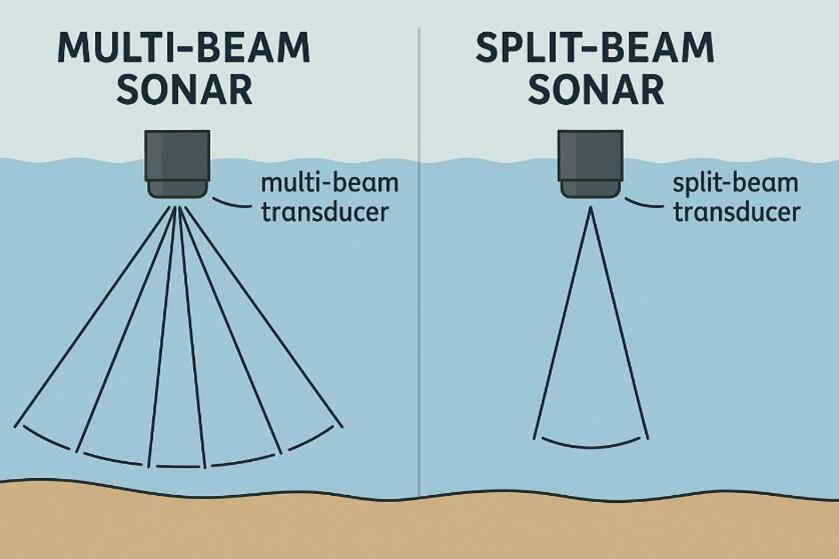
The goal of this project is to create a hydroacoustic database, in which data is collected on individual free-swimming fish of known size and species using specialized Sound Navigation and Ranging (SONAR) equipment (multi-beam and split-beam sonar, Figure 1). This database will enhance the accuracy and trust of ongoing fish monitoring efforts by the U.S. Geological Survey (USGS) and the U.S. Fish and Wildlife Service (USFWS). The results of this study will help researchers and managers understand how to identify invasive carp using sonar technology.
Primary objectives:
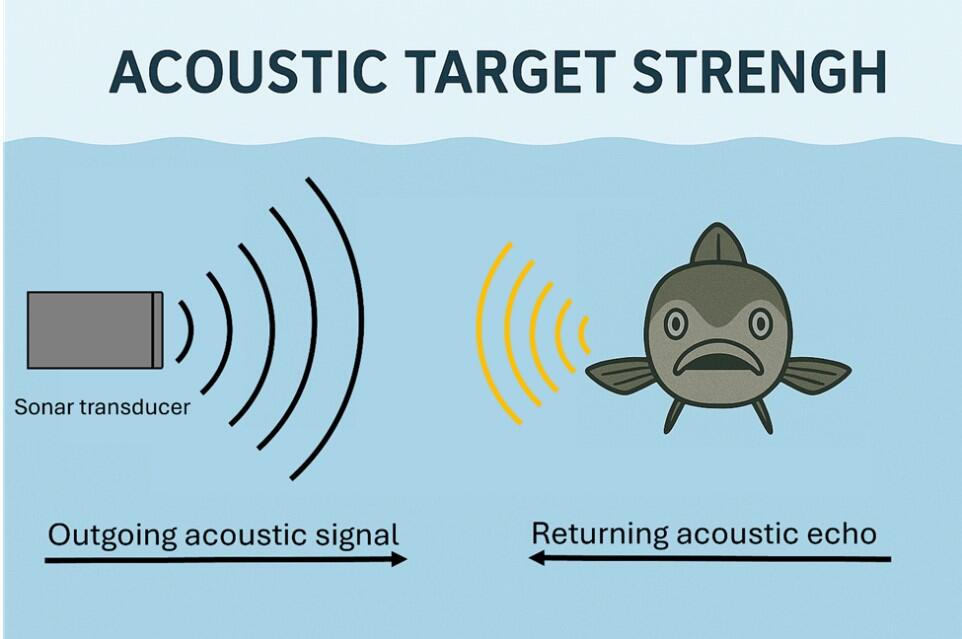
- Explore the creation of target strength equation specific to invasive carp: Acoustic target strength (figure 1) is a measurement used in fisheries science to understand acoustic echoes reflected by aquatic organisms as sound waves emitted by sonars encounter them. The target strength helps determine how many fish are present and their size. We aim to develop a specific formula that relates the size of invasive carp to their target strength. The current target strength equation used for hydroacoustic sampling by the USGS and USFWS is meant for multiple species that does not include invasive carp.
- Examine the use of split-beam echo envelope characteristics to estimate fish lengths: When sound waves hit a fish, they typically create a group of echoes which are referred to as echo envelopes. By examining the echo envelope, researchers can more accurately infer the orientation of the fish when it is hit by the sonar beam. We aim to utilize this information and see if it can improve fish length estimates.
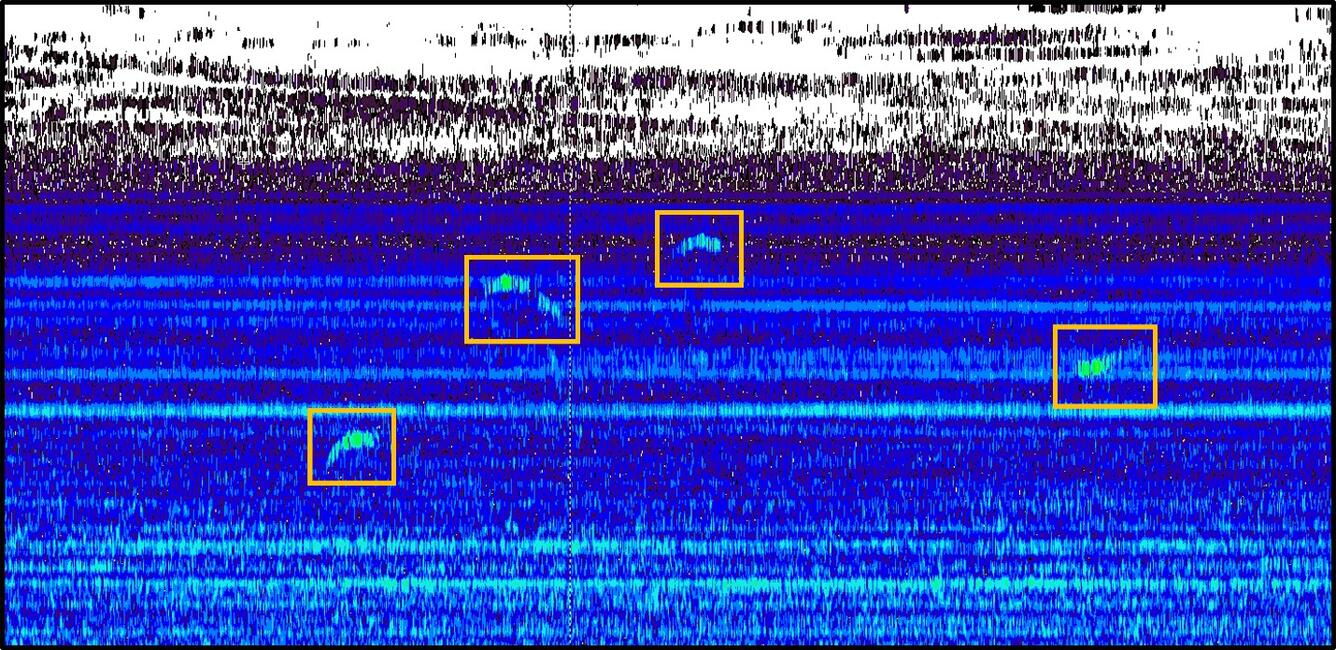
- Examine the possibility of remote fish species identification using multi-beam sonar: Fish swim by moving their tails back and forth, creating a pattern known as tail-beat frequency. This frequency can be influenced by factors such as fish species and morphology, size, and swim speed. By analyzing the frequency of tailbeats captured using multi-beam sonar, we aim to determine whether we can remotely identify invasive carp. Being able to quickly and accurately identify invasive in a water body would allow for efficient management strategies, including targeted removal efforts.
Invasive carp, such as Bighead Carp and Silver Carp, are non-native fish that have been introduced throughout North American waterways, often through human activities. Their ability to rapidly reproduce, outcompeting native fish for food and habitat, can pose a significant threat to local ecosystems. Additionally, their large population numbers can harm commercial and recreational fishing, causing economic losses for communities that rely on these activities.
The goal of this project is to create a hydroacoustic database, in which data is collected on individual free-swimming fish of known size and species using specialized Sound Navigation and Ranging (SONAR) equipment (multi-beam and split-beam sonar, Figure 1). This database will enhance the accuracy and trust of ongoing fish monitoring efforts by the U.S. Geological Survey (USGS) and the U.S. Fish and Wildlife Service (USFWS). The results of this study will help researchers and managers understand how to identify invasive carp using sonar technology.
Primary objectives:
- Explore the creation of target strength equation specific to invasive carp: Acoustic target strength (figure 1) is a measurement used in fisheries science to understand acoustic echoes reflected by aquatic organisms as sound waves emitted by sonars encounter them. The target strength helps determine how many fish are present and their size. We aim to develop a specific formula that relates the size of invasive carp to their target strength. The current target strength equation used for hydroacoustic sampling by the USGS and USFWS is meant for multiple species that does not include invasive carp.
- Examine the use of split-beam echo envelope characteristics to estimate fish lengths: When sound waves hit a fish, they typically create a group of echoes which are referred to as echo envelopes. By examining the echo envelope, researchers can more accurately infer the orientation of the fish when it is hit by the sonar beam. We aim to utilize this information and see if it can improve fish length estimates.
- Examine the possibility of remote fish species identification using multi-beam sonar: Fish swim by moving their tails back and forth, creating a pattern known as tail-beat frequency. This frequency can be influenced by factors such as fish species and morphology, size, and swim speed. By analyzing the frequency of tailbeats captured using multi-beam sonar, we aim to determine whether we can remotely identify invasive carp. Being able to quickly and accurately identify invasive in a water body would allow for efficient management strategies, including targeted removal efforts.