



Restoring Pinto Abalone in Washington’s Waters
After decades of population decline, Washington State’s pinto abalone recovery program is making meaningful progress. With the first-ever population uptick observed at a long‑term survey site, scientists are cautiously optimistic about the species’ path toward recovery.
Pinto abalone were once abundant in Washington’s Strait of Juan de Fuca and around the San Juan Islands. However, Washington’s Department of Fish and Wildlife (WDFW) found that the abalone population had declined 97% between the early 1990s and 2017. Although recreational harvest ended in 1994—and was already tightly restricted before then—the population continued to fall. Poaching may have contributed to these losses in the early years, but today, with so few remaining animals, it is no longer considered a significant factor. In 1992, WDFW established ten permanent survey sites in the San Juan Islands to track long‑term trends, and between 1992 and 2017 every annual survey recorded further declines.
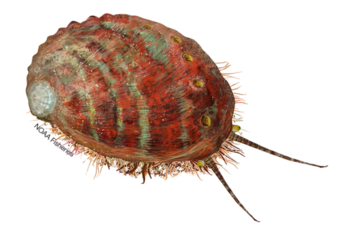
Amid these challenges, conservation partners initiated an ambitious recovery effort centered on aquaculture. Here adult abalone are brought into safe laboratory spaces to spawn. Then, their offspring are raised until they are juveniles and carefully moved to suitable wild habitat where they can establish and thrive. Early program trials began in the mid‑2000s, followed by a pilot program in 2007 and the first San Juan Islands outplant in 2009. These early steps laid the groundwork for a program that has now added more than 74,000 juvenile abalone across more than 50 restoration sites. In 2026, that total is expected to reach nearly 95,000 juveniles placed into the wild.
The program’s partnerships have grown steadily over the years, beginning with the Puget Sound Restoration Fund (PSRF) and WDFW but expanding to include NOAA laboratories, USGS facilities, Tribal partners, the Seattle Aquarium, and other marine research institutions. Work initially began at NOAA’s Mukilteo Lab and later shifted to the NOAA Manchester facility, which allowed the program to scale up abalone production and expand research into parent origin, spawning techniques, and juvenile rearing. From there, the partnership has explored ways to integrate satellite spawning facilities, which would further increase capacity.
One of the most significant developments in recent years is the inclusion of USGS Western Fisheries Research Center’s Marrowstone Marine Field Station. Our facility is located in natural abalone habitat and able to draw seawater from local sources that match the environmental conditions abalone are adapted to. A portion of the facility was retrofitted to suit abalone husbandry needs. The first cohort of juveniles were spawned at the facility in 2025 and will be transferred to other rearing facilities in spring 2026. The goal is to establish a consistent annual cycle where new parent abalone arrive in May to spawn and then the offspring are reared to juvenile age through the following April before being moved to the wild. This facility also enables cleaner, small‑scale, more sterile spawning conditions and opens up the possibility of returning parents to the wild—something not feasible in the program’s early years. Researchers are additionally evaluating the potential of sperm cryopreservation, which could remove the need for housing males in the laboratory, but will require careful study to ensure the offspring are healthy and will survive in the wild.
The 2026 season is slated to be the program’s most productive year yet, with 20,000 juveniles expected to be outplanted. These growing production numbers coincide with encouraging signs in the field. In 2024, for the first time ever, WDFW recorded an increase—just one abalone—at one of its long‑monitored static survey sites. While modest, this increase breaks a decades‑long trend of yearly declines and suggests that the population may be on a positive trajectory thanks to regional restoration work. Importantly, the program does not outplant abalone directly onto the “index” survey sites. Instead, the index sites respond to changes in the abundance of abalone larvae traveling through the water: the offspring of wild abalone and of reared abalone outplanted elsewhere.
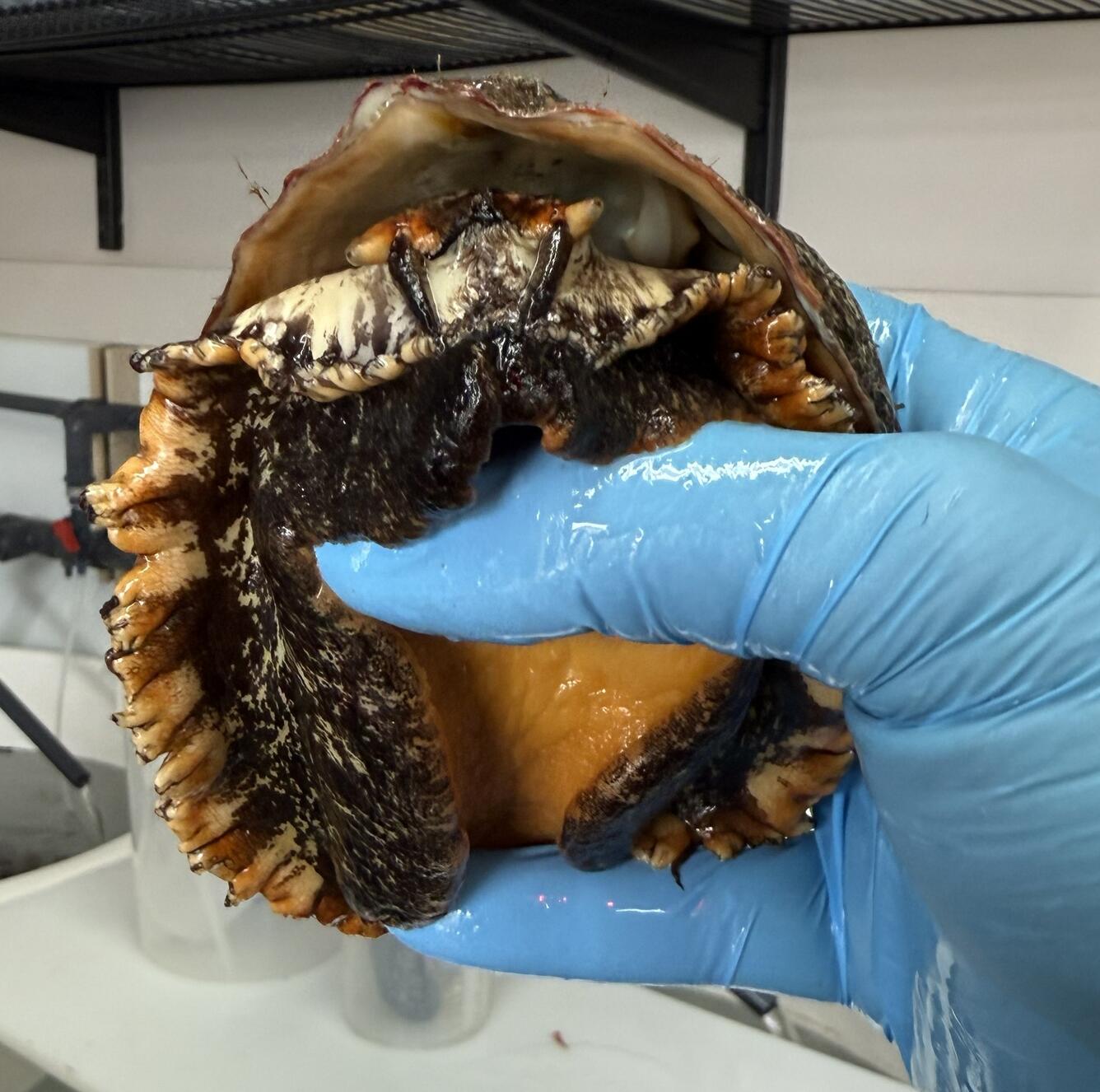
The importance of pinto abalone in Pacific Northwest ecosystems and cultures cannot be overstated. Like a vacuum of rocky reefs, they graze down algae and keep hard surfaces clean so that kelp and other species can attach and grow. They are a key food source for an array of marine predators and hold cultural, nutritional, and artistic significance for Tribal communities. Historically, they supported a popular recreational fishery, though never a commercial one.
Today, the pinto abalone recovery program reflects a broad collaborative effort grounded in science, cultural stewardship, and long‑term commitment. With expanding partnerships, increasing hatchery capacity, promising early indicators in the wild, and the largest outplanting year on the horizon, scientists remain hopeful that Washington’s abalone populations are moving toward recovery.