



The Elegance of the Wooldridge Monuments: A Kentucky Attraction Carved in Stone
Known for influencing the atmosphere of modern Halloween traditions in Graves County, Kentucky, the Wooldridge Monuments in Maplewood Cemetery offer more than seasonal chills, it delivers a deeply human story of remembrance.
If you ever find yourself wandering through Maplewood Cemetery in Mayfield, Kentucky, don’t be surprised if you feel a subtle unease or quiet tension. There, arranged in an unassuming rectangular plot stands one of the most curious memorial groups: The Wooldridge Monuments, locally known as “The Strange Procession Which Never Moves”.
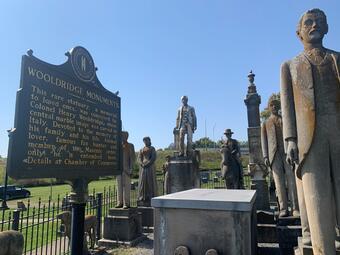
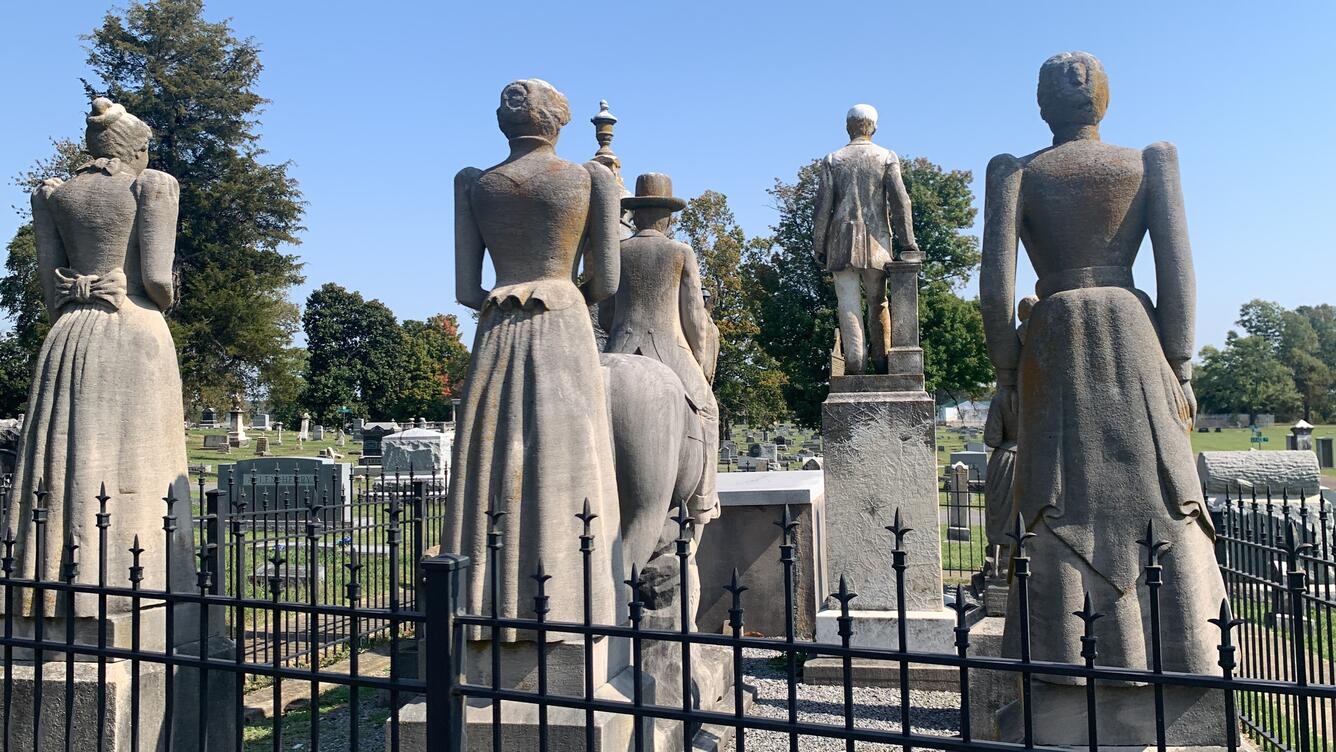
Eighteen statues surround the vault of Colonel Henry G. Wooldridge - each representing a family member or companion, including his mother, siblings, niece, and several favorite animals. Oddly, Henry appears twice: once mounted on his horse, Fop, and another standing beside a lectern. He is the only one buried here.
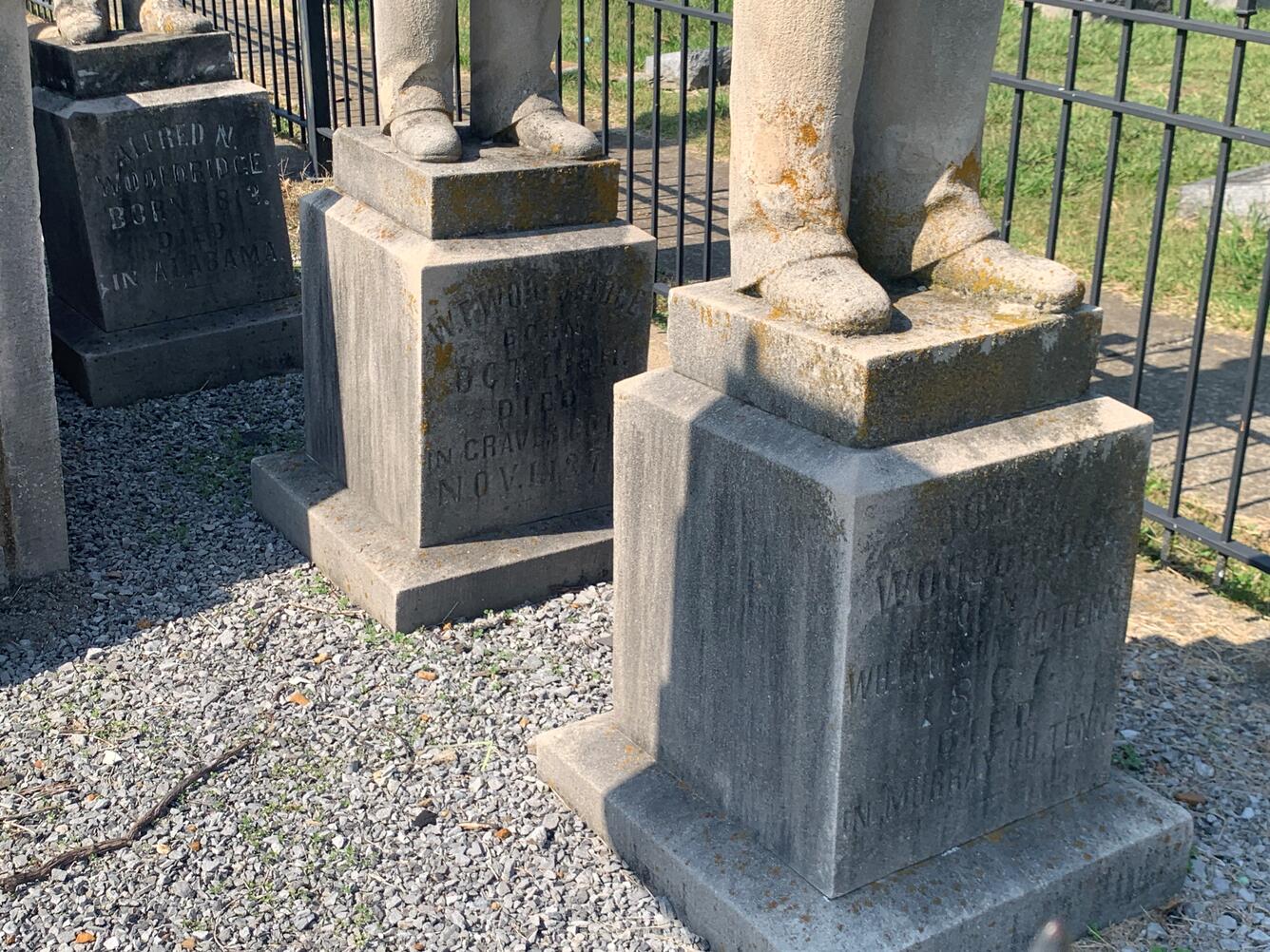
Visitors can identify each figure by reading the pedestals, which list family names and locations of death. A historical marker inside the plot explains each statue’s connection to Henry.
Details That Deepen the Mystery
Over the years, the statues have developed a weathered appearance, with surfaces darkened and eroded by exposure to the elements. In January 2009, a severe ice storm swept through the region, toppling a massive tree onto the plot. The impact shattered nearly all the statues leaving only a few intact, necessitating a significant restoration effort.
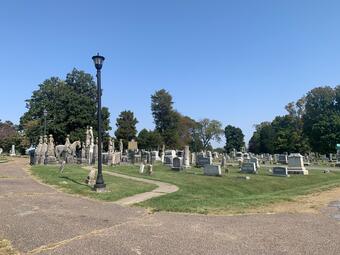
A lone post lantern stands nearby casting a moody glow that recalls the iconic lighting of The Exorcist film poster. The surrounding iron fence enhances the statues’ atmosphere: Its pointed pickets, rails, and steeple like finials create a dramatic silhouette, lending beauty and mystery to the plot. Were fences designed to discourage body snatchers supplying medical schools or perhaps to keep Henry’s spirit from leaving? More likely, the fence simply established privacy and permanence, but the imagination wanders.
Even the direction the statues face invites speculation. They all face east, a traditional Christian orientation symbolizing resurrection. Interpreting such an unusual installation requires a mix of observation and knowledge.
The Man Behind the Mystery
At the center of this burial is Col. Henry G. Wooldridge (1822–1899). However, the Wooldridge story begins long before Henry. The first American ancestor, John Wooldridge, arrived in Virginia around the early 1700s, likely an indentured servant who rose to become a blacksmith and farmer. Over generations, the family spread across Virginia, Tennessee, and Kentucky. Henry’s branch descended from John’s son Edward, a prosperous planter whose landholdings stretched across two states.
Henry migrated from Tennessee to Graves County, Kentucky, in the 1840s with his mother Keziah and siblings, eventually settling near Feliciana, once a thriving town that faded after refusing railroad access.
A Monumental Undertaking
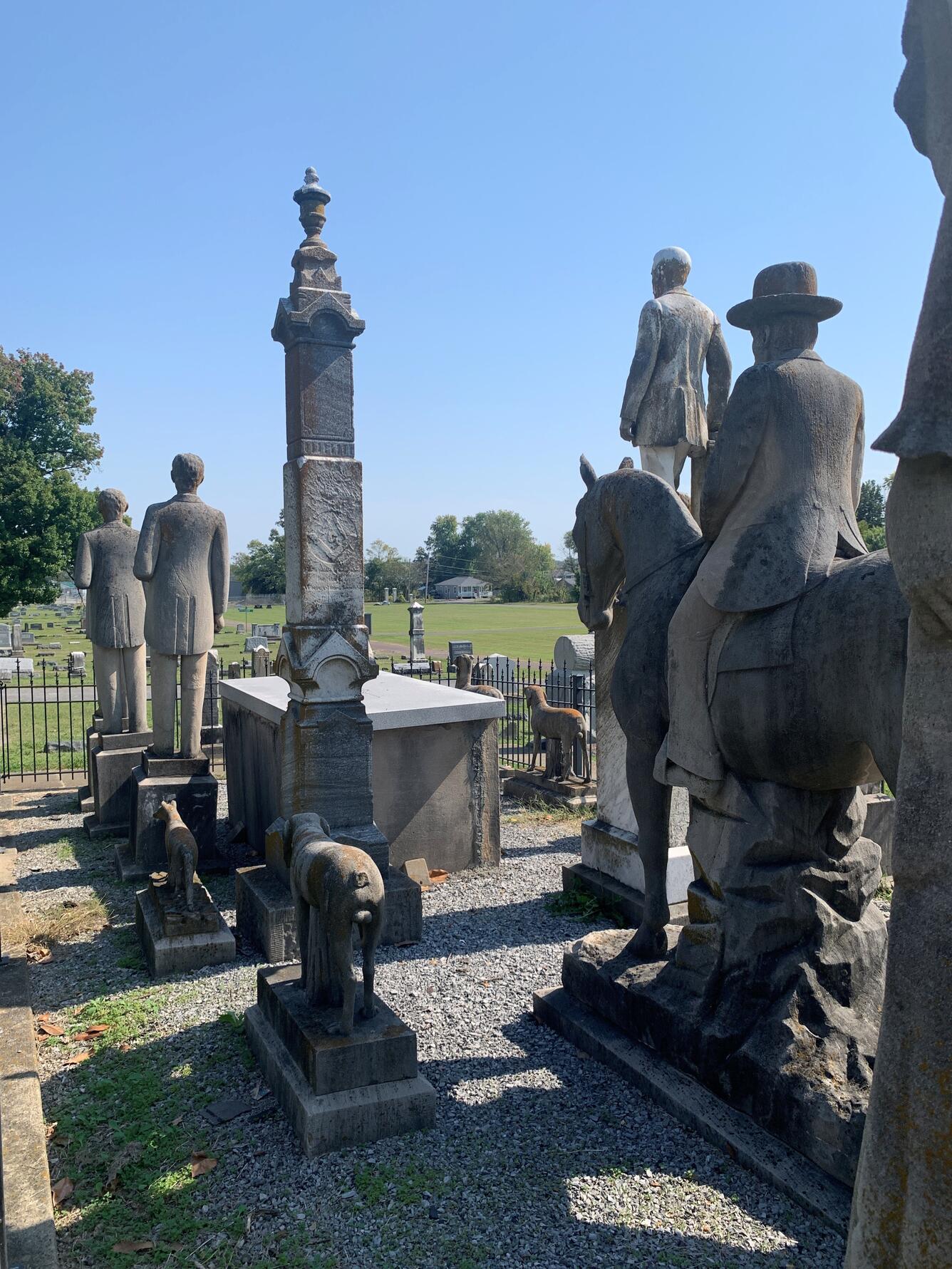
The statues, built between the 1880s and 1890s, came from several artisans and locations. Henry’s own tall central monument was carved in Italy from white marble at a cost of \$1,000. Three additional statues were created locally in Mayfield for a total of \$500. The remaining sandstone figures, including the representations of family members, two hounds, a fox, a deer, and Henry’s beloved horse Fop, were carved in Paducah by sculptor William Lydon using Indiana stone. Each statue represents someone meaningful to Henry: his mother Keziah, his brothers John, W.F., Alfred, and Josiah, his sisters Narcissa, Susan, and Minerva, and even two great nieces. Together, they stand frozen around his final resting place, forming a circle of affection.
Despite the swirl of legend and rumor that has followed the site for more than a century, one thing remains certain: the Wooldridge family “rests in peace,” their stories etched not only in history but in stone. Monuments help us bridge past, present, and future. They serve as symbols of identity, honor, and memory reminding us that stories outlast lifetimes.
Sources
- (2002) "Monumental Procession," Jackson Purchase Historical Society Journal Archive: Vol. 29: No. 1, Article 2.
- WKU PBS. (2013, April 5). MainStreet - "The Wooldridge Monuments" [Video]. YouTube.
- Wooldridge Monuments – Mayfield-Graves County Tourism Commission.
Related
The National Map Corps April 2026 Newsletter - Vol. 12 | Issue 2 The National Map Corps April 2026 Newsletter - Vol. 12 | Issue 2
Related