



GeoHEALTH - USGS Newsletter - Issue September 2025
Effective Communication in PFAS Research: Moving Beyond "Ubiquitous"
In recent years, per- and polyfluoroalkyl substances (PFAS), have gained attention for their environmental presence; however, the term "ubiquitous" used to describe them can be misleading. USGS scientists push to use more precise language such as "widespread" and “commonly detected” to avoid confusion and misinformation. This distinction is crucial for understanding the actual occurrence of PFAS...

Exploring the Sensitivity of Salmonids to 6PPD-Quinone: Implications for Urban Ecosystems
The USGS is investigating the effects of 6PPD-quinone (6PPDQ), a harmful contaminant found in urban stormwater runoff, on fish and wildlife health, particularly in salmonids. Recent studies have shown that 6PPDQ poses acute toxicity risks, especially to coho salmon, with sensitivity varying by life stage. New research evaluated the lethal and sublethal impacts of 6PPDQ exposure on coastal...

Healthy Fish and Wildlife: Community Livelihoods, Fishing and Hunting Heritage, Recreation, and Economic Security
Healthy fish and wildlife underpin the economic vitality, food security, recreational enjoyment, and cultural heritage of fishing and hunting in communities across the United States. Fishing and hunting resources scale from the personal recreation of families to multi-billion-dollar industries. Recognizing these critical connections, the U.S. Geological Survey (USGS) works to understand, protect...
The Environmental Health Program's One Health Approach
Recognizes the interdependence of plant, animal, and human health, and the health of the ecosystems that they share.
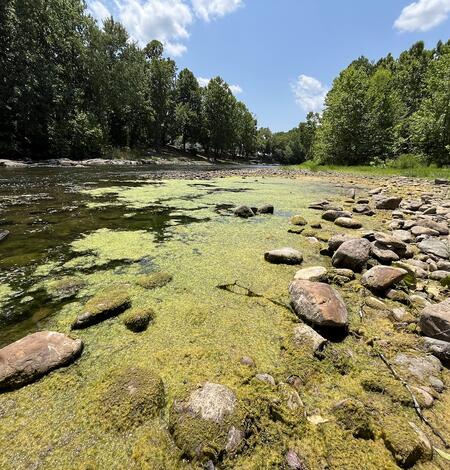
Leveraging UV Light for Effective Algal Toxin Removal in Drinking Water
Harmful algal blooms (HABs) pose significant risks to public health and the environment by producing dangerous toxins like microcystin-LR (MC-LR), which can exceed safety limits in drinking water. Research by the U.S. Geological Survey, The Ohio State University, and Boise State University evaluated ultraviolet (UV) light treatments for reducing microcystin levels, comparing traditional UV254 with...
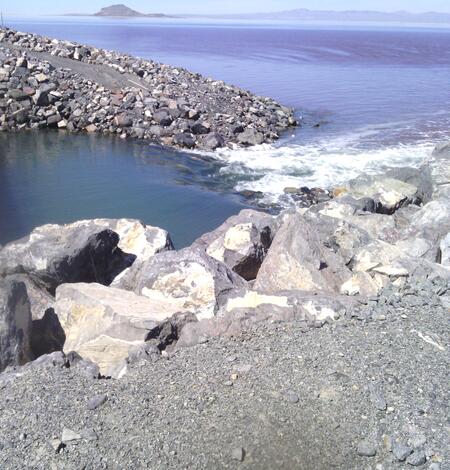
Dust from the Great Salt Lake dry lakebed: a possible health risk for communities in northern Utah
By analyzing dust samples in northern Utah, the USGS is providing crucial insights about the importance of water and lakebed management to mitigate dust pollution and protect vulnerable communities in northern Utah.
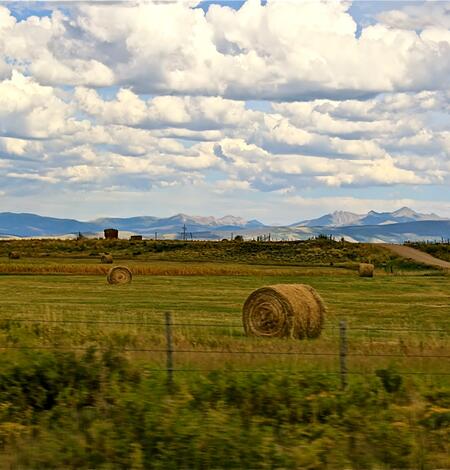
Helping Secure Our Nation’s Food Supply: The Intersection of Agriculture, Health, and Environment
Agriculture is vital to the U.S. economy, supplying food, fibers, fuels, and jobs. Ensuring the quality of our natural resources is essential for keeping our food safe and plentiful. The USGS studies environmental factors affecting food security and offers valuable insights to reduce health risks, ensuring a safer food supply and a healthier environment.
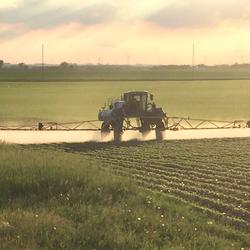
Bioenergy and Pesticides: Lessons from the AltEn Bioenergy Plant
Ethanol production from seed corn, while reducing waste and promoting renewable energy, can have environmental and health implications. A USGS study on a former bioenergy plant that received pesticide-coated seeds used for ethanol production, revealed that the process led to contaminated wastewater and solid residue, resulting in elevated pesticide levels in nearby surface waters even after the...

From Stream to Spider: How PFAS Move Through Aquatic and Terrestrial Food Webs
Per- and polyfluoroalkyl substances (PFAS) are persistent synthetic chemicals that accumulate in the environment and living organisms. A USGS study examined how different PFAS compounds move through a stream ecosystem and are transferred from aquatic to terrestrial food webs. The findings documented that not all PFAS behave the same once they enter the environment, leading to differences in...
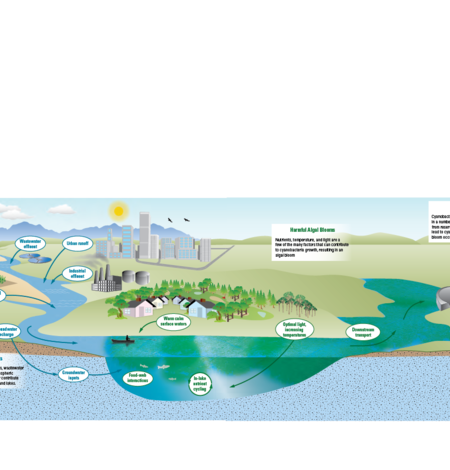
Tracking Toxins at the Coastline: A National Look at Harmful Algal Toxins in U.S. Coastal Waters
This study is a major step forward in understanding how harmful algal blooms, which are often associated with lakes and rivers, can also affect coastal environments. It provides important baseline information for scientists, public health officials, and environmental managers.