



USGS and NASA Announce 2025 William T. Pecora Award Recipients
NASA researchers James Irons and Eric Vermote have been selected as winners of the 2025 William T. Pecora Award for their outstanding leadership and pioneering research that revolutionized the Landsat program and advanced global, land-change monitoring.
The prestigious award is sponsored by the U.S. Geological Survey and NASA. The award recognizes outstanding scientific contributions toward understanding the Earth through remote sensing, which is the science of gathering information about Earth’s surface from satellites and aircraft. Remote sensing can be used to manage forests, monitor agriculture, track water quality and availability, support natural or human-induced disaster response, and more. This annual award has been presented since 1974, and honors the memory of William T. Pecora, former USGS director and Under Secretary of the Interior.
Formal, in-person award presentations for both recipients are scheduled to take place at the Institute of Electrical and Electronics Engineers International Geoscience and Remote Sensing Symposium in Washington, D.C., August 9–14, 2026.
2025 Award Recipients
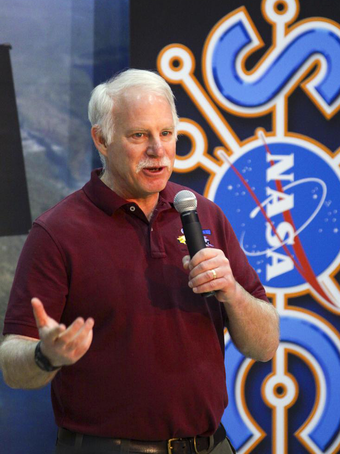
James Irons
James Irons, an emeritus scientist at NASA Goddard Space Flight Center, has devoted his career to understanding how Earth’s systems work together and to advancing remote sensing to expand that knowledge. He is best known for his contributions to the Landsat program and his belief that long-term, consistent records are important for studying changes on Earth.
Irons led the effort to continue thermal infrared measurements from earlier Landsat missions into the Landsat 8 era. He also pushed for technical advances that helped establish the standards and processes for data calibration and quality assurance that remain in use today. His insight and understanding of Earth system needs expanded Landsat’s role in innovative science applications, such as water quality and evapotranspiration estimates, benefiting communities worldwide.
One of his greatest contributions is the strong partnership he built between NASA and USGS, which continues to shape how Landsat operates today. He brought stakeholders together as well as encouraged cross-mission collaborations, ensuring the continuity of the Landsat program and broadening the range of disciplines needed to understand Earth’s systems. That collaborative spirit carried into his role as the Director of the Earth Science Division at NASA Goddard Space Flight Center in Greenbelt, Maryland, where his reliable leadership created an environment that gave teams the support needed to be successful.
In addition, Irons remains committed to education and mentorship and continues to dedicate time to outreach at NASA and elsewhere, helping the next generation of scientists find their place in Earth science.
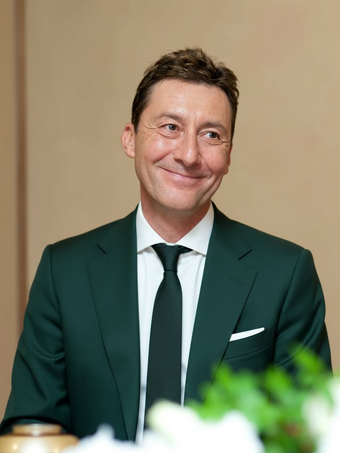
Eric Vermote
Eric Vermote, a research physical scientist with NASA, is recognized for his outstanding contributions to improving the quality and reliability of global Earth observation data through the development and application of atmospheric corrections over land. The methods and algorithms he developed are critical for accounting for atmospheric effects on satellite measurements, advancing Earth observations to support a wide range of science applications.
His development of the 6S radiative transfer code and the Land Surface Reflectance code helped set global standards for atmospheric correction and data validation. They are now widely used in operational data production across decades of satellite observations, allowing for accurate and consistent atmospheric correction of data from missions including Advanced Very High-Resolution Radiometer, SPOT Vegetation, Terra and Aqua Moderate Resolution Imaging Spectrometer, Visible Infrared Imaging Radiometer Suite, and Landsat. His work is foundational to consistent, long-term surface reflectance satellite data archives that support time-series applications, from agricultural monitoring to understanding changes in environmental conditions and informing predictive modeling.
Through international collaborations, Vermote has advanced standards for atmospheric correction and for validating satellite retrievals using ground-based measurements from the AERONET Sunphotometer network, work that is essential to ensuring reliability and consistency across missions and over time. Alongside his research, he is a dedicated mentor to students, helping them develop the skills needed to succeed in Earth science.
About the Pecora Awards
The award was established to recognize outstanding individuals or teams working toward understanding the Earth, educating the next generation of scientists, informing decision makers or supporting natural or human-induced disaster response.
Learn more about the Pecora Award and explore past winners.
Return to all Landsat Headlines