



Collecting measurements from SET


Detailed Description
SET – MH Station: Reading a surface elevation table – marker horizon (SET – MH) station in a Jamaica Bay, NY salt marsh.
Sources/Usage
Public Domain.
Related
Wetlands
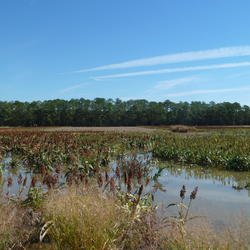
Wetlands play many important roles in the environment including water purification, flood prevention, stabilizing shorelines, and serve as habitat for fish, shellfish, waterfowl and other wildlife. We work with U.S. Fish & Wildlife Service, National Park Service and other federal and state land managers that are charged with managing our nation’s wetlands to ensure these habitats are productive...

Coastal & Estuarine
Coastal areas and estuaries contain a variety of habitats that serve many purposes including protecting other lands from flooding and storms, habitats important to commercially harvested fish and shellfish, recreational uses, and habitat for wildlife. We work with U.S. Fish & Wildlife Service, National Park Service and other federal and state land managers that are charged with managing our nation...

Chesapeake Bay Projects
The Chesapeake Bay is the nation’s largest estuary and third largest in the world. It is an important habitat for many species and our science focuses on wetlands and waterbirds. Our scientists address such questions as “How are Chesapeake Bay wetlands responding to sea level rise?” and “How do different shoreline types impact waterbird populations?” and “What can refuge land managers do to...

Hurricanes
The high winds and storm surge associated with hurricanes impacted coastal wetlands from Virginia to Maine. Understanding the ecological and geological impacts of hurricanes on coastal wetlands and both resident and migratory wildlife populations is fundamental to helping rebuild and maintain these unique ecosystems.
Related
Wetlands
Wetlands play many important roles in the environment including water purification, flood prevention, stabilizing shorelines, and serve as habitat for fish, shellfish, waterfowl and other wildlife. We work with U.S. Fish & Wildlife Service, National Park Service and other federal and state land managers that are charged with managing our nation’s wetlands to ensure these habitats are productive...
Coastal & Estuarine
Coastal areas and estuaries contain a variety of habitats that serve many purposes including protecting other lands from flooding and storms, habitats important to commercially harvested fish and shellfish, recreational uses, and habitat for wildlife. We work with U.S. Fish & Wildlife Service, National Park Service and other federal and state land managers that are charged with managing our nation...
Chesapeake Bay Projects
The Chesapeake Bay is the nation’s largest estuary and third largest in the world. It is an important habitat for many species and our science focuses on wetlands and waterbirds. Our scientists address such questions as “How are Chesapeake Bay wetlands responding to sea level rise?” and “How do different shoreline types impact waterbird populations?” and “What can refuge land managers do to...
Hurricanes
The high winds and storm surge associated with hurricanes impacted coastal wetlands from Virginia to Maine. Understanding the ecological and geological impacts of hurricanes on coastal wetlands and both resident and migratory wildlife populations is fundamental to helping rebuild and maintain these unique ecosystems.