



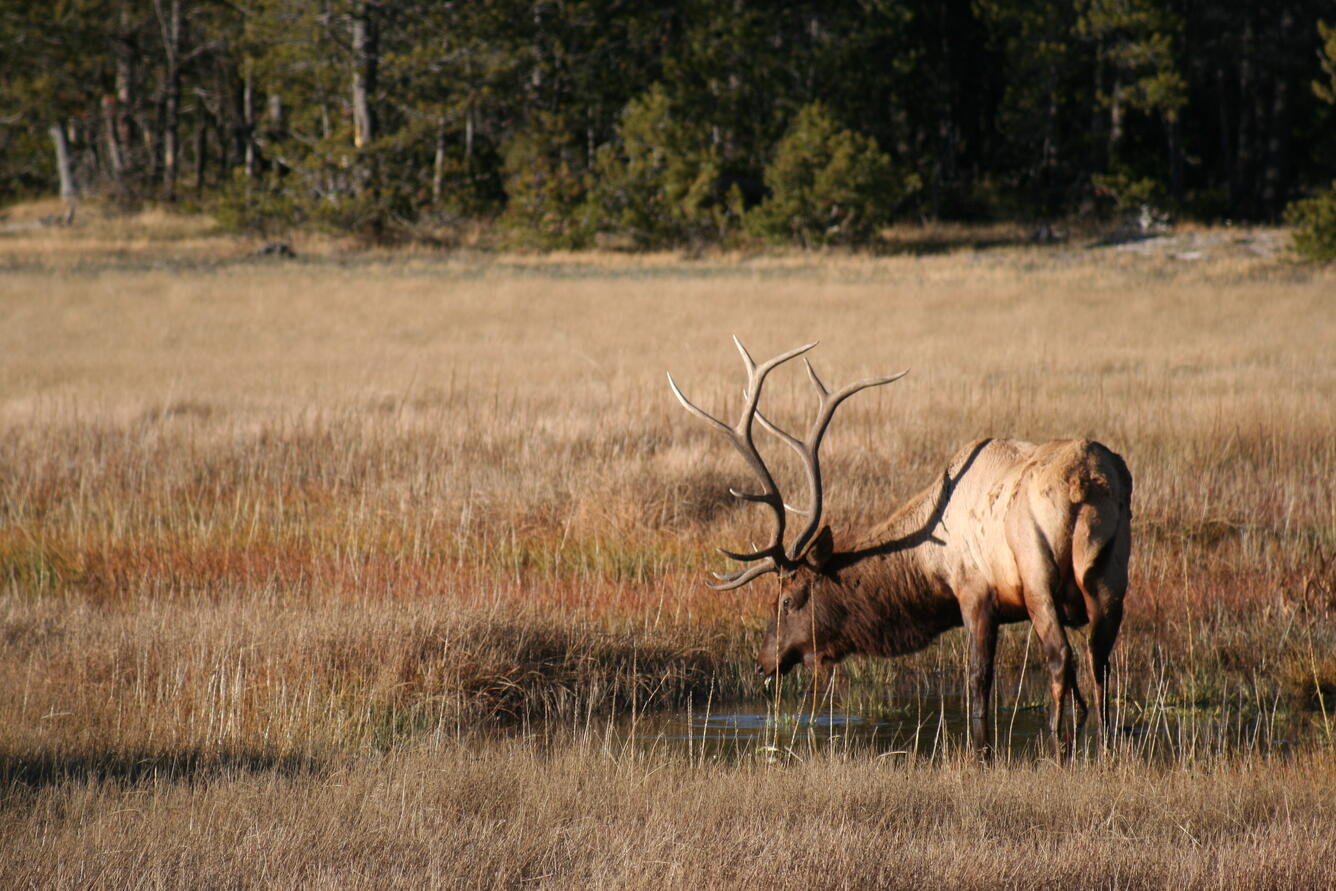
An elk grazes in Yellowstone National Park.
By Northern Rocky Mountain Science Center
2007 (approx.)


Sources/Usage
Public Domain.
Related

The influence of natural mineral licks on wildlife disease dynamics
Some locations on the landscape can aggregate animals of multiple species and could become hotspots of disease transmission. One example of this are areas of localized concentrations of minerals that animals like deer, elk, bighorn sheep, and mountain goats use and diseases like chronic wasting disease or respiratory diseases could spread among or within species who use natural mineral licks...
Related
The influence of natural mineral licks on wildlife disease dynamics
Some locations on the landscape can aggregate animals of multiple species and could become hotspots of disease transmission. One example of this are areas of localized concentrations of minerals that animals like deer, elk, bighorn sheep, and mountain goats use and diseases like chronic wasting disease or respiratory diseases could spread among or within species who use natural mineral licks...