
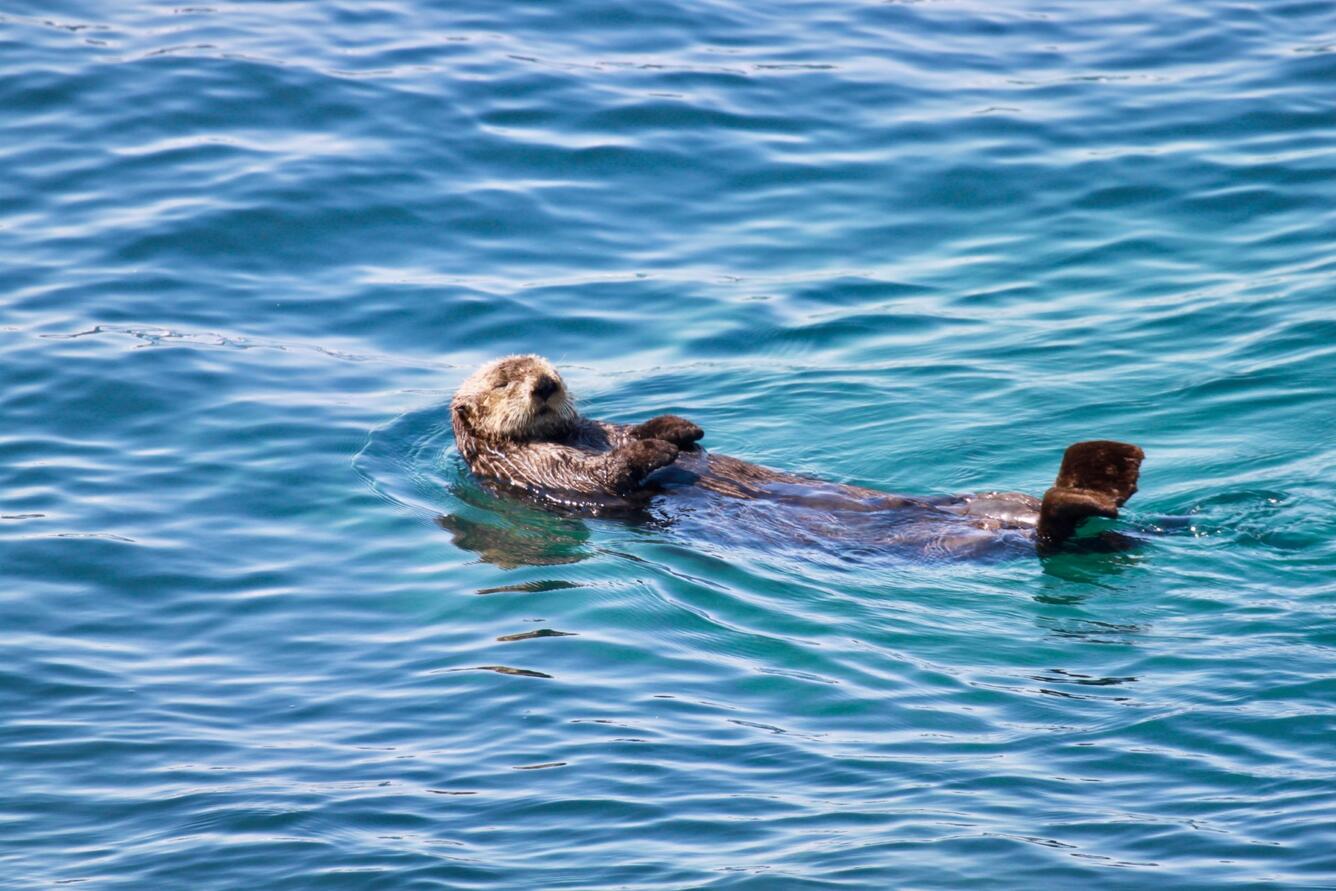
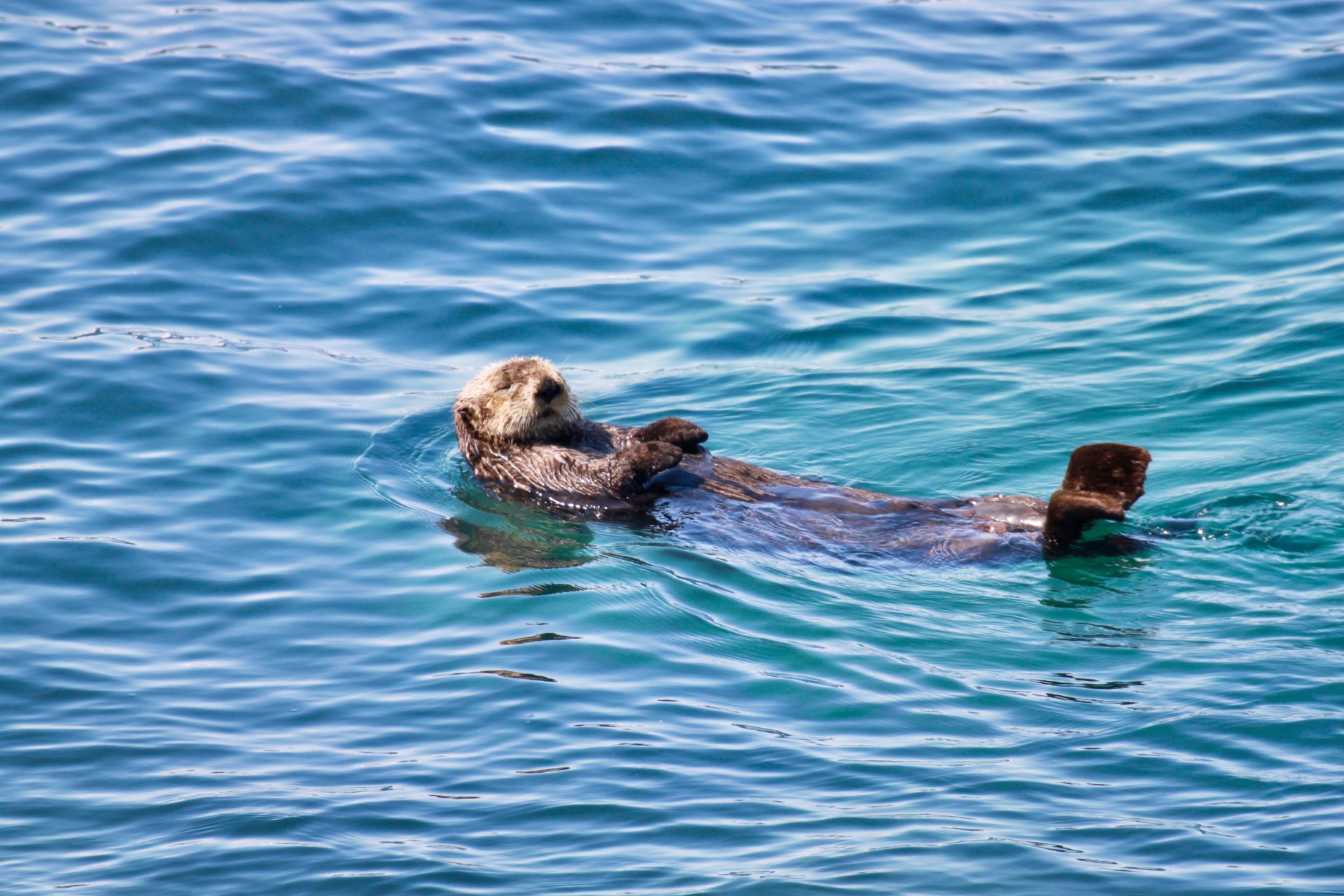
Sleeping sea otter
Detailed Description
A male Northern Sea Otter sleeps on his back after foraging for clams at Katmai National Park and Preserve.
Sources/Usage
Public Domain.
Related
Alaska Science Center Weekly Findings
Recent findings by USGS Alaska Science Center staff and their collaborators.
Nearshore Marine Ecosystem Research
Nearshore ecosystems include many resources that are of high ecological, recreational, subsistence, and economic value. They also are subject to influences from a wide variety of natural and human-caused perturbations, which can originate in terrestrial or oceanic environments. Our research is designed to evaluate sources of variation in the nearshore and how they influence resources of high...
Filter Total Items: 16
Sea Otter Aerial Survey Data from lower Cook Inlet and the outer Kenai Penisula, Alaska, 2002 Sea Otter Aerial Survey Data from lower Cook Inlet and the outer Kenai Penisula, Alaska, 2002
This dataset consists of three tables related to abundance and distribution of northern sea otters (Enhydra lutris kenyoni) in lower Cook Inlet and the outer Kenai Peninsula, Alaska, based on data collected during a series of aerial surveys from May-Aug 2002. The dataset consists of: (1) sea otter counts along strip transects, (2) sea otter counts in Intensive Search Unit (ISU) within...
Sea Otter Aerial Survey Data from Western Prince William Sound, Alaska, 2022 Sea Otter Aerial Survey Data from Western Prince William Sound, Alaska, 2022
This dataset consists of three tables related to abundance and distribution of northern sea otters (Enhydra lutris kenyoni) in western Prince William Sound, Alaska, based on data collected during a series of population-wide aerial surveys in June 2022. The dataset consists of: (1) sea otter counts along strip transects, (2) sea otter counts in Intensive Search Unit (ISU) within the...
Glacier Bay National Park and Preserve Sea Otter Forage Data, 1993-2019 Glacier Bay National Park and Preserve Sea Otter Forage Data, 1993-2019
These data describe observations of sea otter foraging behavior in Glacier Bay National Park and Preserve. Data consist of dive and surface times, success in prey retrieval, prey item, prey quantity, and size. Additionally, location of observations, and age class, sex, and pup status of the focal sea otter were also recorded.
Sea Otter Spraint Data from Kachemak Bay, Katmai National Park and Preserve, Kenai Fjords National Park and Prince William Sound Sea Otter Spraint Data from Kachemak Bay, Katmai National Park and Preserve, Kenai Fjords National Park and Prince William Sound
These data are part of the Gulf Watch Alaska (GWA) long-term monitoring program. This dataset consist of observations of sea otter (Enhydra lutris) fecal samples (spraint). Observers examined fresh spraint piles to identify major prey classes in the samples and to determine sea otter diets in the Gulf of Alaska region.
Intertidal and Subtidal Sea Otter Prey Sampling in Mixed Sediment Habitat in Glacier Bay National Park and Preserve, Alaska, 1998 to 2011 Intertidal and Subtidal Sea Otter Prey Sampling in Mixed Sediment Habitat in Glacier Bay National Park and Preserve, Alaska, 1998 to 2011
This dataset provides clam species abundance and size data from intertidal and subtidal mixed sediment habitats in Glacier Bay National Park and Preserve (GBNPP). Data are provided for all observed clams, horse mussels, or urchins 14 mm or larger. Sampling involved excavating 25 cm of substrate from quadrats (approximately 0.25 sq meter) along transects at random and selected sites, 10...
Sea Otter Aerial Survey Data from Lower Cook Inlet, Alaska, 2017 Sea Otter Aerial Survey Data from Lower Cook Inlet, Alaska, 2017
This dataset consists of three tables related to abundance and distribution of northern sea otters (Enhydra lutris kenyoni) in lower Cook Inlet, Alaska, based on data collected during a series of population-wide aerial surveys in May 2017. The dataset consists of: (1) sea otter counts along strip transects, (2) sea otter counts in Intensive Search Unit (ISU) within the transects, and (3)...
Sea Otter Aerial Survey Data from the Outer Kenai Peninsula, Alaska, 2019 Sea Otter Aerial Survey Data from the Outer Kenai Peninsula, Alaska, 2019
This dataset consists of three tables related to abundance and distribution of northern sea otters (Enhydra lutris kenyoni) near the outer Kenai Peninsula, Alaska, based on data collected during a series of population-wide aerial surveys in June 2019. The dataset consists of: (1) sea otter counts along strip transects, (2) sea otter counts in Intensive Search Unit (ISU) within the...
Sea Otter Aerial Survey Data from Western Prince William Sound, Alaska, 2017 Sea Otter Aerial Survey Data from Western Prince William Sound, Alaska, 2017
This dataset consists of three tables related to abundance and distribution of northern sea otters (Enhydra lutris kenyoni) in western Prince William Sound, Alaska, based on data collected during a series of population-wide aerial surveys in June 2017. The dataset consists of: (1) sea otter counts along strip transects, (2) sea otter counts in Intensive Search Unit (ISU) within the...
Sea Otter Aerial Survey Data from Northern and Eastern Prince William Sound, Alaska, 2014 Sea Otter Aerial Survey Data from Northern and Eastern Prince William Sound, Alaska, 2014
This dataset consists of three tables related to abundance and distribution of northern sea otters (Enhydra lutris kenyoni) in northern and eastern Prince William Sound, Alaska, based on data collected during a series of population-wide aerial surveys in June 2014. The dataset consists of: (1) sea otter counts along strip transects, (2) sea otter counts in Intensive Search Unit (ISU)...
Sea Otter Survey Data, Carcass Recovery Data, and Blood Chemistry Data from Southwest Alaska Sea Otter Survey Data, Carcass Recovery Data, and Blood Chemistry Data from Southwest Alaska
Three data sets are included here to aid in assessment of the sea otter population collapse in southwest Alaska. One data set consists of results of sea otter surveys conducted between 1959 and 2015 at Bering Island, Russia and a selection of western Aleutian Islands in Alaska. Sea otter counts are reduced to a comparable value of otters per linear kilometer. Another data set consists...
Morphometric and Reproductive Status Data for Sea Otters Collected or Captured in Alaska Morphometric and Reproductive Status Data for Sea Otters Collected or Captured in Alaska
This dataset includes morphometric measurements and pregnancy / dependency status from sea otters captured or collected (experimental harvests or recovered after the Exxon Valdez Oil Spill) in Alaska, 1947-2019 by the U.S. Geological Survey (USGS) and the U.S. Fish and Wildlife Service (USFWS). Data collected include total body length, tail length, body mass, axillary girth, paw width...
Gulf Watch Alaska Nearshore Component: Sea Otter Aerial Survey Data Katmai National Park and Preserve, 2008-2018 Gulf Watch Alaska Nearshore Component: Sea Otter Aerial Survey Data Katmai National Park and Preserve, 2008-2018
These data are part of the Gulf Watch Alaska (GWA) long term monitoring program, nearshore monitoring component. Specifically, these data describe sea otter (Enhydra lutris) aerial survey observations from the waters around Katmai National Park and Preserve from surveys conducted in 2008, 2012, 2015, and 2018. Sea otters are a keystone predator, well known for structuring the nearshore...
Population demographics, survival, and reporduction: Alaska sea otter research Population demographics, survival, and reporduction: Alaska sea otter research
The fundamental force behind population change is the balance between age-specific survival and reproductive rates. Thus, understanding population demographics is crucial when trying to interpret trends in population change over time. For many species, demographic rates change as the population’s status (i.e., relative to prey resources) varies. Indices of body condition indicative of...
Authors
Daniel H. Monson, James Bodkin, D.F. Doak, James Estes, M. Tinker, D.B. Siniff
Related
Alaska Science Center Weekly Findings
Recent findings by USGS Alaska Science Center staff and their collaborators.
Nearshore Marine Ecosystem Research
Nearshore ecosystems include many resources that are of high ecological, recreational, subsistence, and economic value. They also are subject to influences from a wide variety of natural and human-caused perturbations, which can originate in terrestrial or oceanic environments. Our research is designed to evaluate sources of variation in the nearshore and how they influence resources of high...
Filter Total Items: 16
Sea Otter Aerial Survey Data from lower Cook Inlet and the outer Kenai Penisula, Alaska, 2002 Sea Otter Aerial Survey Data from lower Cook Inlet and the outer Kenai Penisula, Alaska, 2002
This dataset consists of three tables related to abundance and distribution of northern sea otters (Enhydra lutris kenyoni) in lower Cook Inlet and the outer Kenai Peninsula, Alaska, based on data collected during a series of aerial surveys from May-Aug 2002. The dataset consists of: (1) sea otter counts along strip transects, (2) sea otter counts in Intensive Search Unit (ISU) within...
Sea Otter Aerial Survey Data from Western Prince William Sound, Alaska, 2022 Sea Otter Aerial Survey Data from Western Prince William Sound, Alaska, 2022
This dataset consists of three tables related to abundance and distribution of northern sea otters (Enhydra lutris kenyoni) in western Prince William Sound, Alaska, based on data collected during a series of population-wide aerial surveys in June 2022. The dataset consists of: (1) sea otter counts along strip transects, (2) sea otter counts in Intensive Search Unit (ISU) within the...
Glacier Bay National Park and Preserve Sea Otter Forage Data, 1993-2019 Glacier Bay National Park and Preserve Sea Otter Forage Data, 1993-2019
These data describe observations of sea otter foraging behavior in Glacier Bay National Park and Preserve. Data consist of dive and surface times, success in prey retrieval, prey item, prey quantity, and size. Additionally, location of observations, and age class, sex, and pup status of the focal sea otter were also recorded.
Sea Otter Spraint Data from Kachemak Bay, Katmai National Park and Preserve, Kenai Fjords National Park and Prince William Sound Sea Otter Spraint Data from Kachemak Bay, Katmai National Park and Preserve, Kenai Fjords National Park and Prince William Sound
These data are part of the Gulf Watch Alaska (GWA) long-term monitoring program. This dataset consist of observations of sea otter (Enhydra lutris) fecal samples (spraint). Observers examined fresh spraint piles to identify major prey classes in the samples and to determine sea otter diets in the Gulf of Alaska region.
Intertidal and Subtidal Sea Otter Prey Sampling in Mixed Sediment Habitat in Glacier Bay National Park and Preserve, Alaska, 1998 to 2011 Intertidal and Subtidal Sea Otter Prey Sampling in Mixed Sediment Habitat in Glacier Bay National Park and Preserve, Alaska, 1998 to 2011
This dataset provides clam species abundance and size data from intertidal and subtidal mixed sediment habitats in Glacier Bay National Park and Preserve (GBNPP). Data are provided for all observed clams, horse mussels, or urchins 14 mm or larger. Sampling involved excavating 25 cm of substrate from quadrats (approximately 0.25 sq meter) along transects at random and selected sites, 10...
Sea Otter Aerial Survey Data from Lower Cook Inlet, Alaska, 2017 Sea Otter Aerial Survey Data from Lower Cook Inlet, Alaska, 2017
This dataset consists of three tables related to abundance and distribution of northern sea otters (Enhydra lutris kenyoni) in lower Cook Inlet, Alaska, based on data collected during a series of population-wide aerial surveys in May 2017. The dataset consists of: (1) sea otter counts along strip transects, (2) sea otter counts in Intensive Search Unit (ISU) within the transects, and (3)...
Sea Otter Aerial Survey Data from the Outer Kenai Peninsula, Alaska, 2019 Sea Otter Aerial Survey Data from the Outer Kenai Peninsula, Alaska, 2019
This dataset consists of three tables related to abundance and distribution of northern sea otters (Enhydra lutris kenyoni) near the outer Kenai Peninsula, Alaska, based on data collected during a series of population-wide aerial surveys in June 2019. The dataset consists of: (1) sea otter counts along strip transects, (2) sea otter counts in Intensive Search Unit (ISU) within the...
Sea Otter Aerial Survey Data from Western Prince William Sound, Alaska, 2017 Sea Otter Aerial Survey Data from Western Prince William Sound, Alaska, 2017
This dataset consists of three tables related to abundance and distribution of northern sea otters (Enhydra lutris kenyoni) in western Prince William Sound, Alaska, based on data collected during a series of population-wide aerial surveys in June 2017. The dataset consists of: (1) sea otter counts along strip transects, (2) sea otter counts in Intensive Search Unit (ISU) within the...
Sea Otter Aerial Survey Data from Northern and Eastern Prince William Sound, Alaska, 2014 Sea Otter Aerial Survey Data from Northern and Eastern Prince William Sound, Alaska, 2014
This dataset consists of three tables related to abundance and distribution of northern sea otters (Enhydra lutris kenyoni) in northern and eastern Prince William Sound, Alaska, based on data collected during a series of population-wide aerial surveys in June 2014. The dataset consists of: (1) sea otter counts along strip transects, (2) sea otter counts in Intensive Search Unit (ISU)...
Sea Otter Survey Data, Carcass Recovery Data, and Blood Chemistry Data from Southwest Alaska Sea Otter Survey Data, Carcass Recovery Data, and Blood Chemistry Data from Southwest Alaska
Three data sets are included here to aid in assessment of the sea otter population collapse in southwest Alaska. One data set consists of results of sea otter surveys conducted between 1959 and 2015 at Bering Island, Russia and a selection of western Aleutian Islands in Alaska. Sea otter counts are reduced to a comparable value of otters per linear kilometer. Another data set consists...
Morphometric and Reproductive Status Data for Sea Otters Collected or Captured in Alaska Morphometric and Reproductive Status Data for Sea Otters Collected or Captured in Alaska
This dataset includes morphometric measurements and pregnancy / dependency status from sea otters captured or collected (experimental harvests or recovered after the Exxon Valdez Oil Spill) in Alaska, 1947-2019 by the U.S. Geological Survey (USGS) and the U.S. Fish and Wildlife Service (USFWS). Data collected include total body length, tail length, body mass, axillary girth, paw width...
Gulf Watch Alaska Nearshore Component: Sea Otter Aerial Survey Data Katmai National Park and Preserve, 2008-2018 Gulf Watch Alaska Nearshore Component: Sea Otter Aerial Survey Data Katmai National Park and Preserve, 2008-2018
These data are part of the Gulf Watch Alaska (GWA) long term monitoring program, nearshore monitoring component. Specifically, these data describe sea otter (Enhydra lutris) aerial survey observations from the waters around Katmai National Park and Preserve from surveys conducted in 2008, 2012, 2015, and 2018. Sea otters are a keystone predator, well known for structuring the nearshore...
Population demographics, survival, and reporduction: Alaska sea otter research Population demographics, survival, and reporduction: Alaska sea otter research
The fundamental force behind population change is the balance between age-specific survival and reproductive rates. Thus, understanding population demographics is crucial when trying to interpret trends in population change over time. For many species, demographic rates change as the population’s status (i.e., relative to prey resources) varies. Indices of body condition indicative of...
Authors
Daniel H. Monson, James Bodkin, D.F. Doak, James Estes, M. Tinker, D.B. Siniff