



Amphibian Week with USGS: Science for Healthy Habitats
Amphibians (frogs, toads, salamanders, newts, and caecilians) are key contributors to healthy ecosystems and important indicators of environmental change. During Amphibian Week, the USGS is highlighting how long-term science is helping us understand amphibian declines and support conservation across the nation. Attend our webinar or one of our local events for more amphibian fun!
Why amphibians matter
Amphibians link water and land, making them central to nutrient cycling and food webs in rivers, wetlands, forests, and grasslands. They consume large numbers of insects and other invertebrates and, in turn, are eaten by fish, birds, mammals, and reptiles, which helps maintain ecological balance.
Because amphibians have permeable skin and often rely on both aquatic and terrestrial habitats, they are highly sensitive to pollution, disease, habitat modification, and climate-related changes in water availability and temperature. This sensitivity means amphibians can serve as early-warning indicators of ecosystem health, signaling problems that may also affect other wildlife and people.
The USGS Amphibian Research and Monitoring Initiative (ARMI)
The USGS launched ARMI in 2000 in response to a congressional directive to address amphibian declines in the United States. ARMI is an innovative, multidisciplinary program that blends long-term monitoring with targeted research to better understand the status, trends, and causes of change in amphibian populations.
ARMI scientists work across a national network of monitoring sites, collecting standardized data on amphibian presence, abundance, and health. These data allow researchers and managers to:
- Track changes in amphibian populations over time and across regions.
- Investigate the roles of habitat loss, disease, invasive species, contaminants, and climate change in amphibian declines.
- Evaluate how conservation and management actions, such as habitat restoration, flow management, and species reintroductions, affect amphibian recovery.
By providing consistent, science-based information at local, regional, and national scales, ARMI science informs decision-making for federal, state, Tribal, and local partners working to conserve amphibians and the ecosystems they depend on.
USGS Friday’s Findings Webinar: Amphibian Week Edition – “At Home in a Habitat”
Date: Friday, May 8, 2026
Time: 2:00-2:30 PM Eastern/11:00 -11:30 AM Pacific
Presenter: Brian Halstead, Research Wildlife Biologist, USGS Western Ecological Research Center
Join us for a special Amphibian Week edition of the USGS Friday’s Findings webinar series. This session explores what it truly means for amphibians to be “At Home in a Habitat.” Our presenter will take you on a tour of the wide range of places amphibians call home, from rocky streams and underground passages to hot springs and seasonal vernal pools.
Along the way, you’ll learn about amphibians with unique habitat needs, such as the Dixie Valley toad living in isolated hot spring systems, limestone salamanders that spend much of their lives hidden in cracks and talus, and foothill yellow-legged frogs that rely on specific stream conditions.
The talk will also highlight how USGS science is helping us understand and protect amphibians, especially when scientists work to understand habitats, and support long-term recovery and translocation efforts.
This webinar is designed for anyone curious about the natural world. You don’t need a science background to enjoy it.
Registration is free and open now. Reserve your spot today.
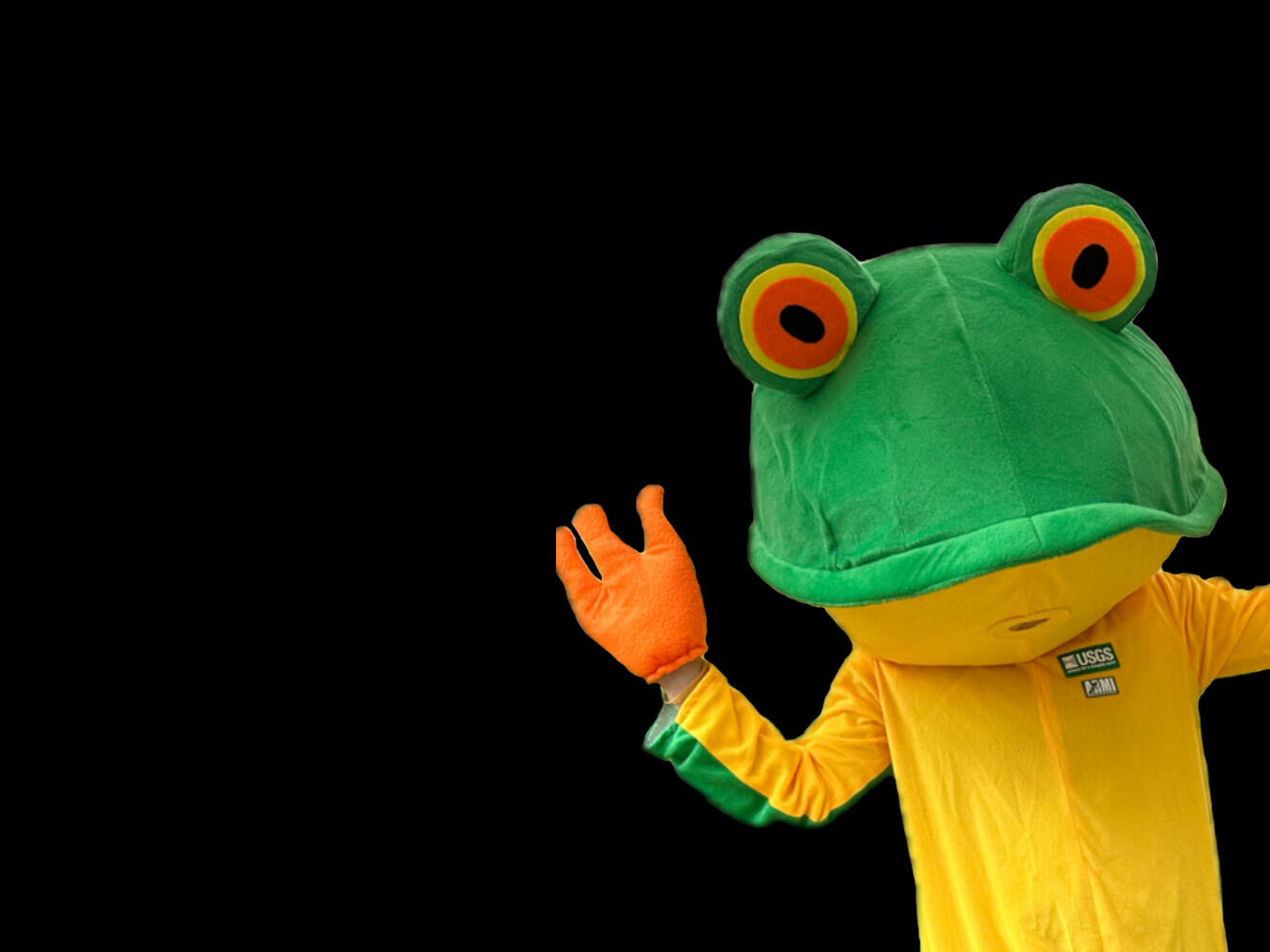
Have you met Phil?
Phil the Frog is a USGS/ARMI phenomenon who embodies the spirit of amphibian conservation based on sound science. Phil was named after Dr. Phil Bishop of the University of Otago, New Zealand because he was a great herpetologist and champion of amphibians.
Fun fact, Phil is also the Senior Liaison to Inter-amphibian Monitoring and Engagement (SLIME), previously called Liaison for Ecosystems Amphibian Programs and Science (LEAPS).
Amphibian Week Events
The USGS is hosting and/or participating in several Amphibian Week events across the U.S. Stop by to learn more about these amazing animals! Events are free and open to the public.
CALIFORNIA
Wild About Amphibians
Celebrate Amphibian Week with the U.S. Geological Survey and U.S. Fish and Wildlife Service at the Tijuana River National Estuarine Research Reserve. Everyone is invited to explore the fascinating world of frogs, toads, and salamanders through hands-on activities and nature experiences. Enjoy a Baja California tree frog hike, see live amphibians up close, play amphibian games, and take part in a creative frog art project. Activity books and coloring pages will be available for children and curious adults alike. This free, all-ages event offers a fun way to connect with nature and learn about the amphibious residents of Southern California. Bring your family and join us in celebrating Amphibian Week.
Date: Saturday, May 9, 2026
Time: 9:00am - 12:00pm PT
Location: Tijuana River National Estuarine Research Reserve, 301 Caspian Way, Imperial Beach, CA 91932
COLORADO
Amphibian Walk at the Environmental Learning Center
Join us for an amphibian walk on Tuesday, May 5, 2026 from 7:30 to 9:30 pm at the CSU Environmental Learning Center at 2400 S. County Rd 9. Bring a headlamp or flashlight, weather appropriate clothing, and a good pair of rain or muck boots, and be ready to look for frogs and salamanders! All ages and ability levels are welcome. This event will be limited to 30 attendees to give everyone the best opportunity to see and hear our local amphibians.
Date: Tuesday, May 5, 2026
Time: 7:30pm-9:30pm MT
Location: CSU Environmental Learning Center, 2400 S County Road 9, Fort Collins, CO 80525
COLORADO
Amphibian Week at the Fort Collins Museum of Discovery!
Join us in celebrating amphibians with the Fort Collins Museum of Discovery! We will have booths, activities, and amphibian walks in a nearby park.
Date: Saturday, May 9, 2026
Time: 7:00pm-9:00pm MT
Location: Fort Collins Museum of Discovery, 408 Mason Ct, Fort Collins, CO 80524
WASHINGTON, D.C.
The World and Me: Amphibian Week Kickoff Celebration with USGS and Friends!
Come celebrate Amphibian Week with a special kickoff event at The World & Me inside Q?rius, The Coralyn W. Whitney Science Education Center! Join USGS scientists to experience the world of amphibians! Families with learners of all ages will be invited to explore different stations, see live amphibians, and explore play, art, and related museum collections.
Date: Saturday, May 2, 2026
Time: 10:00am-12:30pm ET
Location: Q?rius, The Coralyn W. Whitney Science Education Center, National Museum of Natural History, 10th St. & Constitution Ave. NW, Washington, D.C. 20560
WISCONSIN
Guided Frog Walk
Join USGS biologists for a short presentation on frogs and toads of the upper Midwest, then head out into the marsh to see what you can see and hear!
Date: Wednesday, May 6, 2026
Time: 7:00pm-8:15pm CT
Location: The Nature Place, 789 Myrick Park Dr., La Crosse, WI 54601